Showing posts with label tomatoes. Show all posts

Wednesday, September 28, 2011

Will Green Tomatoes Ripen Indoors? Yes!

Green Tomato Harvest 10-17-09
Not to worry—you can pick green tomatoes and ripen them indoors, off the vine.

How was your tomato season? Ours was pretty disappointing, and while I'm already making plans for a bigger and better tomato crop next year (build sturdier cages, get plants in the ground earlier, pray for a cooler June!), I haven't written this one off completely yet.

My six late planted Roma tomato plants are finally loaded with fat green fruit, and the fresh tomato-crazed gardener in me refuses to give up.

October is often fairly mild here in southern Missouri, so I'm going to hold out for a while in the hopes that some of them will ripen on the vine—or at least until I get tired of covering them (as well as my other 15 tomato plants and all of the basil) with floating row cover and old bed sheets each night to protect them from the cold. (Why is it only windy on autumn nights, not summer nights when you're drenched in sweat, wishing for even a hint of breeze?)

If you're ready to call it tomato quits for the season, don't despair over all those green ones still out on the vine. My most popular post this time of year is How To Ripen Green Tomatoes Indoors the Really Easy Way—and it really is easy.

© FarmgirlFare.com, loving autumn on the farm and thrilled to be picking tomatoes, no matter what the color.

Sunday, August 28, 2011

Garden Journal 8/28/11: BLT Season Has Finally Begun! (and a Classic Sandwich Bread Recipe for the Occasion)

BLT on Farmhouse White bread with heirloom tomatoes from the organic kitchen garden - FarmgirlFare.com
Does anything taste better than a BLT made with homegrown tomatoes on homemade bread?

Realization of the Day:
It's the little things often turn into the biggest celebrations here on the farm.

Traditional holidays usually pass us by with little or no fanfare. That's partly because it's just the two of us, and both our families live in other states. But it's also because living on 240 acres with 100+ critters makes it nearly impossible to make and keep any sort of plans.

Just getting dinner on the table at a specific time is usually a challenge. An entire roast turkey dinner in a space presentable enough for guests? Forget it. We don't even have a dining table, let alone a dining room—in the new house (which we're sort of moved into!) or The Shack.

People often ask us why we never go camping. It's because living miles from the nearest neighbor in middle of nowhere is a lot like camping, complete with wild animals, beautiful scenery, and bathroom issues. Right now we're actually using a Luggable Loo. See? Camping.

We really don't mind, though, and the whole lifestyle suits us. We whoop it up when we feel like it and create holidays for the silliest of reasons (Pop the cork, it's Champagne Thursday!).

The opening night of BLT season each summer is always cause for celebration, and what's nice is that we get to decide when it takes place. This year it was last Friday night. Yum.

More below. . .

Thursday, October 21, 2010

How To Ripen Green Tomatoes Indoors the Really Easy Way

Green Tomato Harvest 10-17-09
Green Tomatoes Harvested on 10-17-09

While you're waiting for your green tomatoes to ripen—or if you have a lot of immature ones, which probably won't ripen—you could turn some of them into my no sugar, so easy, salsa-like green tomato relish, which is one of my most popular recipes.

Will green tomatoes get ripe and turn red after picking them (or yellow or orange, depending on the variety)? Yes.

Is it difficult to get tomatoes to ripen off the vine? No.

Do you have to pull up the whole tomato plant and bring it inside? No.

Do you have to do anything special to get green tomatoes to ripen? No.

Do they have to be kept at a specific and/or steady temperature? No.

Will tomatoes ripened indoors taste as good as vine-ripened garden tomatoes? Probably not, but any homegrown tomatoes are going to taste better than no homegrown tomatoes—especially if you're enjoying them on Thanksgiving or Christmas. And they'll still probably taste better than storebought tomatoes, especially if you're buying them at Christmas.

Saturday, August 21, 2010

Garden Journal 8/18/10: Tomato Season Has Arrived and the First Harvest is In!

First Tomato Harvest 8-18-10
Yep, that's it. Pretty though, isn't it?

Realization of the Day:
One of the nicest things about gardening is that the littlest surprises can often mean so very much.

A month or so ago, I changed my blog header to a photo that more accurately reflects the season: tomatoes! But ever since then I've felt like a guilty impostor. Oh, those are my tomatoes up there alright—I just picked them back in 2008 (at the end of October!). And while pretty much everyone equates the summer vegetable garden with ripe tomatoes, I don't actually have any growing in my garden this year. Or so I thought.

Saturday, October 17, 2009

Garden Journal 10/17/09: Widespread Frost Warning


And This Isn't Even the Half of It

Realization of the Day:
Looks like it's time to make some of my Super Simple, No Sugar, Salsa-Like Green Tomato Relish!

So what do you like to do with green tomatoes?

© Copyright 2009 FarmgirlFare.com, the fluffing up for winter and enjoying the warmth of wood heat foodie farm blog where our 'official' frost date is October 15th, so while tonight's prediction of 30° (and as much as 10° colder down here in our little valley if the skies are clear) isn't a big surprise, the first frost forecast always causes a bit of a stir—especially out in the garden.

Wednesday, September 23, 2009

Garden Journal 9/23/09:
Tomatoes! Freshly Picked Heirlooms (Mine) and Favorite Varieties to Grow (Mine and Yours)


My Favorite Kind of Tomatoes—Ripe!

Realization of the Day:
2009 is not my Year of the Tomato.

It was supposed to be. In late winter (on time!) I started something like 30 different kinds of heirloom tomato seeds, most of which I'd never grown before, and with fabulous names like Egg Yolk, Mule Team, and Chocolate Vintage.

Things pretty much went downhill after that, though I'm finally harvesting a few various ripe tomatoes—some of which I can even identify. (Why do the plants that I meticulously label and make notes about usually seem to die?) I'm also already planning for next year—and I'm not the only one.

Back on September 3rd (where has this month gone?) a message arrived in my inbox from 'mother.' Since messages from my mother have her name on them, I figured it was spam—like all the ones that say they're from 'me.' But then I looked at the subject line: Help Us with the Top Tomato Varieties Survey. This wasn't spam, it was from Mother Earth News, specifically Cheryl Long, the Editor in Chief herself:

As a tomato grower and a blogger, we hope you will help us spread the word to gardeners who love great tomatoes. Mother Earth News invites you (and others!) to take our new Top Tomato Varieties online survey.

Our goal is to connect with lots of folks who are passionate about homegrown tomatoes, then combine everyone's tomato-growing experience and advice into an article for
Mother Earth News, with emphasis on the best varieties for regional growing conditions.

I guess I'm not the only one who spaced the survey out, because fortunately it's still going on. It only takes about 10 minutes, and you can take it here. The findings will be presented in the February/March 2010 issue of Mother Earth News.

I'm really looking forward to reading the results, especially since regional growing conditions seem to make an especially huge difference with tomatoes—which so many of you confirmed in all the interesting and helpful 2009 tomato comments you left on this recent post (thanks so much!).

Ironically, the same day Cheryl's message arrived, I picked the cherry tomatoes in the photo above, which were volunteers growing in our grey water runoff ditch (where the water that drains out of our kitchen sink, bathroom sink, washing machine, and shower runs off into a ditch outside The Shack). They're sweet and tasty, and the plants don't mind being completely ignored, but they're no help to the survey because I don't have a clue what kind they are.

Below are some of my tried and true favorite heirloom tomato varieties I can name, all of which are not only full of flavor but also do well in our hot and humid summers and generally crazy Missouri climate. Varieties marked PT came from Pinetree Garden Seeds in Maine; BC are varieties ordered from Baker Creek Heirloom Seeds here in Missouri (which also has a new retail store in Petaluma, California—my old stomping grounds!).

San Marzano (my favorite red plum/paste tomato I've been growing for 14 years - PT)
Orange Banana (a wonderful orange plum/paste tomato - BC)

Gold Nugget (produces lots of 1-inch flavorful fruits that aren't prone to cracking - PT)
Yellow Pear & Red Pear (I love these tiny pear shaped fruits with great yields; the red ones date back to the 1700s - PT)
Yellow Currant & Red Currant (really tiny tomatoes - so cute! - that mature early and taste great - PT)

Tappy's Heritage (large, globe shaped red tomatoes with good disease resistance and great yields - a bestseller at BC)
Arkansas Traveler (beautiful pink tomato from Arkansas, tolerant to heat and humidity, crack and disease resistant - I wrote about them here - BC)
Kellogg's Breakfast (extremely large, sunny orange beefsteak I wrote about here - PT)
Thai Pink Egg (darling pink, 2-ounce, grape shaped tomatoes from Thailand did fabulous for me the first year, died of some strange disease the next while loaded with unripe fruit, but are definitely worth trying again)

So what are your favorite tomato varieties to grow? I hope you'll take a minute to share them here—after you've taken the survey of course!

Previous tomato posts:
Links to all of my tomato recipes (at the bottom of the post)
—7/31/06: Growing Arkansas Traveler Tomatoes & How To Save Your Own Tomato Seeds
—8/9/06: Growing Kellogg's Breakfast Tomatoes and a Colors of Summer Salad with Tomatoes, Zucchini, Sweet Red Pepper, Beet Greens, Basil, & Garbanzos
—9/16/07: Kissing Summer Goodbye with the Easiest Greek Salad Ever
—6/2/08: Planting Tomatoes Later is Better than Never (I Think)
—9/4/08: How To Freeze Tomatoes the Really Easy Way (and Why I Don't Do Much Canning Anymore) (lots of great comments from other gardeners here)
—10/12/08: Growing Tomatoes: How Many Plants Do You Need and What To Do If You End Up with Too Many Tomatoes—Make Easy & Delicious Homemade Tomato Juice! (lots of great comments here, too)

© Copyright 2009 FarmgirlFare.com, the small, round, and juicy foodie farm blog where it's nice to have tried and true tomato favorites, but it's even nicer knowing that despite all the past years of experimenting, there are still hundreds of varieties of heirloom tomatoes just waiting to be grown in my garden.

Sunday, August 23, 2009

Garden Journal 8/23/09:
The First Tomato of the Year Is Finally Ripe!


Swaddled in a Bed of Fresh Basil (the biggest success in the garden this year)

Realization of the Day:
It's always a good idea to download your photo and check to see if it's in focus before gobbling up the subject in a fit of uncontrollable excitement.

When I was growing up in the San Francisco Bay Area suburbs, our neighbor across the street always planted a big backyard vegetable garden, which we were sometimes called upon to water while he and his family took their summer vacation. A few years ago my foodie mom (aka Queen of the 100% Whole Grain Bran Muffins) and I were talking about ripening tomatoes in the garden, and she said, "Well you know what Mr. C. always used to say, don't you? That his first tomatoes were always ripe on August 1st. 'It doesn't matter when I plant them, it's always August 1st,' he'd tell me. 'I can plant my tomatoes on the last day of July, and I'll still have ripe tomatoes on August 1st.'" This cracked me up.

The 20th of August is definitely a ripe tomato record for me—I've never had to wait this long, and for just one tomato at that. And I thought last year's handful of ripe cherry tomatoes picked on August 17th was pathetic. But considering that my sorry little seedlings didn't go into the ground until June 17th, it's really not that bad.

I can't remember what variety this is (why does it seem like I make the most detailed notes about the plants that end up dying?), but I do know it's my favorite kind—ready to eat. Of course it was delicious.

For various reasons, most of my tomato plants have not been doing all that well, but I do have quite a few green tomatoes in various shapes and sizes out on the vines. Despite it being the end of August (and a blissfully invigorating 50 degrees this morning!), I'm hopeful; last summer I was harvesting ripe tomatoes into October.

Strange spring and summer weather has meant a bad year for both commercial and backyard tomato crops across the country, and then there are all the plants decimated by blight. My friend Jen at FarmAid (a fabulous organization whose annual fundraising concert is being held in St. Louis this year!) told me last month that her CSA farm was getting ready to pull up 4,000 tomato plants because of blight. Closer to home, my Amish neighbor said his first early tomato planting basically flooded from all our spring rain (which was very nice in some ways but terrible in others). Fortunately his later plantings did better (though not nearly as well as last year), and I've been getting my ripe tomato fix from his front yard produce stand.


Fast Farm Summer Food—Perfect for Breakfast, Lunch, or Dinner

One of my favorite ways to celebrate summer's tomato bounty is by making BLTs. We had the first ones of the season for dinner last week (on freshly baked Farmhouse White of course), and they were so good we had them again for dinner the next night. I've always loved cream cheese and tomato sandwiches, which I ate on toasted English muffins when I was a kid and on homemade crusty baguettes now. The best cream cheese and tomato sandwiches I've ever eaten were the little ones I made with Italian Olive Cheek Rolls from Daniel Leader's wonderful book, Local Breads, but the open-faced sandwich pictured above on toasted slices of Honey Bran Whole Wheat was pretty darn wonderful, too.

So how are your tomatoes doing this year? Any new favorites? What about failures? And don't forget to tell us where you're located!

Do you have an abundance of ripe tomatoes in your garden? (Oh, I remember those years well!) Here are some of my most popular tomato recipes you might enjoy:
Homemade Tomato Vegetable Juice
Quick & Easy Gazpacho
Fresh Tomato Pizza Sauce
Fiesta Cottage Cheese Veggie Dip (and Factory Tours)
Savory Tomato Pesto Pie with an Easy Biscuit Crust
Fresh Tomato & Basil Whole Wheat Sourdough Bread
Tomato Pesto Pizza, My Basil Pesto Recipe, & A Simple Tomato Salad
Three No-Cook Summer Recipes: Mexican Jumping Bean Slaw, Easy Vegetarian Tacos, & High Kickin' Tomato Dressing
Cream Cheese & Tomato Sandwiches On Italian Black Olive Cheeks
The Easiest Greek Salad Ever
My Seven Second Tomato Glut Solution
Saving the Harvest with No Sugar Green Tomato Relish
How to Freeze Tomatoes the Really Easy Way

© 2009 FarmgirlFare.com, the slowly ripening foodie farm blog where anticipation doesn't just apply to ketchup.

Sunday, October 12, 2008

Growing Tomatoes: How Many Plants Do You Need? (And What To Do If You End Up with Too Many Tomatoes)


Just Juice Them Using My Homemade Tomato Juice Recipe!

It hasn't been a good year for tomatoes in the garden, partly because I never got around to starting any seeds (for the second embarrassing year in a row), and partly because the mostly boring varieties of purchased plants I had to make due with didn't go into the ground until June (okay, okay, and maybe a few in July). I did end up with about 20 producing plants and a small but fairly tasty harvest.


My favorite variety of the year is a tasty little plum type with a dark reddish green skin and interior. It has a really nice flavor, was a good producer, and didn't have any disease or pest problems. Unfortunately I never wrote the name down and seem to have misplaced the tag that came with the one plant I bought. If I figure it out, I'll definitely let you know. I'm pretty sure it was from Baker Creek Heirloom Seeds (great seeds, great Missouri company), but the only description I could find that seemed right said the tomatoes were six ounces each, and these are less than one.

I'm still getting a few ripe sweet cherry, Celebrity, and Arkansas Travelers (an always reliable variety in my garden), and the Romas are just coming into their prime, so I've been swaddling the plants in floating row covers and old bedsheets at night to protect them from the 37 degree temperatures we've been having (though now we're headed back up into the 50s at night). Soon I'll get tired of all that covering and uncovering and will turn whatever's left into a big batch of my popular salsa-like green tomato relish (no canning required unless you want to save it for months).

People sometimes ask me why I like to have at least 70 or 80 tomato plants in the garden. "So I can be sure of getting at least a few tomatoes!" is how I always reply. This question is never posed by anyone who has tried to garden in Missouri. While talking tomatoes with my blueberry supplier last summer, he confessed that he usually puts out 200 tomato plants—and that's just for him and his wife.

On the other end of the growth chart, my all-around talented friend Finny picks enough tomatoes to eat her fill all summer and put up several jars of what she swears is the best tomato sauce ever from the two measly plants in her Northern California garden. These plants apparently "grow to gargantuan sizes and impose their overabundance on us with unrelenting ferocity." It's just way too easy to garden in California.

So how many tomato plants should you put in your garden? It obviously depends on where you're located and what you plan to do with your bounty. If you just want some slicers for salads, a couple of plants will probably suffice. But if you're hoping to line your pantry shelves with dozens of jars of tomatoes and sauce, I'd say you'll want at least 10 or 12 of the meaty paste varieties.

Last year my 46 tomato plants gave me less than 46 pounds of tomatoes (a terrible yield), which might sound like a lot until you start preserving them. It takes an amazing number of tomatoes to fill up one little quart-sized container. I also never knew how many fresh tomatoes I was capable of eating until I broke down and bought some from a neighbor last year while waiting for mine to mature. Um, like twenty-five pounds in a couple of weeks. Joe helped of course, but still. Even I had trouble believing it. But indulging like this in summer is of course the only way to survive the rest of the year sans fresh tomatoes. And besides, I really do love them.

When I moved from Northern California to Missouri back in 1994, I was told that the general rule for growing anything was that you need to plant one for the weather, one for the bugs, one to die, and one for yourself. That's about right, though for a lot of things six would be better.

You also never know what's going to do well and what isn't, which is why I like to plant several different varieties of tomatoes (and everything else). And unless I really don't care for the taste of one, I always give each kind at least two summers to prove itself. A total disappointment one year might very well be the star of the season the next—or vice versa. The first year I planted Thai Pink Egg tomatoes they were a delicious success. The compact plants were loaded with little egg-sized fruits that started out white and ended up the most beautiful dark pink—while turning about five gorgeous shades of pink in between. The next year was promising, but as soon as the plants put on all those white eggs they promptly turned brown and died.

I always recommend having at least one cherry tomato plant because not only will your first tomatoes be ripe earlier, but the small size of the fruits means there's less of a chance for things to go wrong. There are dozens of types of easy to grow heirloom cherry tomatoes, and I love to experiment each year (well, except this one) with various colors and sizes. Some of my all-time favorites are red and yellow currant (a pain to pick but so adorable) and yellow pear, which add a touch of tasty elegance to everything.

Sometimes the garden gods smile do down on us, and we end up with a tomato surplus. You can never have too many plum tomatoes around (I'm particularly fond of San Marzanos) because this meaty type is perfect for canning and freezing as well as drying (a food dehydrator is a wonderful thing to have). Some day I may even give in and turn on the oven for hours on a sweltering day so I can make the slow roasted tomatoes my food blogging friends are always raving about.

Regular salad or slicing tomatoes aren't as easy to preserve because they're usually more juice than meat. Two years ago I turned an excess into a dressing/dip that I called Susan's Seven Second Tomato Glut Solution, but now I know better. If I ever have an overabundance of tomatoes again, whatever isn't tossed into my new favorite quick and easy gazpacho will be turned into homemade tomato juice. In fact, I'm so in love with this simple, scrumptious, amazingly good-for-you juice that I'm planning to increase my harvest odds next year by putting at least 100 tomato plants in the garden. I already have something like 45 different kinds of heirloom seeds in my stash. Maybe I'll go ahead and try some of each. Can't hurt. Wish me luck.

So how did your tomatoes grow this year? Any stories or tips you'd like to share? What about your favorite varieties-or, better yet, save us some trouble and tell us which kinds of tomatoes you won't be growing again.


These Mexican Jumping Bean Slaw Tacos Were a Hit Last Year

What else do I do with tomatoes?
How to Freeze Tomatoes the Really Easy Way
Saving the Harvest with No Sugar Green Tomato Relish
Quick and Easy Gazpacho
Fresh Tomato Pizza Sauce
Fiesta Cottage Cheese Veggie Dip (and Factory Tours)
Savory Tomato Pesto Biscuit Crust Pie
Fresh Tomato & Basil Whole Wheat Sourdough Bread
Tomato Pesto Pizza & My Favorite Basil Pesto Recipe
Purple Basil Pesto & White Bean Dip
Three No-Cook Summer Recipes: Mexican Jumping Bean Slaw, Easy Vegetarian Tacos, & High Kickin' Creamy Tomato Dressing
Cream Cheese & Tomato Sandwiches On Italian Black Olive Cheeks
The Easiest Greek Salad Ever
My Seven Second Tomato Glut Solution
Colors Of Summer Salad
Summer In A Bowl

© Copyright 2008 FarmgirlFare.com, the award-winning blog where despite our whining, there's always something ready to eat in the garden, something delicious on the menu, and something that tells us we'll never give up trying to grow too many tomatoes.

Thursday, September 04, 2008

Preserving the Harvest: How to Freeze Tomatoes the Really Easy Way (And Why I Don't Do Much Canning Anymore)


Summer sunshine saved in seconds

For many people, late summer means canning season. It's time to stop stuffing our faces with all of this glorious seasonal bounty and stuff it into jars so we can enjoy it come winter instead. It's a wonderful time of year—except for the actual canning part.

When I moved from urban Northern California to a rural Missouri farm 14 years ago, I planted an enormous kitchen garden and looked forward to my first official canning season with gleeful anticipation.

I admired my inexpensive new boiling water bath canner, stockpiled cases and cases of jars, made sure I had the correct number and type of the special two-part lids, and even bought a handy accessories kit that promised to make my canning adventures a thousand times easier (which it did).

I earmarked nearly all the pages in my trusty home preserving book for beginners and cleared off shelves to store my stash. And then I started canning everything in sight.

I put up dozens of quarts of dill pickles and enough red and yellow tomatoes to make pizza and pasta sauce for at least a couple of years. I made vats of tomato salsa and tomatillo enchilada sauce, and when frost threatened in fall I turned my unripe tomato bounty into this salsa-like green tomato relish, which is one of my most popular recipes.

I bought peaches by the bushel and cooked up enough filling to fill more peach pies and cobblers than I knew I would ever eat. I gathered feed sacks full of apples and pears from a friend of a friend's neglected fruit trees using one of those long-handled grabber thingies, then spent the next couple of weeks cooking up big batches of applesauce, apple pie filling, and several cases of a special creation I christened Autumn Harvest Chutney.

This I bestowed upon friends and family during the holidays until I realized nobody had a clue what to do with it. (I mostly ate it straight from the jar.) I even processed half-pints of homemade lemon curd before I figured out I could polish off an entire batch long before it went bad in the fridge.

One year I turned an eggplant overflow in the garden (my first and last) into caponata, but when I called the 800 canning hotline for processing directions I was sternly informed that I couldn't put up jars of caponata. "Oh yes I can!" I said, hanging up and taking my chances. (I lived.)

After a surprising purple cabbage bounty one spring, I made four pints of pickled purple cabbage. When I fed some to my foodie mother she said, "It tastes something you'd get in an English pub." I was afraid to ask if she meant it as a compliment.

I reveled in my self-sufficiency and would sneak into the crowded pantry (also known as the spare bedroom, the office, my graphic design work area, and the recording studio) to admire the rows and rows of glistening jars that were—unlike the green beans and sweet red peppers and blueberries I'd put in the freezer—safe from spoilage even if there was an extended power outage. I sliced and diced and peeled and parboiled and sweated to within an inch of my life.

And then I got tired of canning.

The truth is, as much as I loved having all those jars of food around, I don't really miss them that much. Over the years I've started doing more year round eating straight from the kitchen garden rather than by way of the pantry.

Last fall I grew several types of hardy greens that lasted well into December, and after they were gone I proceeded to enjoy salads of freshly picked arugula and Swiss chard and from my homemade greenhouse for much of the winter.

I eat my fill of fresh peaches in summer and slice up apples for pies in fall. And besides, I've probably had enough dill pickles and Autumn Harvest Chutney to last me for the rest of my life.

I love knowing how to can, and I'm glad I have the option, but these days I don't let it overwhelm me.

What I'll never stop doing, however, is preserving tomatoes, although now I usually take my chances with the freezer. But it takes an amazing amount of paste tomatoes to fill a quart container, so when I don't have enough to make the whole blanching, peeling, and seeding process worthwhile—or if I'm feeling particularly lazy—I simply stick the tomatoes in a zipper bag, toss it into the freezer, and I'm done. Yep, that's it.

In a pinch you can even freeze big old round tomatoes, but they do take up a lot of space.


Frozen whole tomatoes are the slow cook's winter friend

Whole frozen tomatoes will not, of course, defrost into the sturdy slicers they once were, but they're perfect for cooking down later into sauce or tossing into soups, stews and cozy Dutch oven dinners, such as these slow-cooked lamb shoulder roasts (lamb shanks will work great, too).

If you don't feel like waiting until winter to try this recipe and have some fresh tomatoes on hand, by all means toss them in.

So how do you preserve the harvest? Canning? Freezing? Digging up memories of summer while living on winter root vegetables? Do you have any time-saving secrets to share?

© FarmgirlFare.com, the seasonal foodie farm blog where over the years I may have become a little lazy in the canning department, but the freezers and our tummies always stay happily full.

Monday, June 02, 2008

Garden Journal Entry 6/2/08: Planting Tomatoes Later Is Better than Never (I Think)


Eight Tomato Plants (No, Really, they're in there)

Realization of the Day:
It's the second of June and I have a pathetic total of 9 tomato plants in the ground - which is more than double yesterday's count of four. Most years I have at least 40 or 50 - sometimes as many as 80.

Oh yeah, and they're tomato plants I broke down and bought, too - not started from the couple of dozen packets of heirloom seeds still safely sitting in my office.

How did this happen? I have no idea. I'm still trying to figure out how it got to be June already. I think it has something to do with the concurrence of lambing season and seed starting season each year. While my foodie mom was visiting the farm back in April (because she wanted to be here during lambing season), the running joke was that at 10pm when we staggered back to The Shack from the barn I would say brightly, "So are you ready to go out and work in the garden now?" Instead we poured ourselves glasses of wine, scrounged up something to eat, and collapsed into bed.

Back on February 14th I was flailing around trying to figure out what I could direct seed (and get to germinate) in the greenhouse that wouldn't either a) freeze to death in the coming months (basil, zinnias, bush beans) or b) suffer from heatstroke when the temps shoot up into the 90s in there like they do every time the sun comes out (lettuce, broccoli, kohlrabi, spinach). I thought about bunching onions (which I buy every year and never plant - it's like a tradition), but settled on my beloved Swiss chard instead. It's thriving, but what I really should have been doing back then was starting tomato and pepper seeds in containers. At the time, though, the thought of 2+ months of dealing with growing stuff indoors under lights seemed like a total pain. Yes, sometimes I can really be that stupid lazy.


Mr. Midnight Inspects My Work

This morning I took a break from planting to see if the guys working on our new building (the hardwood floor is looking great!) were interested in taking home some Jerusalem artichoke plants (more about growing these soon, I hope). Our contractor, who puts in a large garden every year, happily took me up on my offer even though he had no idea what Jerusalem artichokes were. His two helpers politely declined.

"I only grow tomatoes and green onions," one of them told me.

"I have plenty of green onions," I said. "But I'm really behind with my tomato plants." They nodded understandingly. "In fact," I sheepishly admitted, "I'm in the middle of planting some right now."

"Oh," they said in unison. "That is late." Being polite types, they left it at that, though I have a feeling as soon as I was out of earshot they probably had a little more to say.

In an attempt to look at this embarrassing and depressing tomato plant situation in a more positive light, I've been telling myself that since the weather is already hotter than hell and humid beyond belief nice and warm, my tomato plants will probably be big and tall in no time. The one I planted last week has already grown a couple of inches and is putting on new leaves. None of that chilly April and May stunted growth for these babies.

This will be an interesting experiment, though I really hope I'll never break this late planting record. I'm not a fan of Missouri summers by any stretch of the imagination (in fact I've already started counting down the months until fall), but I can't help hoping that our first frost arrives a little late this year.

The best thing about all is that in the future I'll always be able to console myself by saying, "Sure I'm behind with the tomatoes this year, but it's nothing like what happened back in 2008!"

And of course if you happen to be behind on your own tomato planting progress, my situation should make you feel a whole lot better - because it can't possibly be as pitiful as mine. At least I hope not.

Tomato plants already in the ground:
1 Black Cherry
4 Celebrity
4 Cherry (that's all the sign at the feed store said, but in my experience you can't go wrong with cherry tomato plants of any kind)

Next on the planting list:
27 more tomato plants (purchased)
20 Golden Bell pepper plants (purchased)
2 heirloom eggplant plants (purchased on a whim)
seeds to start: lemon cucumbers, various summer squash, more beans, several types of basil, parsley, & some other stuff

What, you thought I was only behind with tomatoes? Oh, I wish.

So what kind of tomatoes are you growing this year? Did you start your own seeds? Buy plants? Just get everything in the ground? Don't forget to tell us where you're located.

Related posts:
Growing Kellogg's Breakast Tomatoes & Colors of Summer Salad Recipe
How To Trim Tomato Plants & Why You Should
Growing Arkansas Traveler Tomatoes & How To Save Your Own Tomato Seeds
What To Do With All Those Green Tomatoes? Make Green Tomato Relish!

© Copyright 2008 FarmgirlFare.com, the award-winning blog where a raucous thunderstorm dropped a lovely half inch of rain on us today, and that was on top of the 1-1/2 inches we had two nights ago. Everything is growing like crazy!

Sunday, September 16, 2007

Another Less Fuss, More Flavor Recipe: The Easiest Greek Salad Ever


This beautiful summer salad is so full of flavor it doesn't even need dressing.


The way I cooked, ate, bought, and even thought about food all changed dramatically when I left urban Northern California for rural Missouri 13 years ago. Most of this was a direct result of space and availability. Moving from a 900 square-foot cottage with a postage-stamp sized yard to a couple of hundred acres meant there was space for a large kitchen garden, space for chest freezers, space for animals to graze.

Availability was a different story. Relocating from one of the undisputed gastronomic capitals of the world to the middle of nowhere in middle America meant that a lot of food purchasing options disappeared. Order Chinese take-out or have a pizza delivered? Neither. Dash to the store for proscuitto, kohlrabi, sherry wine vinegar? Forget it. Buying parsley or cilantro means 80 miles of driving. One learns to adapt.

My food philosophy these days can pretty much be summed up by the phrase Less Fuss, More Flavor. And what that simply means is this: the better your ingredients, the less you have to mess with them.

Of course some might argue that growing two dozen types of salad greens or putting up 100 pounds of tomatoes or raising your own lamb and beef constitutes a fair amount of fuss. But the nice thing is that if you start with the best, then at the end of the day when you're tired and sore and starving to death, a meal fit for even the most gourmet gourmand can be ready in a snap.

A typical late summer dinner for us might include grilled lamb chops or lamb leg steaks (I love these!), the last of the French filet beans in the garden, and some freshly dug Yukon Gold potatoes (because the best way to store your potatoes is to leave them in the ground). Now sure, you could marinate the lamb for hours with garlic and fresh herbs and all sorts of other delightful stuff, make the delicious sounding but 4-step Warm Green Bean, Pancetta & Tomato Salad with Parmesan in the issue of Fine Cooking I had sitting on the kitchen counter for months (but never actually made), and turn the potatoes into some gorgeous, creamy gratin. But the point is, you don't have to.

More often than not, the lamb gets tossed straight onto the grill, and the beans and potatoes are cooked up (steamed just until tender and boiled, respectively) and served with nothing more than a little organic butter and some nice salt and pepper. Less Fuss, More Flavor allows you to be lazy in the kitchen—without anyone ever realizing it.

A crusty loaf of homemade crusty bread (I always bake three or four loaves at a time and freeze them) and an heirloom tomato salad round things out. Except for a platter of plain sliced tomatoes, which often appears at our table, you can't get much simpler than this bare bones Greek style salad.

So what's your favorite Less Fuss, More Flavor recipe?

Farmgirl Susan's Simplest Greek Salad
Serves at least one

This pared-down version contains just five ingredients, so using the finest of each is of utmost importance. Juicy, vine-ripened tomatoes are the key, which means this is a Summer Only recipe. Stuff yourself silly on it now, and let the memories keep you satiated through the rest of the year.


Most Greek salads call for various other ingredients, some traditional and some not. Everybody seems to have their own favorite version. I used to add olive oil and vinegar but don't bother anymore. I've listed several optional additions below, though none are necessary. I didn't even put salt & pepper in the batch pictured here, though I did add a large handful of chopped flat-leaf parsley.

If you're a nibbler like me, bear in mind that the more complicated the recipe gets, the longer you'll have to fill yourself up while putting it together. Many Greek salad recipes call for cutting the vegetables into large pieces, but I like them on the small side because I'm one of those people who wants a taste of every thing in every bite.

Garbanzo beans (chickpeas) aren't traditional, but I'm addicted to them and will toss them into practically anything when I'm not snacking on them straight from the can (I do rinse them first). Flavorwise, they fit right in here, and they give the salad a fiber and protein boost as well, which can be important if this ends up being your entire meal, like it was for me tonight.

Organic garbanzo beans are a bargain and should be a staple in everyone's pantry. You can find them in many places for under a dollar a can, including at Whole Foods Market, where they'll give you an extra discount if you stock up and buy a dozen cans at a time.


One large cucumber, cut into dice
Several vine-ripened tomatoes, preferably freshly picked, organically grown heirlooms (a variety of colors is nice), cut into small chunks
A handful of kalamata olives, pitted and coarsely chopped
A generous handful of fresh basil, chopped
A hunk of the nicest feta cheese you can find, preferably made from sheep's milk
Splash of brine from the olives or feta

Optional additions:
Garbanzo beans (chickpeas)
Salt & pepper to taste
Olive oil
Your favorite vinegar
Fresh lemon juice
Fresh garlic
Fresh oregano
Flat-leaf parsley
Anchovies, laid on top or a smidge of anchovy paste mixed in
Capers
Red onion
Sweet red peppers
Green bell peppers

Place cucumber, tomatoes, olives, basil, and half the feta cheese (crumbled) in a large bowl along with any desired additional ingredients. Gently toss with a large spoon until combined. Sprinkle with remaining feta cheese just before serving. Alternatively, you can whisk together an olive-oil based dressing and then toss it with the rest of the ingredients.

This salad tastes best if you mix it up and then let it sit for an hour or two at room temperature so the flavors can mingle, but it's delicious even in the making, which is of course how I always eat it.

Tomatoes lose their flavor when refrigerated, so don't make enough for leftovers—just mix up another batch.

Still have more tomatoes left? You'll find links to all my Less Fuss, More Flavor tomato recipes at the end of this post.

© FarmgirlFare.com, the freshly picked foodie farm blog where Farmgirl Susan shares recipes, stories, & photos of her crazy country life on 240 remote Missouri acres—and we never get tired of tomatoes, though each summer we try our very best.

Monday, September 25, 2006

Recipe: How To Make Homemade Pizza Sauce Using Fresh Tomatoes

Easy Cooking with Less Fuss, More Flavor

You made the pizza dough, why not make the sauce, too?

Homemade pizza is one of my favorite things to eat. (Click here for my easy pizza dough recipe.) Throughout most of the year, I make what I call Feels Like Cheating Pizza Sauce. It really is almost too easy. Of course you can't take into consideration all the hard garden labor you put into it months earlier.

First I defrost a plastic freezer container of tomatoes (usually San Marzano or Yellow Plum that have been blanched, peeled, and seeded) that I put up during the previous summer. Then I take a pair of kitchen scissors and snip the whole tomatoes into pieces before pouring the contents (minus some of the liquid) into a heavy saucepan.

I turn the burner on medium, toss in a couple of frozen pesto cubes (also put up the previous summer—you just scoop fresh pesto into ice cube trays and once frozen, transfer them to a zipper freezer bag), then head out to the garden or greenhouse for a handful of fresh oregano. This gets de-stemmed, chopped up, and stirred into the pot. Dried oregano can be used in a pinch.

Bring it all to a boil, then simmer until the desired consistency is reached (I like mine very thick). For years it was done at this point.

But then I bought a KitchenAid hand blander (one of my most useful kitchen purchases ever), and while I still adore the chunky version, I was thrilled to discover the joys of having a smoother, more easily spreadable pizza sauce.

Note Of Caution: Blending up a small amount of tomato sauce is a bit more, um, dangerous—think splashing hot tomato flying about the kitchen—than burying the hand blender in an entire pot of soup, which is probably why they call them immersion blenders.

A regular, counter top blender or a food processor would be a safer option for a less reckless and lazy person.

During tomato season, there's simply no reason to use up your stash of preserved tomatoes when you get a hankering for a homemade pizza—unless you're looking at an almost frighteningly bountiful harvest in the garden and are frantically trying to gobble up everything left over from last year.

Making my fresh pizza sauce takes a little more work than the Feels Like Cheating version, but not much. Chopping the fresh basil and garlic is required, but blanching and peeling the tomatoes is not. That is definitely not my idea of less fuss.

If you chop the tomatoes into fairly small chunks, you'll probably never notice the bits of skin buried under the toppings. And besides, the skin is probably good for you. If you happen to have some pesto handy, you could use a couple of dollops in place of the olive oil, garlic, and basil and save yourself some steps.

The nice thing about this sauce is that you can make it with any kind of tomatoes. Pink, orange, plum, salad, even little cherry tomatoes—it matters not one bit. This is also a great way to use up all of those end of the season 'seconds' hanging around the kitchen and languishing on the vines; the ones that aren't pretty enough to toss into salads or slice up for burgers.

Soft spots, cracks, wrinkles, bug bites, funny little bumps on the skin from who knows what—just cut them off and toss them in the compost bin or give them to the chickens.

A few months ago I read about a farmer who feeds his chickens marigold flowers so that the yolks of their eggs will be very orange. It might be my imagination, but—before the chickens went into non-laying mode a couple of weeks ago—their yolks did seem to be darker after a diet heavy on tomatoes.

Of course perfect tomato specimens can be used as well—and none of the ingredients have to come from your own garden. I'm sure the finished sauce would freeze just fine, though I haven't actually tried it.


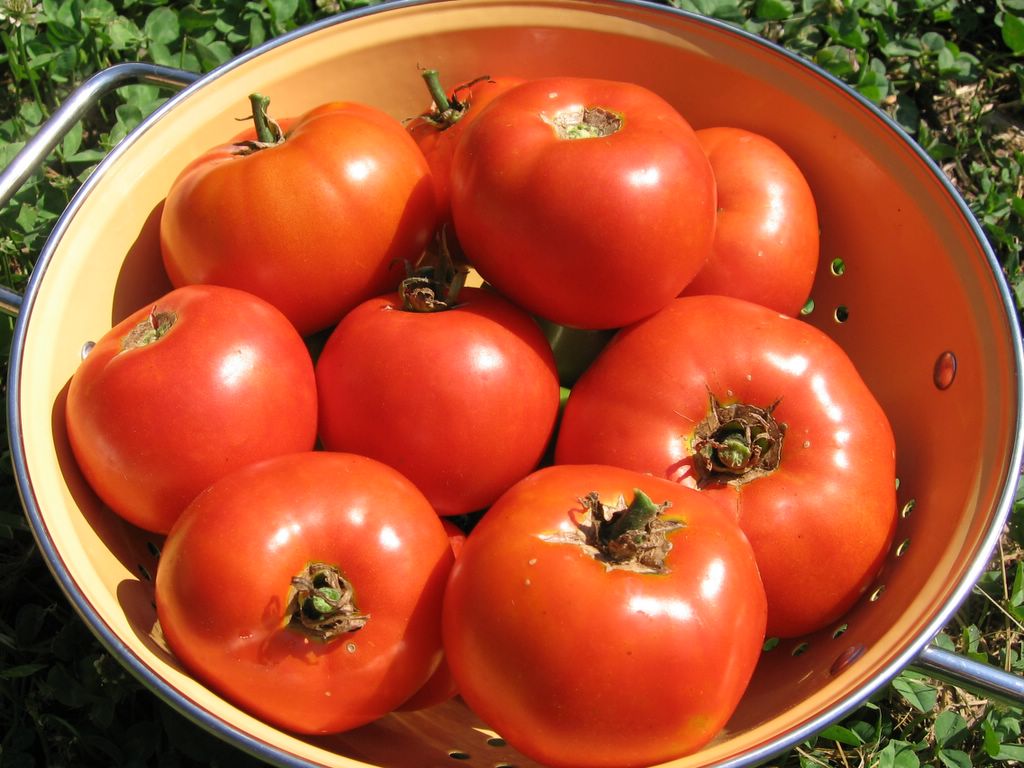
Less Fuss, More Flavor Fresh Tomato Pizza Sauce
Amounts are entirely a matter of taste

Some nice extra-virgin olive oil
Fresh garlic, coarsely chopped with some nice salt and allowed to sit 10 minutes if possible, so the beneficial compounds have time to mix with the air and become more available
Plenty of vine-ripened, garden fresh tomatoes (preferably heirloom & organically grown), cut into chunks
Fresh basil (at least twice as much as you think seems like the right amount—I measure fresh basil by the handful)
Fresh oregano (more than you're about to put in)

Heat the olive oil in a heavy saucepan over medium heat, then add the garlic and cook for 1 to 2 minutes, stirring constantly. Do not allow the garlic to brown.

Add the tomatoes, basil, and oregano and bring to a boil. Reduce the heat and simmer, stirring occasionally, until most of the liquid cooks out. Cooking time will depend on the juiciness of the tomatoes.

When there is still some liquid left in the pan, carefully purée the sauce using a blender, immersion blender, or food processor.

If you prefer a smoother sauce with fewer seeds, you can put your cooked sauce through a food mill instead. After lusting after one for years, I finally bought an Oxo Good Grips food mill and love it. It's great for making Homemade Vegetable Tomato Juice and makes the best homemade applesauce.

Bring the sauce back to a boil and continue simmering until desired consistency. Let cool, then spread on pizza dough.

If you're like me and never remember to make the sauce ahead of time, you can transfer it into a heat proof bowl and stick it in the freezer for a little while. Just don't spill it, because it will immediate freeze to whatever it falls on and is practically impossible to clean up.

And there you have it. Homemade pizza sauce so simple, yet so delicious, you'll wonder why you never thought to cook some up before.

Of course, if you're so inclined, you can embellish this basic recipe by adding a personal touch. Perhaps some chopped onion, diced sweet red pepper, grated carrot for sweetness, or a few dried mushrooms. (Pizza sauce is an excellent vehicle for hiding vegetables from finicky eaters.) You could even stir in some chopped fresh mushrooms after you've blended it up.

Just be sure to make enough pizza so that you end up with plenty of leftovers.

My other favorite ways to use fresh tomatoes are here:
Fiesta Cottage Cheese Veggie Dip (and going on factory tours)

Still hungry? You'll find links to all my sweet and savory Less Fuss, More Flavor recipes in the Farmgirl Fare Recipe Index.

Growing your own tomatoes? You might find these posts helpful:
9/4/08: How To Freeze Tomatoes the Really Easy Way (and Why I Don't Do Much Canning Anymore) (lots of great comments from other gardeners here)

© FarmgirlFare.com, the vine-ripened foodie farm blog where Farmgirl Susan shares recipes, stories, & photos from her crazy country life on 240 remote Missouri acres.

Wednesday, August 09, 2006

Growing Kellogg's Breakfast Tomatoes and a Colors of Summer Salad with Tomatoes, Zucchini, Sweet Red Pepper, Beet Greens, Basil, & Garbanzos


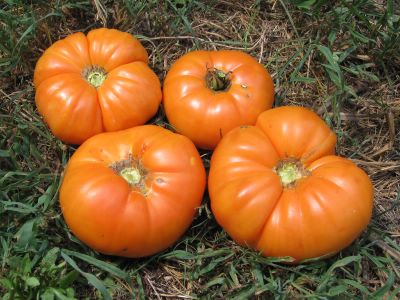
Kellogg's Breakfast Tomatoes Ripe, Ready To Eat. . .


And Looking Good From Top To Bottom

Realization Of The Day:
Absentmindedness saved me from having to eat my words--which left me with plenty of room for these glorious tomatoes.

Here's what happened. I planted Kellogg's Breakfast tomatoes because I absolutely love them. But when the first tomatoes ripened, they were big and bad. And not in a good way bad. In a rotting, cracked, mushy, bug-infested way bad. That's when I remembered that I'm not supposed to be growing giant tomatoes anymore. They simply take way too long to mature--which means there is plenty of time for tomato diaster to strike in one (or three or four) of its many forms.

The worst of the supersize tomatoes are the ones shaped like these--all rumpled and full of cracks and crevices. Similarly shaped varieties include Purple Cherokee and Brandywine (which is probably the best known heirloom tomato in the country--and possibly beyond). Many people who have no idea what an heirloom tomato actually is have heard of the infamous pink Brandywines. In fact, the Baker Creek Heirloom Seeds catalog claims it is "the most popular heirloom vegetable!" which makes sense considering heirloom tomatoes are undoubtedly more well known than all other heirloom vegetables.

But back to the rotten Kellogg's Breakfast tomatoes. I plucked two of the offending specimens from the vine and set them in the grass to take a photo. I figured I would show you what a waste of time it is to grow these and berate myself for falling into their sweet, juicy, beautifully orange trap once again.

Something distracted me, though (most likely Cary), and it wasn't until the next day that I realized I'd picked those tomatoes up and tossed them into the bowl of gourmet scraps for the chickens--and forgotten all about the photo.

No problem. I would simply take a picture of the next ripe ones, as they would surely look just as sorry. Boy, was I wrong. Not only did I find these four beauties yesterday, but the vines are loaded with (so far) perfect looking, nearly ripe tomatoes. Yes!

This means I am now officially recommending Kellogg's Breakfast tomatoes for your garden. I can't guarantee you'll have a successful harvest, but I think they're worth a try. These plants were started from seeds ordered in 2005 from Baker Creek Heirloom Seeds, who says of Kellogg's Breakfast tomatoes: "A giant, beautiful, orange beefsteak preserved by our friend Darrell Kellogg, a railroad supervisor from Redford, Michigan. The fruits are very flavorful and superbly sweet! This delicious heirloom is from West Virginia. A favorite of Dr. Carolyn Male, author of 100 Heirloom Tomatoes For The American Garden." I started my seeds on 2/6/06, transplanted the seedlings into individual plugs on 3/19/06, moved them into the ground on 4/25/06, wondered what the heck was taking so long on 5/19/06, and have probably eaten two pounds of them over the last two days, some of which were in this impromptu zucchini & tomato salad I created this afternoon.


This is basically a variation of my Summer In A Bowl, but it was inspired by this recipe my pal Alanna (whose last name just happens to be Kellogg) posted last year on her popular blog, A Veggie Venture. The recipe caught my eye when I was perusing her archives this morning because I have some zucchini I need to eat, and I liked the idea of using it raw. So I took her recipe and ran with it. I love how it is just bursting with the colors of summer.

Like the Summer In A Bowl, this is a very juicy salad--even if you squeeze some of the juice and seeds out of the tomatoes before dicing them up. I don't mind all that juice (in fact I will probably put it in a glass and happily drink it up), and if you let the salad sit around on the counter for a while, it acts as a marinade, allowing the veggies to soak up even more flavor. You could always dish it up with a slotted spoon if you don't want to serve something sloshy.

Again, you can play around with ingredients and ways to serve it. I think this would make a fantastic cold pasta salad. If I were going to toss it with hot pasta (which I bet would be very tasty), I would probably dunk the diced zucchini and sweet red peppers into the pasta water during the last minute or two of cooking.

Use what you love and what you have on hand when putting together this salad. Amounts are totally up to you. Make it yours--but please do share any scrumptious variations you come up with. Enjoy.

Farmgirl's Colors Of Summer Salad
(Adapted from A Veggie Venture's Tomato & Zucchini Salad)

Vine Ripened Tomatoes (preferably a variety of colors), diced
Raw Zucchini, diced
Sweet Red Pepper, diced (I used my favorite
Aconcagua from the garden)
Beet Greens, finely chopped (found them in the fridge)
Scallions, chopped
Garbanzo Beans (organic, I used one 15-ounce can)
Fresh Basil, chopped
Pecorino Romano Cheese, coarsely grated
Salad Dressing (I used Whole Foods Organic Fat Free Balsamic Vinaigrette--another item that needed using up)

Put everything (along with anything else that strikes your fancy) in a large bowl and toss with a big spoon until well combined. Salt & pepper to taste. Devour however you like (see my Summer In A Bowl post for more ideas), garnished if desired with shredded cheese and basil chiffonade. A hunk of warm, crusty bread served on the side to soak up all that juice should probably be a requirement.

© Copyright FarmgirlFare.com, the bright orange foodie farm blog where when we say Kellogg's, we aren't talking about breakfast cereal.

Saturday, August 05, 2006

How To Trim Tomato Plants


Realization Of The Day:
Although I've written two posts about the scary super trim I gave my two Arkansas tomato plants (click here), I never actually described exactly which leaves were the "useless" ones I cut off. This would have no doubt been helpful, especially since the experiment was a success. So here goes.

An added benefit to thinning your tomato plants is that it enables you to create order from chaos (and show me one gardener who doesn't have a chaos problem in their garden). A tangled mass of leaves and vines can become a neat and manageable plot in mere minutes.

This is especially helpful if you have yet to cage or otherwise stake up your plants. And if they're growing quite close together (like mine always are because every year I insist on cramming way too many tomato seedlings into each 4' x 8' raised bed), thinning out the leaves will allow for better airflow between the plants.

Despite the abundance of sprawling, uncontrollable, cageless tomato plants currently growing like mad in my garden (what, you thought I showed you everything out there?), my tomato trimming days are pretty much over for the season. Due to heat-zapped brain cells—along with no desire whatsoever to spend any more time out in the blazing sun than absolutely necessary—I blow off a lot of garden stuff in August) But I'm sure there are some of you who are up to the challenge.

Although I have always figured that trimming the "useless" leaves would be more beneficial before they got very big—since you're trying to help the plant expend less energy growing them—as you can see in the original post, my Arkansas Travelers were quite mature when I took the scissors to them. They were even loaded with full-size fruits.

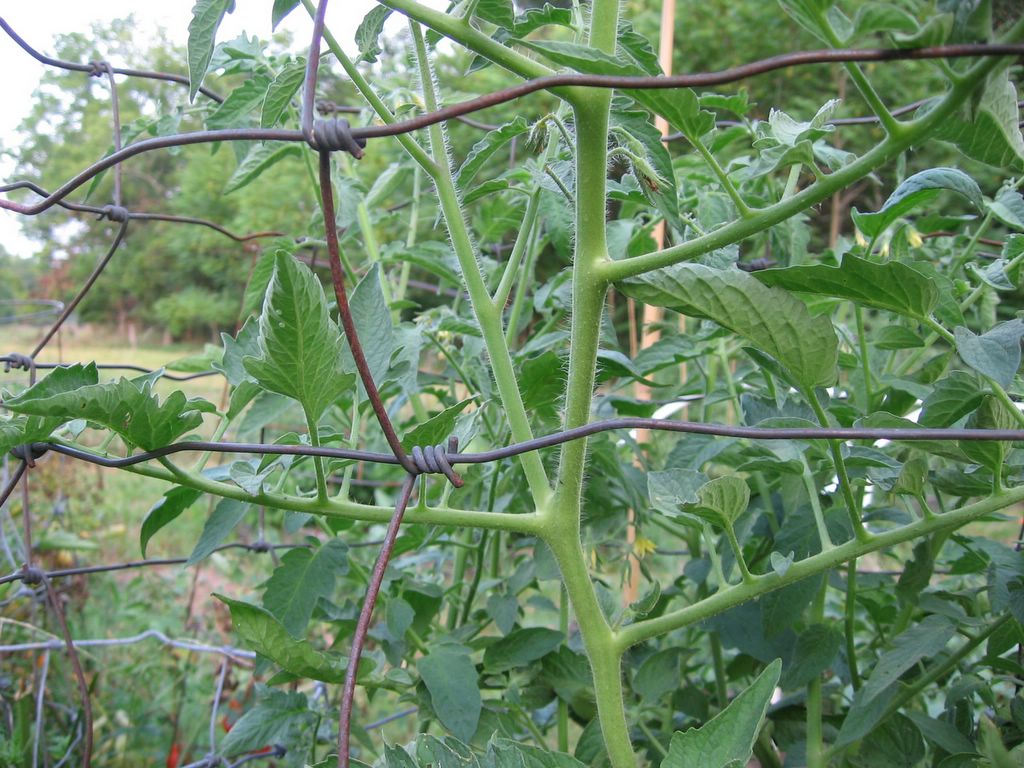
Okay, so this is all you have to do. Look up at the tomato plant in the top photo. Starting from the bottom, I count five side shoots coming off the main vertical stalk. Can you see that the 2nd shoot has several side shoots growing from it, but the 1st, 3rd, 4th, & 5th shoots are really just single large leaves? (You can click on the photo to enlarge it.)

Those are the ones that need to go. They are basically doing nothing except making you wait longer for your ripe tomatoes. Who needs that? Grab the scissors!


So how do you know for sure that you're cutting off the right leaves? Check out this close-up photo. Can you see the tiny leaves sprouting out of the main stem right above the shoot on the bottom right? (Again, you can click on the photo to enlarge it.)

Those tiny leaves are hoping to grow into fruit producing branches. Cut off that big useless leaf below them and help them out! There will almost always be useful growth literally right on top of the useless leaves. The size of that growth will vary. Sometimes it will be much larger than this.

And that's all you need to know. Except that I've found that regular old scissors work the best when tomato leaf trimming. For years I simply used my fingers and fingernails to snap off the leaves. But when you're dealing with dozens and dozens of stem snaps, this gets real old real fast. Plus if the leaves are thick, sometimes it doesn't work right.

This year when half my leaves started to bend instead of snap like I wanted them to, I pulled out my sharp little pocket knife and had one of those Oh my god, why haven't I been using this all along? moments. Then the knife thing started getting old, especially when I found I was often peeling away part of the trunk along with the leaf. Plus I slit a couple of fingers (not badly).

So then I had an even more brilliant idea and switched to scissors, which was same the day I launched the attack on the Arkansas Travelers.

Oh, and the only other thing you need to be aware of is that this is one of tasks where it is very easy to get carried away. But I think I've already made that quite clear.

From Garden To Table:
Well, not table--more like fridge and freezer. Pesto! Most of my basil is blooming (already?), but I found a large and lovely plant this morning that still had big fat leaves and no flowers on it. I just turned 14 ounces of basil leaves into two different pestos. One has been spooned into an ice cube tray and is in the freezer. The other is in the fridge waiting to be used in a new tomato recipe I've just created in my head and hope to make tonight or tomorrow. If it's a success, I will definitely share it. (Update: You'll find my favorite Low Fat, Full Flavor Basil Pesto Recipe, made with roasted almonds and fresh tomatoes here. The best pesto I've tasted was made with purple basil; read all about it, plus find an easy white bean pesto spread here.)

One of these days I'll also share how I make inexpensive homemade tomato cages that beat the storebought varieties I've tried hands down, because they actually keep my giant tomato plants up! Soon (I hope).

In the meantime, a question:
Does anyone have experience using basil or making pesto from blooming plants? I know I've just cut off the flowers and used the leaves many times (because I am always, always late making my pesto), but since I usually just make super strong pesto that I freeze and toss into pizza sauces during the winter, I've never bothered to see if the leaves taste a lot stronger or are bitter or whatever once the plants are blooming. You know, like how the taste of arugula changes so much once the plant matures and starts to bolt (click here and look for my comment).

I do know that, like arugula, the shape of my basil leaves totally changes as the plants mature: from rounded, smooth, and 'soft' looking to smaller, sharper, and more textured. I don't know why, but it always amazes me when that happens.

© FarmgirlFare.com