Showing posts with label growing from seed. Show all posts

Saturday, February 25, 2012

Sorting Through My Seed Stash, Beet Growing Tips, and Planting by the Moon: Garden Journal 2/25/12

Cluster of beet greens, all sprouted from one seed - FarmgirlFare.com
Beautiful, nutritious beet greens, all sprouted from one little beet seed (which is actually a dried fruit containing a cluster of 2 to 6 seeds).

You'll find more about growing beets in my previous post, How To Grow Beets from Seed and Why You Should. And Caramelized Beets with Garlic is my favorite beet recipe.

Realization of the Day:
I currently have 13 unopened packets of heirloom beet seeds in my posession—the newest from 2009. I may need a repeat of that 2007 massive seed packet purge.

Organized gardeners probably sort through their old seeds before placing their new seed orders. I finally placed my first seed order for 2012 last Thursday, and then decided to dig out all of my various (actually somewhat organized!) containers of seeds.

Thankfully I hadn't ordered any beet seeds.

More below. . .

Thursday, February 16, 2012

Easy How To: Grow Asian Greens Like Bok Choy, Pak Choy, Tatsoi, and Mizuna by Direct Seeding in the Garden

Asian greens in the kitchen garden 10-10-06
Gorgeous gourmet Asian greens: not available in most stores.

There are many things to consider when deciding what to plant in your vegetable garden: available space and time, soil conditions, time of year, cost of growing vs. buying (or is buying even an option?), how much you love to eat it, past performance, etc. And, perhaps most importantly, does it do well in your location?

When I moved from the San Francisco Bay Area to rural Missouri back in 1994, I was surprised to discover that while nearly everyone around here planted a vegetable garden each spring, many people grew nothing but beans, corn, tomatoes, and potatoes.

I quickly learned that with our extremely fickle climate and growing conditions, these are the crops most likely to reward you with a decent harvest, but even they're not guaranteed. Plus people just aren't into stuff like basil and Swiss chard and arugula—which thankfully also do well here.

I've also had good luck growing all sorts of Asian (Oriental) greens, which you can't find for sale in this area. There are numerous types of Asian green seeds available, and it's fun to experiment with different varieties. Large leaf ton ho or wong bok cabbage, anyone? Fast growing mizuna is one of my favorites. It's often stir-fried (I'm crazy about my Lodge cast iron wok), but I love it best in salads.

More below. . .

Tuesday, September 14, 2010

Garden Journal 9/14/10: How To Grow Asian (Oriental) Greens for Fall by Direct Seeding

Asian greens in the kitchen garden 10-10-06
Asian greens ready to be thinned and eaten on 10-10-06

Realization of the Day:
I don't think the little thrill over seeing tiny seeds sprout up out of the soil will ever go away. At least I hope it won't.

Realization #2:
I've grown a lot of fall vegetables over the years that I've completely forgotten about. Thank goodness I did remember to take pictures of them—or at least of some of them.

Okay, so summer is finally winding down, and gardeners everywhere are busy packing away their garden tools, preparing their beds for winter, and already thinking about next spring. If it's been a good year in your garden, you're also hopefully still picking delicious, vine-ripened bounty.

But what you should also be doing is starting a few fall crops. And this isn't as daunting—or exhausting—as it sounds.

Wednesday, February 24, 2010

Easy to Grow from Seed Favorites: Miniature White Cucumbers


I love these crunchy little things.

Realization of the Day:
I can't let another year go by without telling you about my new favorite cucumbers—and for once I'm actually telling you about something in plenty of time to plant!

If I had to choose between growing lemon cucumbers (which I wrote about here) and these mini white cucumbers, it wouldn't be an easy decision.

What are the advantages to growing this open pollinated variety (which is really more very pale green than white)? First of all, just like with cherry tomatoes, smaller cucumbers mature more quickly than their larger counterparts—49 days versus an average of 55 to 72 days. They can be picked and eaten when they're even smaller than the ones in this photo (and I don't have very big hands).

Tuesday, January 26, 2010

Garden Journal 1/26/10: Organizing Seed Packets (but not yet starting any seeds)


Time for all those empty envelopes and really outdated seeds to go!

Realization of the Day:
Gosh that felt good.

I actually took this photo back in January of 2007, but looking at it three years later still evokes a warm and fuzzy feeling of accomplishment. What a mess my seeds were! I'd been hoarding dozens of empty paper packets with the misguided idea that somedoay I would reuse them.

I'd also been letting my stash of really outdated seeds just keep accumulating, telling myself each year that you never know, they might actually still be good—and what gardener can simply toss out good seeds? But did I ever bother to do some simple testing for germination? Of course not—all the fresh new seeds had always just arrived!

Anyway, in a rare fit of mid-winter organization and decluttering three years ago, I spent a couple of hours sorting through my entire garden seed collection—and got rid of nearly all of it, including everything you see in the photo above (except the cute little storage containers). It really did feel great.

Of course I still couldn't stand the thought of dozens of packets of seeds going to waste, so I stuffed them into a brown paper bag, wrote 'FREE GARDEN SEEDS' on the outside in big letters, and casually dropped it next to the magazine free pile in the entryway of the library the next time I stopped by to return some books. When I walked back through five minutes later, the bag was already gone. It was the highlight of my month.

According to Martha's Calendar in the front of the January issue of Martha Stewart Living magazine (which can sometimes be helpful but usually makes me feel like an underachieving slug), somebody in Marthaland will be sowing cool-season crops, 'such as cabbage and broccoli,' in the greenhouse today.

According to my handy dandy new Gardening by the Moon 2010 wall calendar (that I received as a review copy from the publisher, and which is already proving helpful—there's even a PDF downloadable version available), I have until tomorrow or Thursday, when the second quarter moon is in Cancer, before I need to be thinking about planting above ground annuals.

No matter what, I obviously need to get cracking, especially since I'm determined to successfully grow brussels sprouts from seed this year (to feed my Quick Roasted Brussels Sprouts with Lemon and Parmesan addiction), and they take forever to mature. Did I mention I haven't ordered any seeds yet either? Though I do have at least one 2009 packet of brussels sprouts seeds (along with dozens of other varieties) kicking around here someplace. I also want to direct seed some arugula, mache (a cold loving little green also known as corn salad), and lettuce in the unheated greenhouse to see if they'll sprout this early.

My excuse for not yet ordering seeds is that I need to take stock of what I already have first, and my seed collection isn't quite as organized as it was after the above-mentioned 2007 purging. Time to hurry up and take on the task, though, since before I know it, it'll be time to start all the warm weather seeds—and I can tell you from personal 2009 experience that if you live in southern Missouri, putting your tomato plants in the ground in mid-July (or even in June) is really not a good idea.

As far as storing and organizing my seeds, I have yet to come up with a surefire system that works best for me. I used to put seeds I save myself in plastic vitamin containers (there are a few in the photo above) rather than paper envelopes since they're airtight, but they take up a lot of space and don't stack well, so now I use itty bitty zipper bags that I buy for a couple of dollars per hundred from a vendor at a nearby antique/junk mall.

I like the little purple snapping lid containers pictured above for separating seeds by type, but lately I've found myself just using quart and gallon zipper freezer bags instead. One of the best places to store garden seeds is actually in an airtight container in the refrigerator (the freezer is good, too), so these bags take up much less space than the boxes. Now all I have to do is actually put the bags of seeds in the fridge.

So how do you organize and store your garden seeds? I'm sure some of you have figured out much better ways than I have!

Related posts:
8/6/05: New Cat on the Potting Bench
2/7/06: My Seed Starting Headquarters (with seed starting tips in the comments)
3/18/06: J2 on the Potting Bench
7/24/09: How to Beat the Heat
8/17/09: A Peek Inside My Potting Cabinet
9/4/09: Sacked Out Sylvester

4/28/06: Sublime Direct Seeded Salads for Those Who Are Short (on Time, Space, & Sunlight)
7/1/07: How to Grow Your Own Gourmet Lettuce from Seed—It's Easier than You Think!
5/31/06: Book Review: Astrological Gardening by Louise Riotte
From my early farm stories: Midnight Mothers & Minding the Moonsigns—A Busy Spring at Windridge

© 2010 FarmgirlFare.com, the can't bloom until you're planted foodie farm blog where starting containers of seeds is one of my favorite parts of gardening, but putting together the related links above, it quickly became clear that the farm cats get a lot more use out of my potting bench than I do. And I haven't forgotten about posting my list of new year's garden resolutions, although there's no big rush since I can't yet check anything off it.

Sunday, February 15, 2009

Garden Question: Using Soil Block Makers When Starting Seeds Indoors—Yay or Nay?


4-Block and 20-Block Soil Block Makers at Johnny's Selected Seeds

So I'm thinking of buying a soil block maker, and I'd love to hear about any experiences you've had with them. Have you ever used a soil block maker? They're also called potting blocks, and I discovered them ages ago in the Johnny's Selected Seeds catalog but never actually ordered one. Then last year I read an interesting article about soil block makers in the special March gardening issue of Martha Stewart Living (which can be found online in its entirety here). When I was re-reading through that issue the other day and came across the soil blocks again, I figured it was a sign that I should finally take the plunge and just go order one already.

So what exactly is a soil block maker and why do gardeners love them? Here's an soil block intro from PottingBlocks.com, which bills itself as "The world's resource for soil block gardening:"

Potting Blocks, also known as soil blocks, are free-standing compressed cubes of potting soil which hold their shape without any container. Potting Blocks are made from a zinc coated stainless steel Soil Block Maker, much like an ejection mold. The block maker metal form is packed into a tub of pre-moistened potting soil and then discharged into nice, firm, blocks with a pre-drilled seed or transplant holes formed right into the top.

Potting Blocks are used for seed starting or germination, and transplanting. They have an amazing success rate due to the volume of soil compressed in the cube. The roots are naturally "air pruned" due to the air barrier of the "container-less" cube. They become the growing medium and the container! They are used for everything; herbs, flowers, vegetables, cuttings, and other transplants.

Potting Blocks have many advantages over traditional potting methods. First, they eliminate transplant shock! The seedling and root system stays intact and protected, a "home away from home". They will not become "'root-bound". They eliminate root circling. They replace plastic pots, trays, inserts,etc. They contain more cubic volume of soil than pots of the same top dimensions. They promote great air circulation. They have a major increase in space utilization than round pots. And, studies in Europe have shown that Potting Block transplants are superior in performance than container-bound transplants.


They sound pretty great, huh? Kind of makes me wonder why I didn't start using them ages ago.


Soil block makers are available in several sizes, from itty bitty to big and pricey commercial versions. I'm thinking of starting with the 2" x 2" 4-block size, which can be used for all sorts of seedlings. If I like how it works, I'll invest in the 3/4" x 3/4" 20-block maker (pictured above) and four soil block maker inserts. Each insert makes a defined 3/4" x 3/4" impression in the 2" soil block, perfectly sized to insert a mini block. How convenient is that?

There are many economical and environmental reasons to use soil blocks when starting seeds, and the only outlay of cash is your initial purchase—unless of course you become a soil block addict and need to acquire one in every size available. Apparently making the soil blocks is a lot of fun.

There are different opinions as to the best kind of 'soil' to use when making blocks (some gardeners use compost, others say you shouldn't ever use compost), but everyone seems to agree that they're a wonderful invention. I'm looking forward to finally jumping on the soil block bandwagon—especially since I'm already behind with my seed starting this year.

Related Links:
Article About Seed Starting with Soil Blocks from Martha Stewart Living
Soil Block Makers at Johnny's Selected Seeds
4-Block Maker at Peddler's Wagon
Jason Beam's PottingBlocks.com
Tips, Tricks, & Techniques on The Soil Blocker Blog
How To Make Your Own Soil Block Maker

So what seeds have you started already? And what did you start them in?

© Copyright 2009 FarmgirlFare.com, the germinating foodie farm blog where seeing seeds sprout up—whether in containers or directly in the ground—is definitely one of the most rewarding aspects of gardening. Right after eating your bounty of course.

Sunday, November 09, 2008

It's Time to Start Planning Next Year's Garden! Online Seed Sources & Helpful Growing Tips


Seven Kinds of Basil Seeds Started on My Potting Bench 6/12 (Late!)

The Internet is an amazing resource for cooks and gardeners, but I'll never give up my cookbooks or seed catalogs. I refer back to my seed catalogs often throughout the year, checking for information on something I currently have in the garden (usually because I didn't bother to write it on the plant marker—if I even bothered to make a plant marker), looking for other varieties to try when something does well, investigating new things to grow (last week it was okra—I've decided to go from zero to three kinds next year) or sometimes just simply daydreaming. There's nothing better than curling up on the sofa or in bed during a snowstorm with a pile of seed catalogs and letting your imagination grow wild.

That said, I have to admit that Johnny's Selected Seeds, a wonderful employee-owned company in Maine, has done something very cool: they've put their entire 2008 paper catalog online. You now have the ability to browse through page by page just as if you had the book. You can even place your order right through the virtual catalog, too. It's slower than flipping through the paper version, but that's probably partly because my Internet connection isn't very fast. And it's definitely easier to search for stuff.

I'm a big Johnny's fan and have always been pleased with the seeds I've started, organic hardneck garlic I've planted (more about this one of these days!), and tools I've purchased from them—all of which come with a 100% satisfaction guarantee. Their catalog is one of my favorites because it's packed with growing tips and all sorts of helpful information, and I love that gardeners around the world are now able to access it. Johnny's has also started producing a series of neat how-to videos, including one on How To Use Floating Row Covers.

Like the rest of us, Johnny's has been dealing with the increasing costs of just about everything, and they're going to be raising their prices for 2009. But if you order your seeds and supplies before November 15th, you'll still receive the lower 2008 prices.


These scrawny little basil seedlings grew up & became a batch of my favorite lower fat, full flavor pesto (seeds started 6/12, transplanted into individual plugs 7/22, went into the garden in August).

I think the earliest I've ever managed to get my seed orders together was New Year's Eve, but saving money does give a girl incentive. Of course I still have dozens of packes of seeds from last year (including something like 40 varieties of tomatoes—counting the seeds I saved myself) that never got planted. Not that this has ever stopped me from ordering more.

Many of you know that my two other long time favorite seed sources are Pinetree Garden Seeds (also in Maine) and Baker Creek Heirloom Seeds located here in Missouri. Pinetree specializes in smaller seed packets for the backyard gardener, with many costing less than a dollar—which is nice since those seed orders can really add up quickly! The seeds are top quality and they offer lots of interesting heirlooms. They also have a good selection of bulbs, plants, nifty garden products (I always seem to find some new gadget or tool I just have to have), and often bargain-priced books.

Baker Creek offers an amazing variety of rare and unusual seeds from around the world, all very reasonably priced. They also hold two seed and plant festivals each year at their southern Missouri farm that feature well known speakers from around the country. In addition, they operate IDigMyGarden.com, the world's largest online gardening forum that has thousands of members who make up a "hip community of heritage gardeners, natural foodies, and seed savers."

Gardens Alive, a company that sells "Environmentally Responsible Gardening Products that Work" (and the ones I've tried do) also has lots of useful information on its website. Their online library covers everything from squirrels to starting seeds indoors, and their Insects and Disease Guides might just save your supper (or your sanity).

What's your favorite seed catalog or seed company? Know any great gardening related websites? One of the things I love most about having this (often sadly neglected) garden blog is hearing from you—about your garden successes, your failures, the important things you've learned, your funny stories, or simply what's going on in the garden or what your weather's been like. So please do tell!

© Copyright 2008 FarmgirlFare.com, the award-winning blog where Farmgirl Susan shares recipes, stories, and photos from her crazy country life on 240 remote Missouri acres—and letting your sheep (even if it's just a few of them) into the garden because it has more thick, lush grass growing in it than anywhere on the farm is always a bad idea. Always. (Don't ask—though I might tell you later so I'll have someone commiserate with me. Not that you'd ever dream of doing anything that stupid. Again.)

Thursday, January 24, 2008

Let's Trade: Your Purple Kohlrabi Growing Tips For My Best Kohlrabi Recipe Ever


Pathetic purple kohlrabi direct seeded sometime last summer


Realization Of The Day:
I'm giving up on the kohlrabi - again. (But I'll still eat the leaves.)


There's nothing like a couple of zero degree mornings to put things into perspective. It's time to let last year's garden go. This is actually a relief because there comes a point, usually around mid-December, when covering and uncovering half a dozen raised beds with floating row covers, old bedsheets, raggedy quilts, sheets of thick clear plastic, tarps, and whatever else is cheap and handy starts to feel like a real pain in the butt—especially when you uncover the tiny Swiss chard plants you've been coddling along for months in one of the mini greenhouse beds only to find that they've been munched down to nothing but pathetic little stems by. . . well, I have no idea what ate them, only that they had to have been really persistent (and really hungry) to reach them.


As for this row of kohlrabi plants I direct seeded sometime around last June, it's actually doing pretty well considering it's been covered with nothing but two floating row covers and an old sheet during these record-breaking bitter cold temperatures, more of which are expected tonight. Kohlrabi is one cold-hardy little vegetable, but my problem seems to with the other end of the thermometer. Once again the plants have refused to form bulbs, and I think it may have to do with the heat.


Early last spring (unfortunately I didn't write down exactly when) I direct seeded a couple of rows of purple kohlrabi, and only a few of the plants ever formed bulbs. They didn't get too cold, were planted in rich organic soil, had plenty of sunshine, were watered regularly, and weren't overcrowded. But they just kept growing straight up instead of out.


Not a single one of the plants in my second planting (again I forgot to make a note of exactly when I started the seeds, but I think it was June) formed bulbs, and I made sure they were thinned out so that none of the plants were even touching each other just in case that was the problem, though I didn't think it was.


Apparently most gardeners don't have any trouble growing kohlrabi, because my search through books, blogs, seed catalogs, gardening forums, and various other online sources for help about my no-bulb problem came up with zilch.


Everybody did say that kohlrabi matures quickly, likes cool weather, should be grown in the spring and/or fall, tastes even better after a frost, and is extremely easy to grow. For them, maybe.


I did find an excellent online article about growing kohlrabi from Mother Earth News called "Cool Kohlrabi" that said if you let the bulbs form during warm weather they can become woody. I also read somewhere that if you let the bulbs get too large they can become woody, but nobody mentions what you're doing wrong if the bulbs don't form at all.


It's iffy growing spring and fall crops in Missouri, which is why I almost never get any decent broccoli. Or cabbage. Or spinach. Or rapini. Or cauliflower, which I fortunately quit trying to grow years ago because I recently learned that it is incredibly finicky.


Our winters are harsh (relatively speaking), spring heats up very quickly (we almost always have April days in the 90s), and by the time the ridiculously hot and humid summers have cooled down enough to start seeds for fall, it's well into September, and there isn't usually enough growing time left before winter really sets in.


That's what happened this year with a lot of my fall plantings. I direct seeded all sorts of things on September 15th, and while I did enjoy some gorgeous spinach, a fine crop of kale, a few Oriental greens, and even a double cutting of mizuna, the turnips, five kinds of beets, and several varieties of Swiss chard I had high hopes for unfortunately never amounted to anything. (The chard I definitely should have started earlier, as it is extremely heat tolerant.)


On the other hand, the four types of bush beans I planted in late March (and was so happy I was getting them in the ground early!) froze to death.


This is just wrong—and depressing.


I'm not giving up on my purple kohlrabi, though. I love it way too much. In fact, I probably love it even more because I hardly ever get to eat it.


Kohlrabi, from the German words kohl (cabbage) and rabi (turnip), is not actually a cabbage or a turnip. Cultivated in Europe since at least the mid 1500's, this cold loving member of the brassica (cabbage) family is low in calories, high in fiber, and a good source of several vitamins and minerals. Although kohlrabi has been grown the U.S. since at least the early 1800's, it still has yet to become very popular.


Sweet and mildly flavored, kohlrabi can be braised, boiled, stuffed, sliced, scalloped, steamed, julienned, roasted, and sautéed. You can grate it into slaw, toss it into salads, slip it into soups and stews, snack on it raw with dip, and stir-fry it. You can even wrap it in foil and grill it.


I've seen recipes where kohlrabi was covered in cream, sautéed with anchovies, stuffed into empanadas, fried into cakes, served with hollandaise sauce, and turned into a cinnamon brunch bake. This vegetable is versatile.


Unfortunately all of these cooks are wasting their time - and their kohlrabi. For the only thing you should ever be doing with kohlrabi is turning it into purée. Trust me. You'll find my favorite recipe in this post on Farmgirl Fare, What To Do With Kohlrabi? Purée it! What's really nice about this recipe (besides the fact that it tastes divine) is that it makes use of both the kohlrabi leaves and the bulbs. By the way, the cute little baby leaves make wonderful additions to salads.


Now that's kohlrabi! (This photo was taken in my kitchen garden on 7/16/07, so I know I can really do it - or it can really do it.)


Okay, so now that you have my recipe, I'm hoping you'll give me some kohlrabi growing tips. What do you think I'm doing wrong? I know kohlrabi can be successfully grown here, as I've had bumper crops in the (very distant) past, and even last spring's planting gave me enough harvestable plants, like the beautiful one above (which I supposedly let get too large but didn't taste woody at all), to make one batch of perfect purée. Any help is greatly appreciated!


In the meantime, I'm tempted to start some kohlrabi seeds in the greenhouse right now, but even in winter it can quickly shoot up to 90+ degrees in there on a sunny day, and if the heat actually is my problem I'd be wasting my time.


Instead I think I'll start a few containers of seeds indoors (which is how I used to start almost everything, but I've been direct seeding more and more as the years go by) then set out the seedlings as soon as they're a couple inches high since I know they can handle the cold.


Wish me luck. I'm really hoping that 2008 will be The Year Of The Humongous Kohlrabi Harvest. I know that someday I'll have so much kohlrabi I'll actually get tired of devouring it puréed, so I'd love to know your favorite ways to eat it, too.


Never give up for good in the garden.


© FarmgirlFare.com, the purple passioned foodie farm blog where Farmgirl Susan shares stories & photos of her crazy country life on 240 remote Missouri acres.

Monday, November 26, 2007

What's Growin' On 11/26/07:
The Mailbox Says It's Spring Planning Season!


Tempting, Oh So Tempting. . .

Realization Of The Day:
The seed catalogs are already piling up!

Last Thursday I, along with zillions of other Americans, consciously thought about the many things I'm thankful for. When it comes to the garden, I am of course thankful for the glorious, year-round bounty my endless toiling it provides me: all the amazingly flavorful (and beautiful!) lettuce and spinach and peppers and tomatoes and potatoes and turnips and cucumbers and beans and greens and beets and kale and Swiss chard and arugula and garlic and herbs and flowers and especially the broccoli that I only very rarely manage to successfully grow.

But I'm even more thankful for something else from the garden, and it isn't even edible: it's the annual ability to completely forget every single disaster and disappointment of the year and start excitedly planning next spring's garden before winter has even begun.

The seed companies know all too well that we gardeners come down with this strange, yet oh-so-convenient affliction. In fact they bank on it. Yes, just moments after the most pitiful tomato harvest in a decade has faded to a hazy memory, the seed catalogs quietly begin to arrive. Next year will be different, we tell ourselves as we begin casually flipping through the first one, eyes glazing over, brain whirring a million miles an hour as we mentally (and effortlessly!) expand the garden to ten times its current size and fill non-existent pantry shelves with 3,000 jars of neatly preserved bounty.

Next year there will be no squash bugs! Next year the blister beetles will spend the summer somewhere else! Next year there will be more tomatoes than I know what to do with! Next year it will be 62 degrees and partly cloudy for 199 days in a row! Next year absolutely everything in the garden will be picture perfect!

Oh, how happy the seed companies will be when they see our largest, most ambitious orders yet!

We can't help it. And really, why should we? For just a few dollars (okay, for some of us it's more than just a few), our seed orders buy us endless winter hours spent happily planting and plotting and harvesting more than we could ever possibly eat. In our dream gardens there exists nothing but pure, unbugbitten success. Sometimes I think December and January are actually the most productive months in my garden.

You may have noticed that these are 2007 seed catalogs in the photo. That's because I'd planned to write this post a year ago. I guess I got carried away drooling over poring through them all instead. I was so proud of myself when I faxed in a seed order on New Year's Eve--the earliest I'd ever placed one. I figured it was a sign of things to come--this would be the year I did everything on time, or even early! Instead I found myself frantically behind in more ways than I ever thought possible from January through September, even for me. I actually bought tomato plants.

But that's all over now. And there's nothing but a whole new gardening year ahead.

There are certain varieties of seeds I faithfully order year in and year out, and of course I save lots of my own seeds, too. But I always like to grow a certain number of new things each year as well. I'm especially drawn to old and rare heirlooms, which my beloved Baker Creek Heirloom Seeds here in Missouri specializes in. Their 2008 catalog hasn't arrived yet, but the one from my other tried and true supplier, Pinetree Garden Seeds in Maine, has.

A brief look through it already has me eyeing some new offerings, including Cosmonaut Volkov tomatoes ("It's like one of those urban legends--we've been hearing about it for years. . . attractive, crack resistant, uniform fruit provide just the right balance of both sweet and tart flavors."), Midnight Ruffles lettuce ("This new variety from an Oregon breeder is the darkest red lettuce we've seen, almost black in color."), and Welsh onions ("This perennial is used like chives but the flavor is substantially stronger.")

I hope to write about some of my favorite varieties of veggies in the upcoming weeks, along with some of the ones that won't be making second appearances in my garden. In the meantime, what are your favorites and--perhaps more importantly--your least favorites? Or are you buried under a pile of seed catalogs?

Copyright © 2007 FarmgirlFare.com, the award-winning blog where Farmgirl Susan shares stories & photos of her crazy country life on 240 remote acres.

Tuesday, October 02, 2007

What's Growin' On 10/2/07: Blink And It's Gone


Golden Globe Turnip & Blue Curled Scotch Kale Seedlings

Realization Of The Day:
It's October.

It's October?! What the heck happened to September?

While there isn't often a whole lot of excitement in the garden in October (unless you count my jumping for joy that the majority of damaging insects have finally disappeared), it's my favorite month on the farm. Autumn doesn't last long in southern Missouri, but when it's here it's very comfortable and very beautiful. In a good year, the colors of the turning leaves rival those in New England. No, really.

The doors and windows of The Shack still stand wide open, and it cools down pleasantly at night, though not enough to warrant having to start up the woodstove yet. That means we aren't hauling firewood into the living room half a dozen times a day, although we do need to start cutting some. This year's woodpile (which is our main source of heat throughout winter) is pretty much non-existent. Okay, there's no pretty much about it, it's non-existent. Months of sweltering heat and humidity make it incredibly easy to ignore that fact--every single year.

Since I haven't been busy dealing with firewood, I did have a chance to plant some fall crops. The seedlings you see above were direct seeded on September 15th, and I guess I was a little heavy handed with the sprinkling. They're in dire need of thinning, but too much germination is always better than not enough. And the cute baby sprouts will be tasty and nutritious additions to the salad bowl.

I planted these seeds in the taller of the two mini greenhouse beds, so once it starts freezing at night I'll cover the frame with thick clear plastic. (Note: there's construction information for the mini greenhouse beds in the comments section of that link. And for those of you who have been asking about what the layout of my garden looks like, you can see most of it in the photos, though it's been expanded since then.) Since I planted only crops that thrive in cool weather in there, I'm hoping to extend my harvest well into winter.

I've had pretty good luck growing turnips over the years. You can read more about my experiences here, including growing tips and how to harvest from your turnip plants all year long.

One of my favorite ways to use turnips is in Garlic Lover's White Bean Soup, a tasty, easy, and oh-so-comforting recipe. It also happens to be vegan and fat free, but you don't have to tell anybody those details unless you want to.

I started plenty of other seeds as well, including several types of Oriental greens, though not everything I'd hoped to. Five raised beds and not a single lettuce seed sown anywhere! I'm telling myself there's still time, but at the rate time has been speeding by, I'm going to blink and it'll be Christmas. Lettuce seeds started or not, I can only hope that my beloved October will stick around long enough for me to enjoy it.

© 2007 FarmgirlFare.com, the award-winning blog where Farmgirl Susan shares stories & photos of her crazy country life on 240 remote acres.

Wednesday, September 26, 2007

How To Grow Your Own Swiss Chard From Seed & Why You Should

Fordhook Giant Swiss Chard in the homemade greenhouse last November.

Looking for Swiss chard recipes? Here are some of my favorites:
What To Do With Swiss Chard—Hot Swiss Chard Artichoke Dip Recipe & Other Ways To Cook & Enjoy My Favorite Leafy Green
Healthy Swiss Chard Tuna Salad with Scallions & Kalamata Olives
Swiss Chard Cabbage Salad with Garbanzo Beans & Cottage Cheese
Swiss Chard and Artichoke Soup

Swiss Chard and Artichoke 'White' Pizza

The year I turned 30, I had two friends who turned 60, and I took full advantage of the situation. "Save me some trouble," I said, "and tell me the most valuable thing you've learned in the last 30 years."

The first one offered up a piece of advice I've tried to abide by ever since. He said, "Be happy, not resentful or envious, when good things happen to other people." But it was seven words of wisdom from the second friend that truly changed my life: "Always plant Swiss chard in the garden."

Monday, September 10, 2007

What's Growin' On 9/10/07:
Planning & Planting The Fall Garden


Golden California Wonder Pepper Ready To Pick

Realization Of The Day:
The best thing about this year's summer gardening season is that it's almost over.

Spring wasn't real great either, but it did give me my best spinach crop ever (I ate spinach salad for weeks from one 4-foot by 8-foot raised bed), as well as that
long and glorious lettuce season. I had so much lettuce I was eating it for breakfast. And of course in spring there's always the prospect of all that glorious summer bounty to come. Which mostly didn't. It's no wonder I haven't written anything here in months. (Welcome to all the new subscribers!)

I did learn a few things, though, including the fact that I really need to focus on growing more fall and winter crops. Now I just need to plant some.

I was shocked the other day when I realized I'd taken
this photo of gorgeous, freshly picked autumn greens last year on October 4th. I've been so busy watering and sweating to death over the past couple of months that I didn't start any seeds for fall. No pak choy, no Swiss chard, no lettuce, no endive or escarole, no spinach, no kale, no turnips, no beets, not even any of my beloved Nero di Toscana cat cabbage
.

Fortunately it shouldn't be too late to plant an autumn garden here in southern Missouri. The official frost date isn't until October 15th (though ours often arrives earlier since we're tucked down in a little valley), and the weather can be fairly mild into November. All sorts of salad greens, as well as other vegetables such as kohlrabi, cabbage, and brussels sprouts thrive in cooler weather, and many taste better if they've been subjected to a couple of frosts.


Greenhouse Permanent Arugula Bed On November 8th, 2006

Last winter as I harvested arugula leaves from the same big bug-free plants for weeks without them turning bitter or bolting, I realized that this easy to grow green actually
thrives in cold weather.

In areas such as the South and the West Coast, you should be able to plant now and continue eating from your garden straight through winter and right into spring.

We're still seeing temperatures in the mid 80s on
the farm, but yellow leaves have begun speckling some of the trees, and the nights are finally cooling down. We've even had some much needed rain. Best of all, the last chigger bite of the year is thankfully in sight.

My appetite for tending to my garden--and my garden journal--has returned. So if you'll excuse me, I have some serious weeding and seeding to do.

How did your summer grow? Successes? Failures? Lessons learned you can pass on to the rest of us?


Coming Up (and this time I really mean it):
--The Easiest Greek Salad Ever
--How to grow Swiss chard from seed, plus two of my favorite Less Fuss, More Flavor Swiss chard recipes
--What I learned this year about growing garlic
--Review of a new dandy little gardening book

Ideas & Inspiration For Your Autumn Garden:
My Review of The Vegetable Gardener's Bible, my favorite gardening book
Building My Inexpensive Greenhouse
Planting My Fall 2006 Garden Part I
Planting My Fall 2006 Garden Part II
Planting My Fall 2006 Garden Part III
How To Grown Your Own Gourmet Lettuce From Seed: It's easier than you think!
How To Go From Seed To Salad Bowl In Less Than A Month: Growing arugula, lettuce, and more, even if you don't have an actual garden
How To Grow Beets From Seed & Why You Should
How To Grow Turnips From Seed And What To Do With Them
How To Grow Endive & Escarole From Seed And What To Do With Them
How To Grow Nero di Toscana Cat Cabbage From Seed And What To Do With It
How To Make It Rain On Your Garden
Pollinators In The Garden

Enjoying The Late Summer Harvest Now:
My Less Fuss, More Flavor Fresh Pizza Sauce
Savory Tomato Pesto Pie
Tomato Pesto Pizza, My Favorite Basil Pesto Recipe, & The Simplest Tomato Salad
Three No-Cook Summer Recipes:Mexican Jumping Bean Slaw, Easy Vegetarian Tacos & High Kickin' Creamy Tomato Dressing
Baby Cream Cheese & Tomato Sandwiches On Italian Black Olive Cheeks
My Seven Second Tomato Glut Solution
Colors Of Summer Salad
Summer In A Bowl
Making & Using Arugula Pesto
My Super Simple Spinach Soup Recipe
Caramelized Beets With Garlic
Herbed Yogurt Cheese Recipe & How To Make Homemade Yogurt
Fast Farm Food: Lettuce For Breakfast? Why not!
My Basic Summer Squash Soup Recipe
My Simple Summer Harvest Soup
My Simple Summer Harvest Soup--The Autumn Version
The Easiest Broccoli Soup Ever
Apple Blueberry Crumble Bars
Just Peachy Blueberry Breakfast Bars

And Later:
Don't Cut Your Basil Season Short!
How To Freeze Sweet Peppers
How To Freeze Zucchini & My One Claim To Fame
What To Do With All Those Green Tomatoes? Make My Easy Salsa-Style Green Tomato Relish!
Quality for Keeps: A Comprehensive Guide To Freezing Vegetables from the University of Missouri Extension Center
The Ball Home Canning Basics Kit includes everything you need get started canning.
I can't imagine life without a FoodSaver and use mine to seal everything from green beans to wild venison to chainsaw chains (it keeps them from rusting). I've found it's more economical to make my own custom bags using two different sized rolls of the FoodSaver bag material.

© 2007 FarmgirlFare.com, the award-winning blog where Farmgirl Susan shares stories & photos of her crazy country life on 240 remote Missouri acres.

Sunday, July 01, 2007

How To Grow Your Own Gourmet Lettuce From Seed - It's Easier Than You Think!

Jericho Lettuce In My Garden On May 8th

Looking for lettuce growing tips? You'll find even more in my post, Lettuce and Arugula in the Garden, with Step-by-Step Photos Showing How To Grow Arugula from Seed in Less than a Month. Happy growing!

I don't think about salad the same way normal people do. I've even started eating it for breakfast. You can read more about this obsession on my food and farm blog, Farmgirl Fare, in a post called On Loving Lettuce.

Lettuce was one of the few things I managed to plant on time this year, and am I glad I did. It's an iffy spring crop in southern Missouri. We usually have at least a few days in the 90s in April—which in itself can be enough to ruin your crop—and it's always a toss up as to whether May will behave itself and stay mild or jump headfirst into summer. This year it behaved, and I harvested gorgeous lettuce every day for weeks.

Today I enjoyed the last of my stash in the fridge, and my salads will now be lettuceless at least until early fall. But if you live in a place where summers are mild (oh how I envy you!), it's not too late to plant, and growing your own lettuce from seed is easier than you might think.


Merveille de Quatre Saisons Lettuce on May 8th

You can tuck a little lettuce almost anywhere, even in spots that are mostly shaded. The only pests that touch the lettuce in my organic kitchen garden are ravaging rabbits. If slugs or snails are a problem in your area, a sprinkling of diatomaceous earth on and around the plants should take care of them.

Diatomaceous earth is an all-natural pesticide made of finely ground fossils of prehistoric freshwater diatoms and can be used indoors and out to kill all kinds of creeping and crawling insects. We buy food grade diatomaceous earth in 50-pound bags and feed it to our livestock (and even the dogs) as a natural wormer.

Don’t have a 'real' garden? Lettuce will happily grow in containers, and since it doesn’t require two feet of soil depth, something short and wide is ideal, such as a plastic dish tub or one of the large plastic bus tubs restaurants use to hold dirty dishes.

For years my lettuce planting schedule went like this: start numerous little flats of seeds in mid-winter, only get around to transplanting a small fraction of the tiny seedlings into individual plugs, then only get around to transplanting a small fraction of those into the garden.

I now take a much lazier approach—and end up with a much bigger harvest.

Simply scatter your seeds onto some nice dirt (compost and manure are excellent soil amendments), then sprinkle them with a light layer of soil or compost, barely covering them. Water well, then sit back and wait, daydreaming of the beautiful bounty you are bringing to life.


You can begin harvesting after only a few weeks—just snip what you need with scissors and leave the plants to continue growing. What I've started doing is sowing the seeds very thickly (which virtually eliminates weeds), then as soon as the plants have a few bite-sized leaves I start to thin them out. And I just keep thinning.

I reach in, pluck out a few of the crowded plants from several different spots, and I swear by the next day the remaining plants have already taken over the empty spaces. You can see in this photo how big the plants with more space have already become.


Newly Planted Lettuce Bed On March 21st

One of the best things about growing lettuce from seed is that there are dozens of varieties available. While the phrase 'picture pefect' rarely applies to my garden unless I’m daydreaming, I did do some aesthetically pleasing, taste-test planting this year.

I divided a 4' x 8' raised bed into eight squares and planted a different type of heat tolerant, slow-to-bolt lettuce in each. I separated the squares with rows of French Breakfast and Easter Egg radishes, which are easy to grow and ready in under a month—just be sure to thin the young seedlings so the rest will have enough room to mature.


Apart from the Red Deer's Tongue, a loose head bib type variety believed to have originated in the mid 16th century, that was a no-show, my experiment was an eye-pleasing, tasty success. The other varieties I planted were Buttercrunch, which I adore; Gentilina, an Italian variety with bright green, frizzled, leafy heads; Jericho, a crisp, sweet cos type bred for the deserts of Israel and pictured at the top of this post; New Red Fire, which has deep red frilly leaves and is extremely slow to bolt; Merveille de Quatre Saisons, a reddish green bibb type; Tom Thumb, which produces a 6" to 7" dark green butterhead in 47 days; and Winter Density, a compact 8" Romaine with thick dark green leaves full of flavor.

Can’t make up your mind which kind of lettuce to plant? Packets of salad mixes are the way to go. I’ve been growing the Rocky Top Lettuce Blend from Baker Creek Heirloom Seeds for years.


Pictured here is a 4' x 8' raised bed of Baker Creek’s European Mesclun Mix I planted in late March that went gangbusters (the closeup photo further up is of this same bed). The Baker Creek catalog says this colorful mix, which includes lettuce, radicchio, arugula, endive, orach, mizuna, kale, mustard, and corn salad, is a favorite with market growers and has flavors that range from sweet-mild to sour-hot-tangy. Talk about some truly gorgeous salads.

Another easy to grow from seed heirloom variety of lettuce I like is Freckles, which you can read more about here.

The main thing to remember when growing lettuce is that heat is its bitter enemy— literally. Even a few days in the upper 80s or 90s can have your whole crop tasting terrible. This is very, very depressing.

A partly shaded garden spot is best. The next best thing is to create some comfortable shade for your plants. If the thermometer reads 90 degrees in the shade, it'll feel a whole lot hotter than if you're standing in the sun for eight hours. You can learn more about how I create garden shade in Gardening on the Cheap: How To Quickly and Easily Shade Lettuce and Other Plants and Why You Should.

If you’re growing in containers, you can move them in and out of the sun. Put large, heavy pots on wheeled bases for effortless rearranging—a trick I learned from my friend Cookiecrumb, who successfully grows containers of tomatoes on a small condo patio by rolling them into the sun.

On the other end of the thermometer, lettuce is quite cold hardy and can survive light frosts. I’ve had uncovered lettuce subjected to 24 degrees, and it thawed out just fine once the sun hit it. Floating row cover is wonderful stuff that will give you about 5 degrees of protection, while still allowing light and rain to penetrate. If you treat it well, it can last for years. An old bedsheet draped over your plants is another easy way to protect them.

So what are you waiting for? Sow some seeds today, and you’ll be harvesting glorious green bounty in less than a month. Just make sure you plant enough—I’m sure I can’t be the only lettuce overeater out there.

More posts about some of my favorite things to grow:


Related articles & resources:


The Vegetable Gardener’s Bible, 10th Anniversary Edition by Ed Smith. This has been my favorite gardening book for the past 7 11 years, and I highly recommend it for kitchen gardeners of all levels, especially beginners. It's full of wonderful tips and is always the first book I turn to when I have a garden question.

Baker Creek Heirloom Seeds, a wonderful family owned company located here in Missouri, sells over two dozen varieties of lettuce in packets of 700 seeds for $1.25 to $1.50 each. Salad blend packets contain 1,200 seeds and cost $2.50. I’ve been buying seeds from them for years. They offer over 1,000 types of non-hybrid, non-GMO, non-treated, non-patented and often very rare seeds from all over the world.

Pinetree Garden Seeds in Maine is another company I’ve been ordering from for years. They specialize in smaller packets of seeds for the backyard gardener and offer many varieties of lettuce seeds, including a few of their own special mixes. Packets of 500 seeds sell for just 65 to 95 cents each. They also sell all kinds of reasonably priced garden & kitchen tools and gadgets.

© 2007 FarmgirlFare.com, the dirty handed foodie farm blog where Farmgirl Susan shares photos & stories of her crazy country life on 240 remote Missouri acres.

Sunday, September 03, 2006

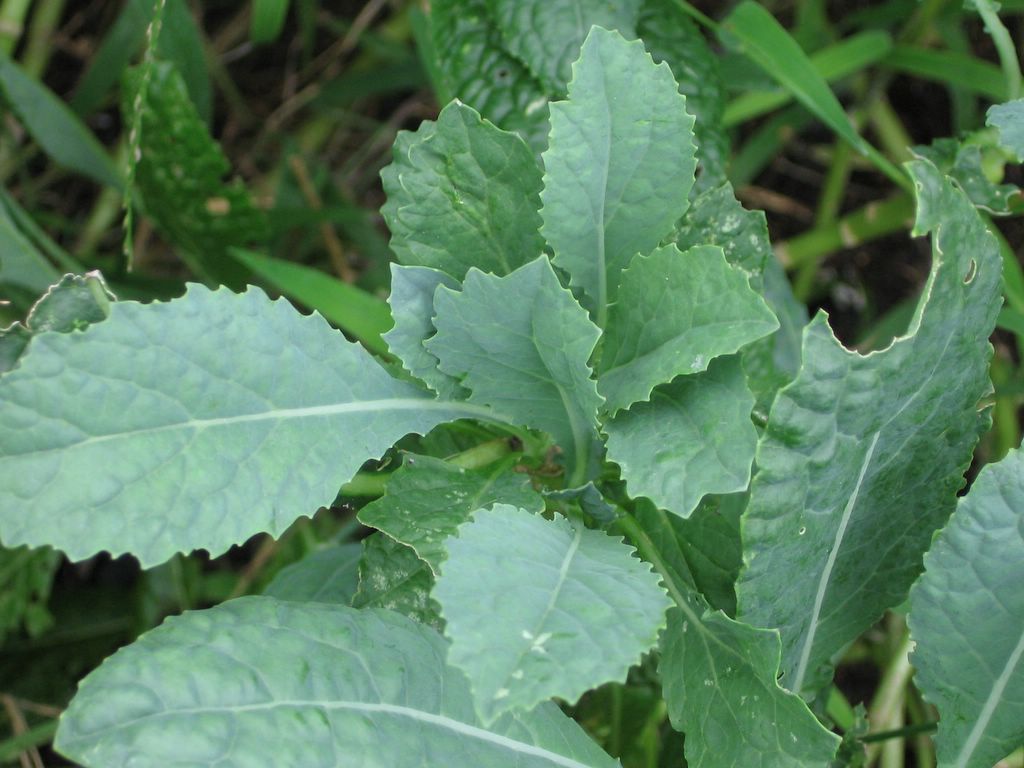
How to Grow Nero di Toscana Cabbage (aka Tuscan Kale, Cavalo Nero, Lacinato Kale, Dinosaur Kale) from Seed and What To Do with It


Realization Of The Day:
Nero di Toscana Cabbage is known around the world by several other names, including Black Palm Cabbage, Cavalo Nero, Black Kale, Tuscan Kale, Lacinato Kale, and Dinosaur Kale. But it really should be universally called Cat Cabbage because I swear this stuff has nine lives.

Regular readers know that I am entwined in a passionate love affair with Nero di Toscana Cabbage. It is easy to grow from seed and puts up with heat waves, cold snaps, long humid summers, with nary a complaint. But no matter how deep my feelings for it run, year in and year out, this delicious, easy to grow mainstay in my kitchen garden suffers through much more than its fair share of distress.