Showing posts with label greenhouse gardening. Show all posts

Tuesday, April 14, 2009

Direct Seeding Lettuce in the Garden and How to Thin Lettuce Seedlings: By Picking the First Salad of the Season!


Baby Tom Thumb Lettuce in the Greenhouse

Back on February 20th, I scattered a spot about two feet square with Tom Thumb lettuce seeds leftover from 2008, sprinkled a thin layer of compost over them, and watered well. Because lettuce seeds don't seem to keep well for me, I sowed them more thickly than I normally would. Next to it, I scattered the rest of a packet of 2008 Winter Lettuce Mix in about the same size area.

On the other side of the Tom Thumb I direct seeded a small patch of mache (corn salad), which is one of the most (if not the most) cold tolerant salad greens you can grow. I've had volunteer mache sprout up in the greenhouse in the middle of winter. I figured I was probably pushing my luck planting in the greenhouse in late February, though, because mache doesn't like the heat, and it will quickly warm up to 100 degrees in there when the sun is shining. No matter—the 2008 seeds were a no show anyway. I've ordered more and will try again in the fall, probably sowing half the seeds in the greenhouse and half outside in a raised bed. I adore mache's nutty flavor and delicate rosettes of leaves.

I had much better luck with the lettuce seeds. It was a slow start sprouting (as of the
February 28th snowstorm there was no sign of anything coming up yet), but that wasn't surprising given how cold the soil was. A lot of times you're actually better off planting early spring crops like peas a week or two later than you think you should because they'll sprout faster and then catch right up to the earlier planted seeds, which is very good news for gardeners like me who are perpetually behind with everything. This is probably what happened with the lettuce.

As you can see, the Tom Thumb lettuce came up nice and thick, and on April 6th I picked enough tender baby plants to make a small, simple salad. It was wonderful. I'm a sucker for any butterhead variety, and while I've grown this type before, some quick fact checking in my seed catalogs has made me realize that I need to give it a little extra attention this year to find out just what this stuff does when given the space.

Pinetree Garden Seeds (where these seeds are from) says that Tom Thumb (47 days) "actually produces a full butterhead in a relatively short period of time. Six to seven inch heads have firm structure and compact habit. Leaves are dark green and the entire head wil make a large salad for one." This year Pinetree started labeling all of their heirloom varieties, but Tom Thumb isn't marked as one.

The Baker Creek Heirloom Seeds catalog, however, describes Tom Thumb as an heirloom lettuce that dates back to the 1850s and "makes small cabbage-like green heads, only 3" to 4" across." They say it's very tasty and "a winner for classy markets!"

I don't recall the leaves ever being particularly dark green, but maybe I just never paid attention. And now I'm curious about the size. In order for these plants to form those soft butterheads and reach maturity, though, they'll need a lot more space. Instead of thinning out lettuce plants when they've barely sprouted, I wait until they're big enough to eat. Then I pull some of plants up, gently tearing off the roots as I go, which means no dirt in the kitchen and tasty snacks for our foodie chickens—which have been multiplying for spring.

This gives the remaining plants some elbow room, which they quickly grow into. Two days after that first picking I took the photo above, and you can hardly tell we've already started eating the spring lettuce crop. A week later it was time to harvest again.


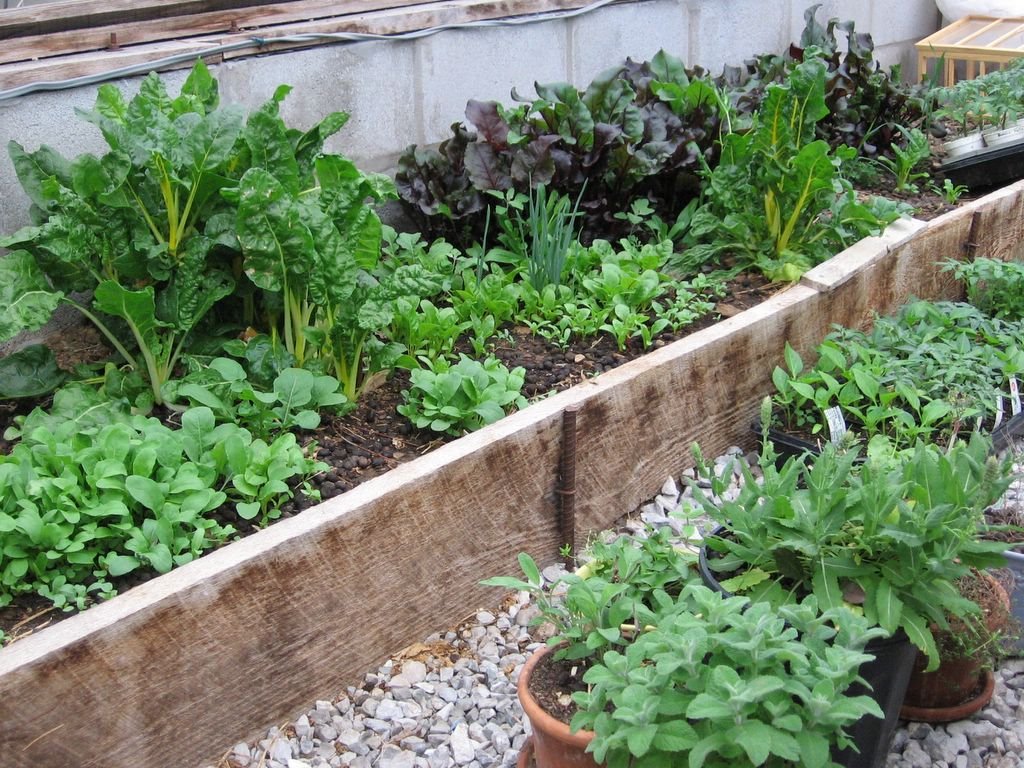
Great Greens in the Greenhouse, Including an Overwintered Swiss Chard Plant

The Winter Lettuce Mix, also from Pinetree Garden seeds, is to the right of the Tom Thumb in the photo above and is looking pretty good, too. I think we'll thin a little bit of it for tonight's dinner.

Are you enjoying spring salads yet? And have you ever grown Tom Thumb lettuce?

Related posts:
How To Easily Grow Your Own Gourmet Lettuce From Seed
Sublime Salads for Those Short on Time, Space, and Sunlight
On Loving Lettuce & Eating Salad for Breakfast
5/24/06: Mixed Baby Lettuce in the Garden & Eating Local
11/13/06: Petite Rouge Heirloom Lettuce in the Garden
5/8/07: Big Boston Lettuce in the Greenhouse

© Copyright 2009 FarmgirlFare.com, the going green foodie farm blog where we're looking forward to hopefully being able to enjoy freshly picked lettuce three times a day in the next month—because overindulging in spring is the only way to survive the hot summer and early fall without any!

Sunday, March 09, 2008

Herbs In & Out Of The Garden: Tips For Growing & Using Rosemary


Rosemary thriving in the homemade greenhouse despite single digit temps.

This was supposed to be a quick post about one little plant in the greenhouse and a new lamb recipe on my food and farm blog, Farmgirl Fare, but somehow it turned into a rambling rosemary learning experience. Now if only I could get my rosemary to ramble this much.

It took me a long time to get up the guts to put a rosemary plant in the ground. I used to keep it in a pot - setting it out in the garden when it was warm, and then moving it into the greenhouse in fall.

When it started getting really chilly, I would bring the pot indoors and set it a few feet from the woodstove in the living room, next to the only available window that receives any measurable sunlight. Within days it would start happily putting on cheerful new growth, and then several weeks later it would die.

Each spring I would buy a new little rosemary plant and the cycle would begin again. This went on for years.

Finally two autumns ago I decided that I should take my chances and transplant my rosemary into one of the raised beds in my homemade, not airtight, and almost always unheated greenhouse instead of bringing it into The Shack. I was nervous, but I figured I had nothing to lose except my beloved little plant that I was planning to murder in a month or two anyway. So I did it. And boy am I glad that I did.


Fresh vs. dried rosemary - there's simply no comparison.

The little plant took off, and now I'm now able enjoy freshly picked rosemary all year long, even when there's snow on the ground. On winter nights I drape it with floating row cover, and when the temperatures really plummet I add an old bedsheet or lightweight blanket, held up off the plant with short sections of bamboo stakes. During the day I uncover it.

It's been as cold as 7 degrees F in there, and yet my rugged rosemary didn't even flinch.


I'm still not sure why I kept killing my rosemary plants in the living room; the gardening books and websites I looked at while working on the post make it sound like everyone except me is able to easily grow rosemary in pots both indoors and out. I know it's warm near the woodstove, but rosemary is a Mediterranean plant that loves heat.

This expert rosemary grower, however, says that when kept indoors rosemary prefers temperatures around 60 degrees. It's possible it was too close to the sometimes icy-cold window, or it might not have been getting enough sun. Or I may have watered it too much. Who knows.

I did relearn an important thing to keep in mind when growing anything in containers, and that is that even if you move them to a warm and sheltered spot, the roots are still much more susceptible to cold that they would be if they were buried in the ground.

A friend pointed this out when I called him last month for 9-1-1 herbal advice regarding the beautiful but now rather dead looking rosemary topiary I'd bought for myself last December after surviving an all day bakery building supply mission to Lowe's.

I assured him the plant hadn't frozen because it had been in the greenhouse and covered. But it was in a flimsy plastic pot that offered no protection from what I'd thought were tolerable temperatures. We learn by mistakes, and this year one of my goals is to stop killing rosemary.


Growing up I never cared for rosemary, despite the fact that we had an enormous rosemary bush in our Northern California backyard. But when I moved to the country and planted a large kitchen garden I was determined to grow it, along with several other herbs I never used, like sage.

There's just something so alluring about growing herbs, even if half of them are simply for show. After all, most gardens and landscaping are only for show.

I am trying to be a better herb eater, though, as evidenced my past pleas for help regarding
what to do with lemon thyme and purple basil. Anyway, somewhere along the line I fortunately developed a taste for rosemary, and now I love the stuff.


Fresh rosemary shines in these Herb Crusted Lamb Spareribs

I suppose this was inevitable since I raise sheep, and lamb and rosemary are a match made in culinary heaven. Unless we're quickly tossing some plain chops or leg steaks on the grill (it's so nice when your meat has enough flavor to stand on its own!), pretty much all the lamb we eat is has been seasoned with rosemary.

You'll find one of my favorite ways to combine rosemary and lamb (pictured above) in my recent post on Farmgirl Fare,
How To Cook Lamb: Onion & Herb Crusted Lamb Spareribs & Grilled Lamb Leg Steaks.

According to About.com: Gardening, the three fundamentals for successfully growing rosemary are: full sun (6 to 8 hours a day), good drainage, and good air circulation.

Rosemary doesn't require much attention, but to keep your plants from becoming scraggly you should prune them back hard after they flower in summer - just don't cut them all the way back to the old wood.


You can buy rosemary seeds, but germination of the best seed available is only around 20%. Instead, look for healthy, preferably organically grown plants at nurseries or natural foods stores. Or better yet, see if you can swipe some cuttings from a friend, then follow these easy instructions from Fine Gardening to root them.

My herb growing and bread baking pal Beth (aka kitchenMage), who lives in the Pacific Northwest where rosemary thrives, says she starts 50 to 100 rosemary cuttings each year and doesn't even bother using rooting hormone. If you're feeling particularly lazy, try plunking the cuttings in a glass of water and setting them on a sunny windowsill; there's a chance they'll develop roots.

Despite the fact that I grow several different types of basil, thyme, and mint, for some reason I've always thought of rosemary as just being rosemary. But of course it isn't.

From Creeping Rosemary, a tall ground cover that can cover eight to ten feet in diameter or trail down eight to ten feet from a second story balcony, to Blue Boy, that grows out only about 12 inches wide and rarely gets over six inches tall, to Shimmering Stars, a trailing rosemary with pink flower buds that open medium-blue to lavender and is great for making topiaries, there's sure to be a variety of rosemary out there to fit your every taste and space. You can read about several other types of rosemary
here and here (scroll down).

Easy Rosemary Focaccia 2 FarmgirlFare.com
Lamb burgers with rosemary, shallots, and feta on focaccia 'buns' (lamb burger recipe here and focaccia recipe here)

At least I was aware that rosemary has a life beyond lamb. This versatile, aromatic herb can be used in everything from salad dressings to sorbets. I made some scrumptious and easy rosemary focaccia recently (my first foray into focaccia!), and I created a separate category on del.icio.us just for rosemary recipes I hope to try someday.


This Pane di Ramerino (Italian Rosemary Raisin Bread) is another favorite way to enjoy rosemary.

Rosemary's usefulness extends far beyond the tastebuds, too. According to Rosemary Gladstar in her wonderful book, Rosemary Gladstar's Family Herbal: A Guide To Living Life With Energy, Health, And Vitality, "We've only begun to uncover the many uses of rosemary."

She goes on to say that this evergreen member of the mint family has long been renowned as a memory aid, produces a tonic effect on the nervous system, and is good for circulation. It also strengthens the heart and reduces high blood pressure.


According to Kitchen And Herb Gardener, an enormous beauty of a book by Richard Bird and Jessica Houdret, rosemary can be taken internaly as an infusion for colds, influenza, fatigue, and headaches, and can be applied externally in massage oil for rheumatic and muscular pain.

In addition, rosemary has been used for hundreds of years as a cosmetic herb for its benefical effects on the hair and skin. Infusions are used as rinses for dry hair and dandruff and added to bath lotions and beauty preparations.


You can include rosemary as part of an invigorating bath blend to help aching joints and tiredness, or when preparing a warm herbal footbath, which can help with headaches and mental stress. Its fragrance and texture also makes it excellent for use in potpourris and insect-repellent sachets.

Hmmm. It sounds like I need to add at least a few more rosemary plants to the garden. Don't worry - I'll be sure to let them know that murder isn't on the agenda.

So do you grow rosemary? How do you like to use it? If you've written about rosemary or shared a favorite rosemary recipe on your own blog, feel free to leave a link to your post in the comments section.

© FarmgirlFare.com, the greenthumb foodie farm blog where we figure that if you're gonna go to the trouble grow it, you might as well be able to eat it.

Wednesday, September 26, 2007

How To Grow Your Own Swiss Chard From Seed & Why You Should

Fordhook Giant Swiss Chard in the homemade greenhouse last November.

Looking for Swiss chard recipes? Here are some of my favorites:
What To Do With Swiss Chard—Hot Swiss Chard Artichoke Dip Recipe & Other Ways To Cook & Enjoy My Favorite Leafy Green
Healthy Swiss Chard Tuna Salad with Scallions & Kalamata Olives
Swiss Chard Cabbage Salad with Garbanzo Beans & Cottage Cheese
Swiss Chard and Artichoke Soup

Swiss Chard and Artichoke 'White' Pizza

The year I turned 30, I had two friends who turned 60, and I took full advantage of the situation. "Save me some trouble," I said, "and tell me the most valuable thing you've learned in the last 30 years."

The first one offered up a piece of advice I've tried to abide by ever since. He said, "Be happy, not resentful or envious, when good things happen to other people." But it was seven words of wisdom from the second friend that truly changed my life: "Always plant Swiss chard in the garden."

Monday, December 18, 2006

What's Growin' On 12/18/06: December Greenhouse Green


Swiss Chard & volunteer arugula

Realization Of The Day:
Things are still green in the greenhouse—but they are no doubt pretty confused. That storm I wrote about on November 30th did sift a pretty layer of snow over the farm, though not the 5 to 9 inches that were predicted (which was just fine by me). And I was right about our wet weather creek—it started running after just one day of rain, which almost never happens.

Plenty of ice followed the snow, and it got very, very cold. Like 0°F (or maybe even lower—I stop checking the thermometer when it drops below about 10) kind of cold. And the power was out for about 21 hours.

My somewhat reliable digital thermometer I have tucked in a raised greenhouse bed recorded a low of 20 degrees in there. But thanks to floating row covers, old bed sheets and quilts, and a little oil-filled radiator heater*, nearly all of my plants survived.

They spent some time in the dark (when I didn't bother to uncover them) and the taller ones are a little flattened, but they're alive and that's all that really matters. (Click here for a list of everything that's still growing in the the greenhouse right now.)

Then it got hot. Okay, not exactly hot, but that's how 66° feels in the middle of December after you've just spent the past couple of weeks clomping around with constantly cold toes and three or four layers of clothing on. We've been breaking heat records left and right. It's mostly been cloudy, but when the sun does out, it heats up very quickly in the greenhouse.

I can only imagine what the plants are thinking.

* These oil-filled radiator heaters are perfect for greenhouse use as they are very safe, easily moved, hard to tip over, have variable settings as well as an automatic thermostat, cost about $50, and don't use much electricity.

I only use mine on the coldest of nights, and although the greenhouse plastic cover doesn't hold the heat all that well, I think those few extra degrees do make a difference. I set it at 600 watts, so it only costs about 5 cents an hour to run. And of course if the sun comes out during the day, it'll automatically turn itself off until the air cools down again.

We have four of these heaters because they're so handy. There's a newer one right next to me here in my little office that can be set to the exact temperature you like. I put it at 60 or 65 degrees, shut the door on very cold nights, and it stays toasty in here without pulling in heat from the adjacent living room where the wood stove (our main source of heat) lives.

We also keep one in the tiny insulated well house, again set on low, but also attached to a simple outlet timer. It goes on for several hours each night and keeps the water holding tank in there, as well as the pipes, from freezing.

© FarmgirlFare.com

Saturday, April 15, 2006

What's Growin' On: 4/15/06


Realization Of The Day:
Sitting inside one's greenhouse during a rainstorm has a wonderfully soothing effect - even if it does mean that all of your big transplanting plans for the day have been scrapped. And the once dry laundry on the clothesline is now soaked. That's okay. Just focus on the lulling sounds of the raindrops washing all those little thoughts away. And besides, we really need the rain.