Sunday, September 16, 2007

Another Less Fuss, More Flavor Recipe: The Easiest Greek Salad Ever


This beautiful summer salad is so full of flavor it doesn't even need dressing.


The way I cooked, ate, bought, and even thought about food all changed dramatically when I left urban Northern California for rural Missouri 13 years ago. Most of this was a direct result of space and availability. Moving from a 900 square-foot cottage with a postage-stamp sized yard to a couple of hundred acres meant there was space for a large kitchen garden, space for chest freezers, space for animals to graze.

Availability was a different story. Relocating from one of the undisputed gastronomic capitals of the world to the middle of nowhere in middle America meant that a lot of food purchasing options disappeared. Order Chinese take-out or have a pizza delivered? Neither. Dash to the store for proscuitto, kohlrabi, sherry wine vinegar? Forget it. Buying parsley or cilantro means 80 miles of driving. One learns to adapt.

My food philosophy these days can pretty much be summed up by the phrase Less Fuss, More Flavor. And what that simply means is this: the better your ingredients, the less you have to mess with them.

Of course some might argue that growing two dozen types of salad greens or putting up 100 pounds of tomatoes or raising your own lamb and beef constitutes a fair amount of fuss. But the nice thing is that if you start with the best, then at the end of the day when you're tired and sore and starving to death, a meal fit for even the most gourmet gourmand can be ready in a snap.

A typical late summer dinner for us might include grilled lamb chops or lamb leg steaks (I love these!), the last of the French filet beans in the garden, and some freshly dug Yukon Gold potatoes (because the best way to store your potatoes is to leave them in the ground). Now sure, you could marinate the lamb for hours with garlic and fresh herbs and all sorts of other delightful stuff, make the delicious sounding but 4-step Warm Green Bean, Pancetta & Tomato Salad with Parmesan in the issue of Fine Cooking I had sitting on the kitchen counter for months (but never actually made), and turn the potatoes into some gorgeous, creamy gratin. But the point is, you don't have to.

More often than not, the lamb gets tossed straight onto the grill, and the beans and potatoes are cooked up (steamed just until tender and boiled, respectively) and served with nothing more than a little organic butter and some nice salt and pepper. Less Fuss, More Flavor allows you to be lazy in the kitchen—without anyone ever realizing it.

A crusty loaf of homemade crusty bread (I always bake three or four loaves at a time and freeze them) and an heirloom tomato salad round things out. Except for a platter of plain sliced tomatoes, which often appears at our table, you can't get much simpler than this bare bones Greek style salad.

So what's your favorite Less Fuss, More Flavor recipe?

Farmgirl Susan's Simplest Greek Salad
Serves at least one

This pared-down version contains just five ingredients, so using the finest of each is of utmost importance. Juicy, vine-ripened tomatoes are the key, which means this is a Summer Only recipe. Stuff yourself silly on it now, and let the memories keep you satiated through the rest of the year.


Most Greek salads call for various other ingredients, some traditional and some not. Everybody seems to have their own favorite version. I used to add olive oil and vinegar but don't bother anymore. I've listed several optional additions below, though none are necessary. I didn't even put salt & pepper in the batch pictured here, though I did add a large handful of chopped flat-leaf parsley.

If you're a nibbler like me, bear in mind that the more complicated the recipe gets, the longer you'll have to fill yourself up while putting it together. Many Greek salad recipes call for cutting the vegetables into large pieces, but I like them on the small side because I'm one of those people who wants a taste of every thing in every bite.

Garbanzo beans (chickpeas) aren't traditional, but I'm addicted to them and will toss them into practically anything when I'm not snacking on them straight from the can (I do rinse them first). Flavorwise, they fit right in here, and they give the salad a fiber and protein boost as well, which can be important if this ends up being your entire meal, like it was for me tonight.

Organic garbanzo beans are a bargain and should be a staple in everyone's pantry. You can find them in many places for under a dollar a can, including at Whole Foods Market, where they'll give you an extra discount if you stock up and buy a dozen cans at a time.


One large cucumber, cut into dice
Several vine-ripened tomatoes, preferably freshly picked, organically grown heirlooms (a variety of colors is nice), cut into small chunks
A handful of kalamata olives, pitted and coarsely chopped
A generous handful of fresh basil, chopped
A hunk of the nicest feta cheese you can find, preferably made from sheep's milk
Splash of brine from the olives or feta

Optional additions:
Garbanzo beans (chickpeas)
Salt & pepper to taste
Olive oil
Your favorite vinegar
Fresh lemon juice
Fresh garlic
Fresh oregano
Flat-leaf parsley
Anchovies, laid on top or a smidge of anchovy paste mixed in
Capers
Red onion
Sweet red peppers
Green bell peppers

Place cucumber, tomatoes, olives, basil, and half the feta cheese (crumbled) in a large bowl along with any desired additional ingredients. Gently toss with a large spoon until combined. Sprinkle with remaining feta cheese just before serving. Alternatively, you can whisk together an olive-oil based dressing and then toss it with the rest of the ingredients.

This salad tastes best if you mix it up and then let it sit for an hour or two at room temperature so the flavors can mingle, but it's delicious even in the making, which is of course how I always eat it.

Tomatoes lose their flavor when refrigerated, so don't make enough for leftovers—just mix up another batch.

Still have more tomatoes left? You'll find links to all my Less Fuss, More Flavor tomato recipes at the end of this post.

© FarmgirlFare.com, the freshly picked foodie farm blog where Farmgirl Susan shares recipes, stories, & photos of her crazy country life on 240 remote Missouri acres—and we never get tired of tomatoes, though each summer we try our very best.

Tuesday, September 11, 2007

What's Growin' On 9/11/07:
Welcoming Autumn With Open Arms


Sedum Autumn Joy Flowers Change Color As The Weeks Go By

Realization Of The Day:
And just like that summer ended.

What a change! It's like I went to bed last night and woke up in another season.

Yesterday was 84 degrees, hot and humid and still. Sweat poured down my face and biting insects attacked as I transformed one of the 4-foot by 8-foot raised garden beds from weed choked nightmare into beautiful bare ground so I can
sow seeds for fall greens. (That always feels so good, doesn't it?)

At dusk I had a sudden urge (brought on, no doubt, by the pound of leftover
pizza dough in the fridge) to harvest the bulk of my basil patch, and last night found me whizzing up two batches of my favorite pesto and swooning over freshly baked tomato pesto pizza long past the hour that will soon mark my bedtime.

This morning dawned cool and crisp and breezier than it's been in weeks. The air conditioner in my little office has been finally turned off, and the windows are wide open. Tonight it's supposed to drop down into the 40s. Autumn is blowing in, and I am welcoming her with open arms.

It's
happy hour in the garden. Cheers!

Want to see more?
You'll find all sorts of butterflies and other pollinators here. More flower photos can be found here.

© 2007
FarmgirlFare.com, the award-winning blog where Farmgirl Susan shares stories & photos of her crazy country life on 240 remote Missouri acres.

Monday, September 10, 2007

What's Growin' On 9/10/07:
Planning & Planting The Fall Garden


Golden California Wonder Pepper Ready To Pick

Realization Of The Day:
The best thing about this year's summer gardening season is that it's almost over.

Spring wasn't real great either, but it did give me my best spinach crop ever (I ate spinach salad for weeks from one 4-foot by 8-foot raised bed), as well as that
long and glorious lettuce season. I had so much lettuce I was eating it for breakfast. And of course in spring there's always the prospect of all that glorious summer bounty to come. Which mostly didn't. It's no wonder I haven't written anything here in months. (Welcome to all the new subscribers!)

I did learn a few things, though, including the fact that I really need to focus on growing more fall and winter crops. Now I just need to plant some.

I was shocked the other day when I realized I'd taken
this photo of gorgeous, freshly picked autumn greens last year on October 4th. I've been so busy watering and sweating to death over the past couple of months that I didn't start any seeds for fall. No pak choy, no Swiss chard, no lettuce, no endive or escarole, no spinach, no kale, no turnips, no beets, not even any of my beloved Nero di Toscana cat cabbage
.

Fortunately it shouldn't be too late to plant an autumn garden here in southern Missouri. The official frost date isn't until October 15th (though ours often arrives earlier since we're tucked down in a little valley), and the weather can be fairly mild into November. All sorts of salad greens, as well as other vegetables such as kohlrabi, cabbage, and brussels sprouts thrive in cooler weather, and many taste better if they've been subjected to a couple of frosts.


Greenhouse Permanent Arugula Bed On November 8th, 2006

Last winter as I harvested arugula leaves from the same big bug-free plants for weeks without them turning bitter or bolting, I realized that this easy to grow green actually
thrives in cold weather.

In areas such as the South and the West Coast, you should be able to plant now and continue eating from your garden straight through winter and right into spring.

We're still seeing temperatures in the mid 80s on
the farm, but yellow leaves have begun speckling some of the trees, and the nights are finally cooling down. We've even had some much needed rain. Best of all, the last chigger bite of the year is thankfully in sight.

My appetite for tending to my garden--and my garden journal--has returned. So if you'll excuse me, I have some serious weeding and seeding to do.

How did your summer grow? Successes? Failures? Lessons learned you can pass on to the rest of us?


Coming Up (and this time I really mean it):
--The Easiest Greek Salad Ever
--How to grow Swiss chard from seed, plus two of my favorite Less Fuss, More Flavor Swiss chard recipes
--What I learned this year about growing garlic
--Review of a new dandy little gardening book

Ideas & Inspiration For Your Autumn Garden:
My Review of The Vegetable Gardener's Bible, my favorite gardening book
Building My Inexpensive Greenhouse
Planting My Fall 2006 Garden Part I
Planting My Fall 2006 Garden Part II
Planting My Fall 2006 Garden Part III
How To Grown Your Own Gourmet Lettuce From Seed: It's easier than you think!
How To Go From Seed To Salad Bowl In Less Than A Month: Growing arugula, lettuce, and more, even if you don't have an actual garden
How To Grow Beets From Seed & Why You Should
How To Grow Turnips From Seed And What To Do With Them
How To Grow Endive & Escarole From Seed And What To Do With Them
How To Grow Nero di Toscana Cat Cabbage From Seed And What To Do With It
How To Make It Rain On Your Garden
Pollinators In The Garden

Enjoying The Late Summer Harvest Now:
My Less Fuss, More Flavor Fresh Pizza Sauce
Savory Tomato Pesto Pie
Tomato Pesto Pizza, My Favorite Basil Pesto Recipe, & The Simplest Tomato Salad
Three No-Cook Summer Recipes:Mexican Jumping Bean Slaw, Easy Vegetarian Tacos & High Kickin' Creamy Tomato Dressing
Baby Cream Cheese & Tomato Sandwiches On Italian Black Olive Cheeks
My Seven Second Tomato Glut Solution
Colors Of Summer Salad
Summer In A Bowl
Making & Using Arugula Pesto
My Super Simple Spinach Soup Recipe
Caramelized Beets With Garlic
Herbed Yogurt Cheese Recipe & How To Make Homemade Yogurt
Fast Farm Food: Lettuce For Breakfast? Why not!
My Basic Summer Squash Soup Recipe
My Simple Summer Harvest Soup
My Simple Summer Harvest Soup--The Autumn Version
The Easiest Broccoli Soup Ever
Apple Blueberry Crumble Bars
Just Peachy Blueberry Breakfast Bars

And Later:
Don't Cut Your Basil Season Short!
How To Freeze Sweet Peppers
How To Freeze Zucchini & My One Claim To Fame
What To Do With All Those Green Tomatoes? Make My Easy Salsa-Style Green Tomato Relish!
Quality for Keeps: A Comprehensive Guide To Freezing Vegetables from the University of Missouri Extension Center
The Ball Home Canning Basics Kit includes everything you need get started canning.
I can't imagine life without a FoodSaver and use mine to seal everything from green beans to wild venison to chainsaw chains (it keeps them from rusting). I've found it's more economical to make my own custom bags using two different sized rolls of the FoodSaver bag material.

© 2007 FarmgirlFare.com, the award-winning blog where Farmgirl Susan shares stories & photos of her crazy country life on 240 remote Missouri acres.

Sunday, July 01, 2007

How To Grow Your Own Gourmet Lettuce From Seed - It's Easier Than You Think!

Jericho Lettuce In My Garden On May 8th

Looking for lettuce growing tips? You'll find even more in my post, Lettuce and Arugula in the Garden, with Step-by-Step Photos Showing How To Grow Arugula from Seed in Less than a Month. Happy growing!

I don't think about salad the same way normal people do. I've even started eating it for breakfast. You can read more about this obsession on my food and farm blog, Farmgirl Fare, in a post called On Loving Lettuce.

Lettuce was one of the few things I managed to plant on time this year, and am I glad I did. It's an iffy spring crop in southern Missouri. We usually have at least a few days in the 90s in April—which in itself can be enough to ruin your crop—and it's always a toss up as to whether May will behave itself and stay mild or jump headfirst into summer. This year it behaved, and I harvested gorgeous lettuce every day for weeks.

Today I enjoyed the last of my stash in the fridge, and my salads will now be lettuceless at least until early fall. But if you live in a place where summers are mild (oh how I envy you!), it's not too late to plant, and growing your own lettuce from seed is easier than you might think.


Merveille de Quatre Saisons Lettuce on May 8th

You can tuck a little lettuce almost anywhere, even in spots that are mostly shaded. The only pests that touch the lettuce in my organic kitchen garden are ravaging rabbits. If slugs or snails are a problem in your area, a sprinkling of diatomaceous earth on and around the plants should take care of them.

Diatomaceous earth is an all-natural pesticide made of finely ground fossils of prehistoric freshwater diatoms and can be used indoors and out to kill all kinds of creeping and crawling insects. We buy food grade diatomaceous earth in 50-pound bags and feed it to our livestock (and even the dogs) as a natural wormer.

Don’t have a 'real' garden? Lettuce will happily grow in containers, and since it doesn’t require two feet of soil depth, something short and wide is ideal, such as a plastic dish tub or one of the large plastic bus tubs restaurants use to hold dirty dishes.

For years my lettuce planting schedule went like this: start numerous little flats of seeds in mid-winter, only get around to transplanting a small fraction of the tiny seedlings into individual plugs, then only get around to transplanting a small fraction of those into the garden.

I now take a much lazier approach—and end up with a much bigger harvest.

Simply scatter your seeds onto some nice dirt (compost and manure are excellent soil amendments), then sprinkle them with a light layer of soil or compost, barely covering them. Water well, then sit back and wait, daydreaming of the beautiful bounty you are bringing to life.


You can begin harvesting after only a few weeks—just snip what you need with scissors and leave the plants to continue growing. What I've started doing is sowing the seeds very thickly (which virtually eliminates weeds), then as soon as the plants have a few bite-sized leaves I start to thin them out. And I just keep thinning.

I reach in, pluck out a few of the crowded plants from several different spots, and I swear by the next day the remaining plants have already taken over the empty spaces. You can see in this photo how big the plants with more space have already become.


Newly Planted Lettuce Bed On March 21st

One of the best things about growing lettuce from seed is that there are dozens of varieties available. While the phrase 'picture pefect' rarely applies to my garden unless I’m daydreaming, I did do some aesthetically pleasing, taste-test planting this year.

I divided a 4' x 8' raised bed into eight squares and planted a different type of heat tolerant, slow-to-bolt lettuce in each. I separated the squares with rows of French Breakfast and Easter Egg radishes, which are easy to grow and ready in under a month—just be sure to thin the young seedlings so the rest will have enough room to mature.


Apart from the Red Deer's Tongue, a loose head bib type variety believed to have originated in the mid 16th century, that was a no-show, my experiment was an eye-pleasing, tasty success. The other varieties I planted were Buttercrunch, which I adore; Gentilina, an Italian variety with bright green, frizzled, leafy heads; Jericho, a crisp, sweet cos type bred for the deserts of Israel and pictured at the top of this post; New Red Fire, which has deep red frilly leaves and is extremely slow to bolt; Merveille de Quatre Saisons, a reddish green bibb type; Tom Thumb, which produces a 6" to 7" dark green butterhead in 47 days; and Winter Density, a compact 8" Romaine with thick dark green leaves full of flavor.

Can’t make up your mind which kind of lettuce to plant? Packets of salad mixes are the way to go. I’ve been growing the Rocky Top Lettuce Blend from Baker Creek Heirloom Seeds for years.


Pictured here is a 4' x 8' raised bed of Baker Creek’s European Mesclun Mix I planted in late March that went gangbusters (the closeup photo further up is of this same bed). The Baker Creek catalog says this colorful mix, which includes lettuce, radicchio, arugula, endive, orach, mizuna, kale, mustard, and corn salad, is a favorite with market growers and has flavors that range from sweet-mild to sour-hot-tangy. Talk about some truly gorgeous salads.

Another easy to grow from seed heirloom variety of lettuce I like is Freckles, which you can read more about here.

The main thing to remember when growing lettuce is that heat is its bitter enemy— literally. Even a few days in the upper 80s or 90s can have your whole crop tasting terrible. This is very, very depressing.

A partly shaded garden spot is best. The next best thing is to create some comfortable shade for your plants. If the thermometer reads 90 degrees in the shade, it'll feel a whole lot hotter than if you're standing in the sun for eight hours. You can learn more about how I create garden shade in Gardening on the Cheap: How To Quickly and Easily Shade Lettuce and Other Plants and Why You Should.

If you’re growing in containers, you can move them in and out of the sun. Put large, heavy pots on wheeled bases for effortless rearranging—a trick I learned from my friend Cookiecrumb, who successfully grows containers of tomatoes on a small condo patio by rolling them into the sun.

On the other end of the thermometer, lettuce is quite cold hardy and can survive light frosts. I’ve had uncovered lettuce subjected to 24 degrees, and it thawed out just fine once the sun hit it. Floating row cover is wonderful stuff that will give you about 5 degrees of protection, while still allowing light and rain to penetrate. If you treat it well, it can last for years. An old bedsheet draped over your plants is another easy way to protect them.

So what are you waiting for? Sow some seeds today, and you’ll be harvesting glorious green bounty in less than a month. Just make sure you plant enough—I’m sure I can’t be the only lettuce overeater out there.

More posts about some of my favorite things to grow:


Related articles & resources:


—The Vegetable Gardener’s Bible, 10th Anniversary Edition by Ed Smith. This has been my favorite gardening book for the past 7 11 years, and I highly recommend it for kitchen gardeners of all levels, especially beginners. It's full of wonderful tips and is always the first book I turn to when I have a garden question.

—Baker Creek Heirloom Seeds, a wonderful family owned company located here in Missouri, sells over two dozen varieties of lettuce in packets of 700 seeds for $1.25 to $1.50 each. Salad blend packets contain 1,200 seeds and cost $2.50. I’ve been buying seeds from them for years. They offer over 1,000 types of non-hybrid, non-GMO, non-treated, non-patented and often very rare seeds from all over the world.

—Pinetree Garden Seeds in Maine is another company I’ve been ordering from for years. They specialize in smaller packets of seeds for the backyard gardener and offer many varieties of lettuce seeds, including a few of their own special mixes. Packets of 500 seeds sell for just 65 to 95 cents each. They also sell all kinds of reasonably priced garden & kitchen tools and gadgets.

© 2007 FarmgirlFare.com, the dirty handed foodie farm blog where Farmgirl Susan shares photos & stories of her crazy country life on 240 remote Missouri acres.

Thursday, June 21, 2007

What's Growin' On: 6/21/07


Flowering Radishes In The Garden

Realization Of The Day:
I need to put up something here--anything. Even if it is just a picture of a couple of little radish flowers.

I have no idea how it got to be the first day of summer already. It seems like just last week I was covering up plants in the greenhouse and fretting about that nasty hard freeze in April. Okay, maybe not last week. If you're feeling overwhelmed by the flurry of passing time--and unflurry of activity in your garden--know that you're not alone.

I started InMyKitchenGarden.com in March 2006 as a personal online gardening journal, a sort of side dish to Farmgirl Fare, my food and farm blog, that would hopefully help me keep better track of my efforts in the garden. Last year was a definite success. It's wonderful to be able to look back at all the growings-on, especially since I have to admit I've already forgotten many of the details.

I'm also a little in awe. How in the world did I have time to not only do so much in the garden, but document it all as well? Lambing Season 2007, my biggest and busiest yet, had something to do with it I know, but that excuse only lasts so long. And it ended quite a while ago.

Nearly every day I've taken photos of the garden, had all sorts of realizations, and written up dozens of blog posts in my head. But they must have been rootbound because none of them ever made it as far as my typing fingers.

I consider myself incredibly behind in the garden this year (I actually bought tomato and pepper plants for the first time since I've lived in the country!), but at the same time, a lot has been happening.

In early March I seeded an entire 4' x 8' raised bed with spinach and had my best crop ever, harvesting scrumptious baby leaves for at least a month and a half.

I spent weeks and weeks picking all sorts of gorgeous lettuces that had so much flavor I often found myself shaking my head in disbelief.

I grew two types of radishes, ate my fill sliced in salads, then waited until there was enough to use in a recipe for braised radishes a Farmgirl Fare reader had suggested, prepped the harvest, and promptly forgot about it in the refrigerator--then learned that even baby chicks will turn up their beaks at aged radishes.

I put in a new strawberry bed.

I foolishly planted seeds of my two of my favorite varieties of skinny little bush beans in late March, Straight'N'Narrow and Masai, which all sprouted (something that rarely happens for one reason or another) and then all promptly froze to death, despite my covering them with floating row covers and old bedsheets.

I just got around to re-planting both types of beans this past week.

I did, and am still doing, a lot of bizarre experimenting, mostly due to running late and laziness.

I succeeded in having Swiss chard either ready to pick or in the fridge ready to be eaten almost every single day of last fall, winter, and spring.

I totally forgot to start any basil seeds.

I stopped long enough to notice just how pretty tiny radish flowers are.

I finally put up something on my long neglected garden blog.

It should only get easier from here. Happy first day of summer. And a big hello to all the new readers and e-mail subscribers.

Coming Up:
--How to grow your own gourmet lettuce--it's easier than you might think!
--How to grow Swiss chard from seed & why you should, plus two original Swiss chard recipes I'm now addicted to.
--More regularly scheduled posts--I hope.

Monday, April 23, 2007

How To Grow Beets from Seed & Why You Should

Last spring I experimented and sowed baby beet seeds between rows of onions.

February 2012 Update: You'll find more about growing beets in this new post, Garden Journal 2/25/12: Sorting Through My Seed Stash, Beet Growing Tips, and Planting by the Moon.

I have no idea why I first started growing beets, since I had never eaten one in my life. The only time I had come face to face with any was during childhood, when scary looking, reddish-purple discs would sometimes appear on restaurant salads.

Fortunately my mother was quick to reach over and stab the offending things with her fork, always murmuring "I love beets!" as she popped them into her mouth.


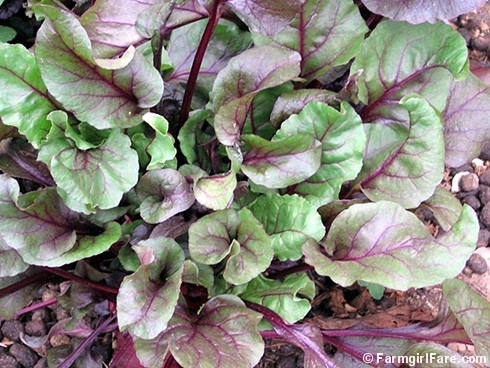
Even if you don't like beets (those scary canned specimens don't count), you should still sow a few rows of beet seeds in your garden this year. Why? Well, just look at this photo of Bull's Blood beet 'greens' overwintered last year in my barely heated Zone 5 homemade greenhouse. Has there been anything so beautiful gracing your salad plate lately? I didn't think so.

Beets are not only very easy to grow but are also extremely good for you. Beets from the garden are like nothing you will find in the supermarket produce aisle. And while I have been known to devour an embarrassingly large plate of Caramelized Beets & Garlic (the only way I ever cook beets), I mainly grow beets for their greens.

Bull's Blood is one of my favorite varieties to grow. Its roots are sweet and tasty, especially when small, and they have lovely pink rings inside. But I recently learned that this popular heirloom is actually grown primarily for its baby leaves, which are ready in as little as 35 days and are, according to my Baker's Creek Heirloom Seeds catalog, "all the rage in salads."

The folks at High Mowing Organic Seeds claim that they're organic gardening pioneer "Eliot Coleman's choice for a red leaf in winter harvest salad mixes." I had no idea I was so chic.

Beets come in all kinds of shapes, sizes, and even colors. Along with my beloved Bull's Blood, this year I'm growing several different other types, including three new-to-me heirlooms: Golden, Chioggia, and Flat of Egypt. Not quite ready to grow your own beets? (Why on earth not?) You can often find interesting varieties of beets at farmers' markets.

Direct seeding in the garden is the easiest way to grow beets. They can be grown in most types of soil but prefer that it be deep, well-drained, and includes plenty of organic material, such as compost or aged manure. Too much nitrogen will cause beets to produce lots of greens but little roots.

Soak beet seeds in water for 24 hours before planting to aid germination. Beets prefer cool weather. For an early summer crop, sow seeds in a sunny spot, 3 to 4 weeks before your last frost.
Plant seeds 1/2-inch deep, 2 inches apart if growing for greens, 3 to 4 inches apart if growing for the roots (but you can still harvest the greens, too).

Sow seeds again in late summer for a fall crop. In frost free areas, you can do a third planting in September for a February harvest.

If you prefer a smaller, continuous harvest instead of one big one (and if you're more organized than I am), sow some of your seeds every two weeks instead of all at once.

If you're minding the moon signs, sow beet seeds in the third quarter, under the signs of Cancer, Scorpio, Pisces, Libra, and Capricorn. I plant by the moon as best I can because I need all the help I can get. Astrological Gardening The Ancient Wisdom of Successful Planting & Harvesting by the Stars by Louise Riotte is a great book on the subject.

Good companions for beets: bush beans, the cabbage family, corn, leeks, lettuce, lima beans, onions, and radishes.

Bad companions: mustard and pole beans. Want to learn more about using the natural benefits of plants to protect and support each other? Louise Riotte's Carrots Love Tomatoes: Secrets of Companion Planting for Successful Gardening is a classic guide with over 500,000 copies in print.

Cluster of beet greens, all sprouted from one seed - FarmgirlFare.com

Each beet 'seed' is actually a dried fruit made up of 2 to 6 individual seeds, so seedlings will sprout very close together. Everything in this photo came from one seed cluster.

If you plan to harvest the beet roots as well as the greens, thin the seedlings when they're about 2" high, choosing the best looking one in each cluster. Use scissors to snip the seedlings at soil level so as not to disturb the remaining plant. Be sure to toss the tender young leaves into salads.

Thinning beet greens in the kitchen garden with baby Cary
Thinning beets with Baby Cary back in 2006.

When growing beets for greens, you can thin the plants over time as they grow larger, as pictured above, giving you a bigger harvest.

The weedy raised beet bed supplies goodies for the chickens, me, and the compost bin.

Beets require even moisture, so don't let the soil dry out. Mulch will help keep the soil moist and the beets cool, as well as discourage weeds; I like to use grass clippings. I also sprinkle compost over the newly planted seeds and around the sprouted plants. You can sow your beets next to taller companion plants that will shade the soil, but be sure you don't end up blocking out all the sun (been there, done that).

Harvest beet roots when they're 1½ inches to 3 inches in diameter for optimum flavor, tenderness, and texture. According to The Vegetable Gardener's Bible
(my favorite gardening book for the past 12 years that still teaches me something new every time I open it), to minimize 'bleeding' when removing the greens, which can reduce moisture content in the root, avoid cutting them off. Instead, hold the root in one hand and twist the tops off with the other hand. (I read this tip after cutting the greens off the beets in the photo below.)


A tiny but tasty beet harvest.

One of the best things about homegrown beets is that even if you abuse them, they will still taste delicious. The hardy plants will put up with frosty mornings as well as hot and humid summer days. The beets you see here were planted late and thinned too late. They were also left in the ground until July 31st, so some of them ended up much too big—and looking a little strange.

I then stuffed my poor harvest in a plastic bag and stashed it in the refrigerator for two months because I wanted to save it for my mother's upcoming visit. I was sure the beets would be tough and woody (not to mention half rotten), but I should have known better—beets from the garden do not hold a grudge. They were wonderful.

More posts about some of my favorite things to grow:
Favorite Heirloom Tomatoes to Grow—Mine and Yours
Growing Onions in the Garden
Growing Short Day Onion Varieties from Purchased Plants
Harvesting Spring Onions Grown from Purchased Plants
Endive and Escarole in the Kitchen and Garden
Growing Lemon Cucumbers from Seed
Growing Miniature White Cucumbers from Seed
My Favorite Heirloom Carrots (so far) to Grow from Seed: Parisienne

How to Grow Swiss Chard from Seed
How To Grow Nero di Toscana Cabbage (also called Dinosaur Kale, Lacinato Kale, Tuscan Kale, Cavalo Nero) and What to do with It
How To Grow Your Own Gourmet Lettuce from Seed (It's easy!)
How To Grow Arugula from Seed in Less than a Month
Tips for Growing & Using Rosemary Year Round

Recommended Reading: The Vegetable Gardener's Bible by Ed Smith. This has been my favorite gardening book since it was published in 2000, and I highly recommend it for kitchen gardeners of all levels.

© FarmgirlFare.com, the sprouting foodie farm blog where you know the beet goes on.

Tuesday, April 03, 2007

What's Growin' On: 4/3/07


It's A Good Thing They're So Cute

Realization Of The Day:
Lambing season has taken over my life!

Thirty-seven lambs born on the farm in less than a month, and not a single tomato, pepper, or basil seed started. Last year at this time, I was two weeks away from setting out tomato plants. (If you'd like to see what else was going on last year in my garden, simply click on the monthly archive links in the sidebar of the homepage).

This is usually when I start digging through the chest freezers, pulling out all the sweet peppers and tomatoes I've been hoarding through winter so we can make room for the next harvest (and usually finding all sorts of forgotten stuff in the process). For now everything in the freezer is staying right where it is.

The good news is that at this rate lambing season will be over soon, and I'll hopefully have more time to devote to the garden. I have managed to direct seed several beds with various spring veggies (and I even wrote down what I planted where!), so we won't have to live on just lamb chops and lamb burgers this summer. (Yes, we do eat some our grass-fed lambs. As Joe puts it, "Why go to all this trouble if we're not going to eat them?" And while my garden wouldn't be the same without all that amazing sheep manure--which trumps cow and horse manure by miles--I love the fact that we are able to raise flavorful, all-natural meat for our table, especially since it is far better than what you usually find at the supermarket--not to mention that it hasn't been traveled all the way from the other side of the world.)

I did see clumps of volunteer tomato seedlings poking up in a few of the raised beds the other day. This has already been a year of streamlining and experimenting, so now I'm thinking I might just be able to thin them out, then transplant some of them either into small containers (I use recycled styrofoam cups) or straight into the garden once they're a few inches tall. I have no idea what variety they are, but at this point I'd be ecstatic with anything as long as it's a ripe tomato.

From Garden To Table:
The two dozen Swiss chard plants that overwintered in the greenhouse have gone crazy. I swear they get bigger by the hour. I've been tossing the chopped leaves and colorful stems (use them like celery) into big salads every night, along with the latest crop of volunteer baby arugula (My Permanent Arugula Plot Plan has been a huge success! One of these days I hope to write more about it; in the meantime, click here to read my previous post that tells how you can go from seed to salad bowl in less than a month--no matter where you live).

Swiss chard is a 'cut and come again' vegetable, which means if you harvest just the outer leaves, the plant will keep producing new ones. Just a few of these both heat- and cold-tolerant plants can provide you with plenty of bounty for months.

Beyond The Garden Gate:
The dogwoods are are in bloom, and the steep hillsides of our little valley are full of happy white flowers. Last year I thought we had the best blooming dogwood season ever, but I think we've already topped it this spring.

Weather Report:
Yesterday it was 84 degrees and sunny. This morning started out much the same; by the time I was done feeding hay and doing chores I was drenched with sweat. Now as I type this at two in the afternoon, there is thunder booming overhead, a heavy rain is pelting on our old tin roof, and hailstones the size of fat peas are bouncing as they land on the lawn. Thursday night there is a chance of snow. Whenever I think our weather couldn't get any crazier, it somehow manages to do just that. And now the power has blinked off. I think I'd better go make sure none of those cute baby lambs are being swooped up and carried off by the blustery winds.

Sunday, March 25, 2007

What's Growin' On: 3/25/07


A Small But Determined Sign Of Spring

Realization Of The Day:
Spring will burst through anything.

When I first moved to Missouri, I read that you were supposed to do something (Plant potatoes maybe? Hunt for morel mushrooms?) when the oak leaves on the trees were the size of a squirrel's ear. I found this piece of advice both funny and odd. A squirrel's ear? Please. How are you supposed to know how big a squirrel's ear is? All I knew was that it had to be small. Really small.

But that's how spring starts out each year, isn't it? Small. Baby buds on the lilac bushes, delicate blades of grass, one tiny grasshopper. But just as you would have to look very closely at a squirrel to figure out the size of its ear, you have to look closely or you will miss so many signs of spring. I don't think I'll ever stop being amazed by how all those barely visible sprouted seeds in the garden turn into full grown beets and heads of lettuce and bushes dripping with beans and tomatoes. How can they do that? And how does the transformation seem to happen in only a matter of days? (Well, unless you're waiting for the first ripe tomatoes of the season.)

I don't know what size the oak leaves are right now, but I do know they're here (and the morels aren't--I checked this morning). And so is our lone clump of grape hyacinths in the front yard. I'd forgotten all about it until I nearly tripped over it yesterday as I was on my way back from one of my numerous lamb-checking trips to the barn. I was so surprised I actually said "When did that happen?" out loud. I love grape hyacinths, and I could have sworn they weren't there the day before. But as far as I know, unlike mushrooms, they do not pop up overnight. They were there alright, along with the oak leaves and the lilac buds and the itty bitty purple flowers I found sprinkled over one of the fenced pastures this morning. I just hadn't taken the time to notice them.

Spring is here, in all its glorious busyness. Slow down, slow down, slow down. You'll never figure out how big a squirrel's ear is if you don't.

From Garden To Table:
For the past few weeks I've been picking arugula and three varieties of Swiss chard that overwintered in the greenhouse and tossing them into the nightly salad bowl. Fresh parsley, too. Green has never tasted so good.

Wednesday, March 14, 2007

What's Growin' On: 3/14/07


First Of The Daffodils

Realization Of The Day:
Spring has sprung. Two days ago it was 80 degrees outside. We actually opened the windows to warm up the house.

Apparently Mother Nature doesn't care one bit that I am totally unprepared for spring. This photo was taken on the 8th and was one of only a handful of blooms. Now the yard is full of them. (Thank goodness for cheerful perennials that require no effort on my part.) When I mentioned missing the color yellow in my last post (written over a month ago? how is that possible?), I had completely forgotten that the first flowers to come up here are the daffodils. I guess Mother Nature does care about me after all.

If your gardening brain is still stuck in January like mine (why am I having so much trouble grasping the idea that it is March?) fear not--you are among friends. Well, actually you probably should be fearful. If we don't get a move on and start some seeds real soon, we're not going to have anything to eat in a couple of months.

It looks like this will be the year I plant nearly all of my seeds directly into my raised garden beds. I usually start dozens and dozens of types of seeds indoors (or in the greenhouse) in flats of little containers, but as far as the cooler season crops are concerned, I've missed the deadline by a longshot.

In a way it's kind of a relief. It'll be nice not to have those hundreds of rootbound, dying-to-be-transplanted seedlings staring guiltily at me every time I get near them. As of right now there are only about two dozen of them, and that's plenty. They're the broccoli seedlings I started way back in early January when I was sure this was going to be The Year Of The Massive Broccoli Crop. Not gonna happen. That one beautiful little broccoli head in the greenhouse? While it was covered with blankets and sheets during the single digit temps, something somehow sneaked under them and ate it. Munched the entire thing off, as well as all the tiny side shoots. I still can't believe it.

The scraggly seedlings had been bravely clinging to life under the flourescent shop light I have tucked under a bookshelf in my office while I spent weeks and weeks ignoring them. They nearly perished when I forgot to water them for, um, a while, but once I finally did they (of course) sprang back to life, so I sprinkled some compost around them and set them in the greenhouse. Maybe I'll get them transplanted into individual plugs. Probably not. I might try putting them straight out into the garden instead--save a step and some time.

The nice thing about broccoli plants is that even if you get yours in the ground too late for a decent head of broccoli to form, you can still harvest plenty of bounty. Yep, all those tender little leaves can go straight into your salad bowl. They're quite tasty, and you know they must be super good for you. Broccoli is one of the few vegetables where we eat only the florets--but there's simply no reason for that.

I did sow some seeds in the greenhouse last week--mostly lettuce. But I realized this morning that was probably a stupid thing to do, as the greenhouse will start heating up like crazy with these warm and sunny days. Lettuce is only too willing to turn bitter and bolt, which is why if I wanted a greenhouse spring lettuce crop, I should have started it back in, oh, January.

But of course that's where my gardening brain still is, isn't it?

Next week the moon will be in the first quarter, which is the best time to start most seeds (except squash, tomatoes, and peppers, but I'm going to anyway), as well as onions. I'll be starting seeds and planting onion sets (barring any unforeseen lambing crises) on the 21st and 22nd as they are the fertile days. Wondering what all this minding the moonsign business is? Click here to read more about it. But be warned--once you find out about all the "bad" times to plant, your gardening schedule might be thrown even more out of whack. If nothing else, it'll give you yet one more thing to fear. On the other hand, if you don't follow the rules and have crop failure, at least you'll have somewhere to lay the blame.

P.S. My apologies (once again) to those of you who asked questions in comments and haven't received a reply. If you're still wondering about something, you're always welcome to e-mail me: farmgirlfare AT gmail DOT com.

Sunday, February 04, 2007

What's Growin' On: 2/4/07


Realization Of The Day:
I love the colors of winter--the muted pastels of the fields and sky, the brilliant white of the snow (that is currently covering most everything). I do not find our winter landscape drab or depressing in the least, but it does have a certain subtlety to it. While spring and summer hit us head on from every direction with their flashy brilliance, you have to slow down and look for the colors of winter. For they are there. They most definitely are there.

That said, I must admit that by the time February rolls around, I catch myself yearning for yellow. Between its prevalence in nature during spring and summer, plus its tendency to fade behind behind the vivid greens and dazzling reds in the garden, I find myself taking this cheerful color for granted. But I suppose if it never disappeared, I wouldn't have the chance to miss it.

The plant in this photo is a volunteer mystery squash that appeared late last summer in one of my raised beds. I think it is actually some sort of weird hybrid of squash and gourd. Unfortunately it froze to death before I was able to harvest any of the little whatever-they-ares. But I do enjoy looking back at this photo in all of its yellow splendor.

Bizarre and puzzling plants in the garden can be fun, but to assure yourself an edible harvest all you have to do is order seeds from a reputable dealer. The good news is that I already placed and received my two large seed orders this year. The bad news is that the post I began writing about ordering seeds back in early January still sits unfinished.

I had planned to discuss some of the varieties of different vegetables I ordered, as well as some of the things I won't be growing this year. Maybe I'll get to it, maybe I won't. All that free time I thought I'd have this winter to catch up on last year's happenings in the garden has not yet materialized (though at least I have photos). And now it's already time to start seeds again.

Regular readers already know the two seed companies I love most--Pinetree Garden Seeds in Maine and Baker Creek Heirloom Seeds located right here in Missouri. I have been ordering from both places for many years and have never been disappointed.

Pinetree specializes in smaller seed packets for the backyard gardener. This means you can go crazy ordering and still possibly have planting space for everything--but no promises because many of their seed packets cost under a dollar, and it's very easy to add just one more, and one more, and oh-what-the-heck-I'm-sure-I-need-one-more. . . Pinetree also offers all sorts of reasonably priced (and hard to resist) garden gadgets and accessories, including floating row covers and my beloved Oriental Garden Tool.

Baker Creek has grown by leaps and bounds since it was started by 17-year-old Jere Gettle 10 years ago. They now offer over 1000 different kinds of heirloom seeds from all over the world and the most amazing collection of melon seeds you'll probably ever find. Prices are extremely fair, too, with most packets priced under $2.00. This is the place to go if you enjoy growing the obscure, the rare, and the just plain weird. Baker Creek also hosts two giant gardening celebrations a year and publishes a quarterly magazine called The Heirloom Gardener. More information about both is available on their website.

While both companies have excellent websites where you can easily place orders, I prefer to flip through old-fashioned catalogs. They're also nice to have on hand for later reference (not to mention late season orders). And many seed catalogs are chock full of helpful growing tips.

A great place to find answers to all your gardening questions (including the ones you've asked me that I haven't had a chance to answer--sorry!) is at Baker Creek Heirloom Seeds' iDigmyGarden.com. With nearly 2,000 members and over 20,000 posts, it's the Internet's largest forum dedicated to the heirloom gardener.

My favorite edible gardening book for the past 5 years has been The Vegetable Gardener's Bible by Ed Smith. Click here to read my review of it.

Not sure if you should take the seed starting plunge? Click here to read how you can easily and effortlessly go from seed packet to salad bowl in less than a month--no matter where you live.

And while you're waiting for me to tell you about my favorite varieties of veggies, why not share yours? Oh, and please save us some trouble and heartbreak--be sure to include the stuff on your No Way Never Again list, too.

Monday, January 08, 2007

What's Growin' On: 1/8/07


Whitey Goes Green

Realization Of The Day:
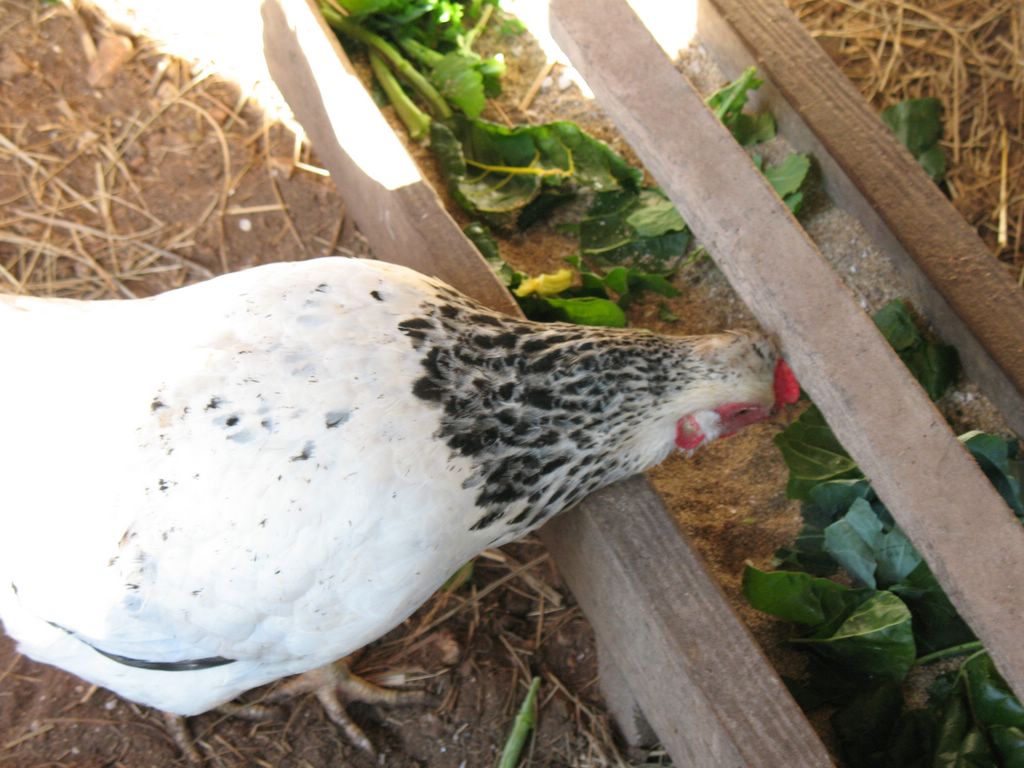
My chickens are foodies.

Harvest For The Henhouse:
A breakfast of freshly picked (slightly less than perfect) arugula, parsley, two kinds of Swiss chard, and a few giant broccoli leaves from my one lonely plant, all from the greenhouse and all heirloom and organic, of course. No bounty goes to waste around here. And I love knowing that plenty of dark green leafy vegetables are making their way into our farm fresh eggs. Now if only Whitey would find the time to go back to laying them. . .

Beyond The Garden Gate:
Have you voted yet?
The Food Blog Awards, hosted by the Well Fed Network, are going on now, and everyone is invited to vote for their favorite blog in each category. Click here for the complete list of categories and nominees. I'm thrilled that my main blog, Farmgirl Fare.com (which I consider In My Kitchen Garden to be a part of), is a finalist in the Best Food Blog--Rural category. Click here to check out my competition and cast your vote. The voting ends Tuesday January 9th at midnight EST. This is also a wonderful opportunity to discover some tasty new blogs.

Feel Like Shopping?
I've added several new items to my Farmgirl Fare Favorites Store at Amazon.com, as well as some new product categories, like Garden & Greenhouse Stuff and On My Bookshelf. Too cold to work in the garden? Why not curl up under a quilt with one of My Favorite Movies instead. Check back often, as my store is a work in progress. And since it's part of Amazon.com, you'll enjoy things like free Super Saver Shipping on thousands of items, totally secure ordering, easy returns, and of course great prices. If you'd like to read more customer reviews about any item in my store, simply highlight and paste the product name, click on Go To Amazon.com in the top right corner of the page, and paste the product name into the search box.

Right now you can Save $25 when you spend $125 or more on Kitchen & Housewares or Bed & Bath products offered by Amazon.com, including items purchased through my Farmgirl Fare Favorites Store. (A few products, such as All-Clad, do not qualify.) Just enter code CLEAROUT at checkout.

Coming Up:
It's seed ordering season!

Friday, January 05, 2007

What's Growin' On: 1/5/07


Realization Of The Day:
Things are definitely looking up in the broccoli department.

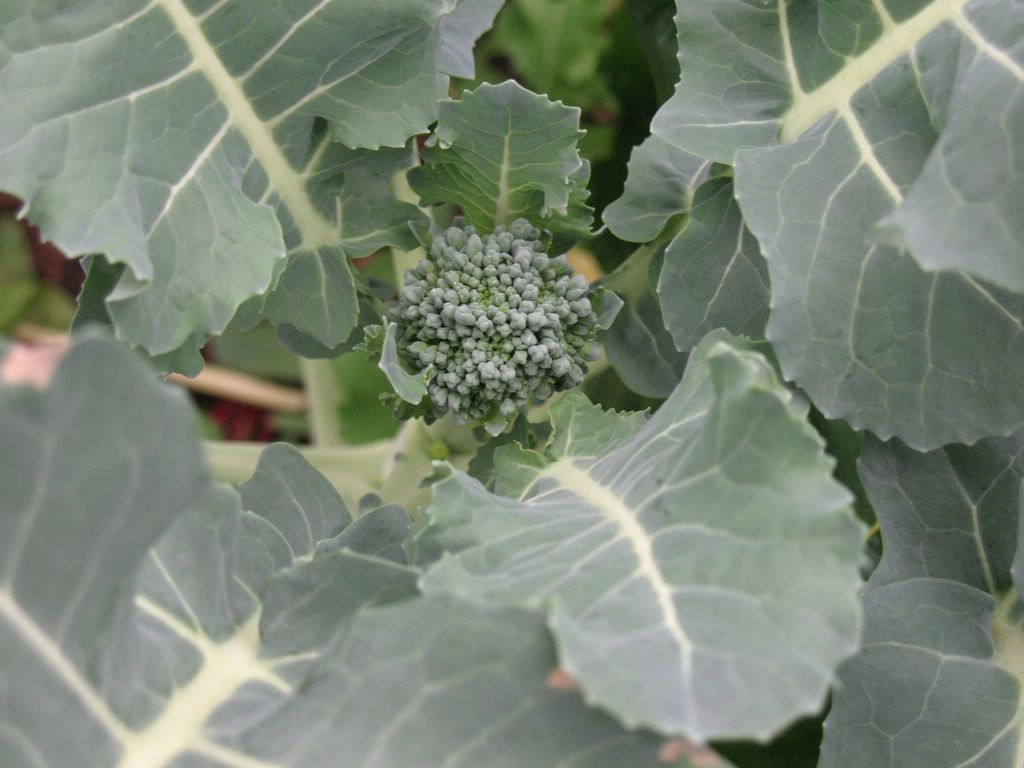
Some of my very favorite foods begin with a 'b': bread, brownies, biscuits & gravy--and broccoli. I absolutely adore broccoli. If I could only grow six things in the garden, one of them would be broccoli. And now, ten years after my only decent harvest (though not for lack of trying), it looks as if I actually can grow it.

I've never had broccoli in the January garden before, and I am just tickled. This photo was taken earlier today in the greenhouse. It is either Calabrese Green Sprouting (an Italian heirloom brought to America in the 1880s) or good old Waltham 29 (a standard, open-pollinated variety introduced in 1954). Unfortunately it is not surrounded by a dozen or so other plants that look exactly like it--it is surrounded by Swiss chard (which I also adore, but not in the same lovesick way as broccoli).

This was a lone seedling that I transplanted on a lark into one of the greenhouse raised beds sometime around the end of August. It was a volunteer that had sprouted up in a container of something else (I think a tomato plant), and I of course didn't have the heart to simply toss it into the compost bin--unlike the three containers of broccoli seeds I started last February. And am I sure glad I didn't--because the seeds I planted directly in one of the new beds on the south edge of the garden sprouted, turned into cute little seedlings with lots of potential, and were all devoured by deer or The Rabbit when I wasn't looking.


December 17th: The Day Of Discovery

I was thrilled when I noticed a tiny head peeking out from the enormous leaves several weeks ago. But while both the plant and the head have been steadily increasing in size, progress is slow. In my Pinetree Garden Seeds catalog (great seeds, great prices) it says that Waltham 29, for example, matures in 85 days. I'm never sure exactly when you're supposed to start counting the days, but this plant has now been in the ground for over 120, and it's still got a long way to go. I'm not complaining, but I am a little worried, as I read something about broccoli yesterday that I never knew. According to Ed Smith, author of The Vegetable Gardener's Bible (a wonderful book I highly recommend for any kitchen gardener), "long exposure to cold" may produce a tiny broccoli head, or button. Ack. I'm assuming that winter in Zone 5 qualifies as "long." We've already had temps down to zero degrees F, and I hate to say it, but it kinda looks like some of those buds are threatening to open real soon. It will be interesting to see what happens.


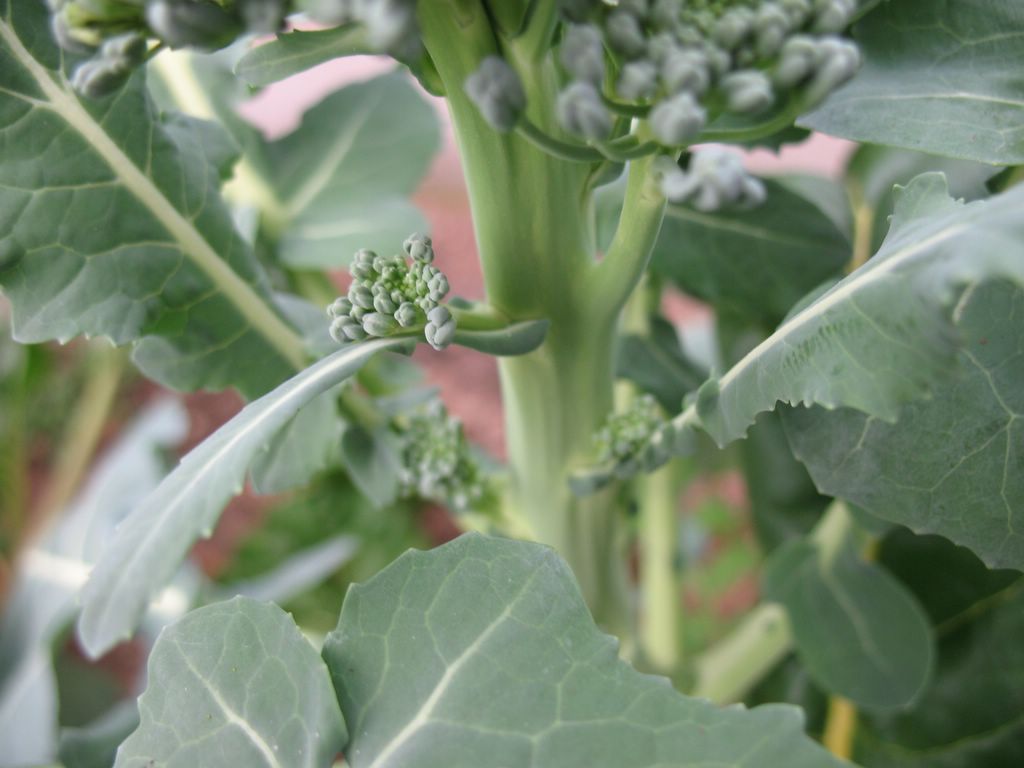
On the upside, there are at least 8 or 9 adorable little side shoots poking out of the stalk below the main head, a characteristic of both Calabrese Green Sprouting and Waltham 29.


These free florets will increase in size once the main head is harvested and are always a welcome bonus.

No matter what happens with this broccoli plant, I'm already looking beyond it. For on January 3rd (a fertile day in the 2nd quarter--click here to find out what this is all about), I started two small containers of 2006 seeds (from my favorite Baker Creek Heirloom Seeds) that have been strategically placed near the woodstove in the living room: yep, more Calabrese Green Sprouting and Waltham 29 broccoli. This is another first. I've never started broccoli seeds this early. I am excited. Because as tasty as they are, a girl can't live on bread and brownies and biscuits & gravy alone--once in a while she's gotta get her broccoli.

And I think this just might be the year I do.

Offshoots to this post:
Susan's Simplest Broccoli Soup--Another Less Fuss, More Flavor Recipe

Monday, December 25, 2006

What's Growin' On: 12/25/06


Wishing you peace, beauty, and joy--
in & out of the garden, today and every day.

Merry Christmas!

Monday, December 18, 2006

What's Growin' On 12/18/06: December Greenhouse Green


Swiss Chard & volunteer arugula

Realization Of The Day:
Things are still green in the greenhouse—but they are no doubt pretty confused. That storm I wrote about on November 30th did sift a pretty layer of snow over the farm, though not the 5 to 9 inches that were predicted (which was just fine by me). And I was right about our wet weather creek—it started running after just one day of rain, which almost never happens.

Plenty of ice followed the snow, and it got very, very cold. Like 0°F (or maybe even lower—I stop checking the thermometer when it drops below about 10) kind of cold. And the power was out for about 21 hours.

My somewhat reliable digital thermometer I have tucked in a raised greenhouse bed recorded a low of 20 degrees in there. But thanks to floating row covers, old bed sheets and quilts, and a little oil-filled radiator heater*, nearly all of my plants survived.

They spent some time in the dark (when I didn't bother to uncover them) and the taller ones are a little flattened, but they're alive and that's all that really matters. (Click here for a list of everything that's still growing in the the greenhouse right now.)

Then it got hot. Okay, not exactly hot, but that's how 66° feels in the middle of December after you've just spent the past couple of weeks clomping around with constantly cold toes and three or four layers of clothing on. We've been breaking heat records left and right. It's mostly been cloudy, but when the sun does out, it heats up very quickly in the greenhouse.

I can only imagine what the plants are thinking.

* These oil-filled radiator heaters are perfect for greenhouse use as they are very safe, easily moved, hard to tip over, have variable settings as well as an automatic thermostat, cost about $50, and don't use much electricity.

I only use mine on the coldest of nights, and although the greenhouse plastic cover doesn't hold the heat all that well, I think those few extra degrees do make a difference. I set it at 600 watts, so it only costs about 5 cents an hour to run. And of course if the sun comes out during the day, it'll automatically turn itself off until the air cools down again.

We have four of these heaters because they're so handy. There's a newer one right next to me here in my little office that can be set to the exact temperature you like. I put it at 60 or 65 degrees, shut the door on very cold nights, and it stays toasty in here without pulling in heat from the adjacent living room where the wood stove (our main source of heat) lives.

We also keep one in the tiny insulated well house, again set on low, but also attached to a simple outlet timer. It goes on for several hours each night and keeps the water holding tank in there, as well as the pipes, from freezing.

© FarmgirlFare.com