Tuesday, September 12, 2006

What's Growin' On: 9/12/06


Realization Of The Day:
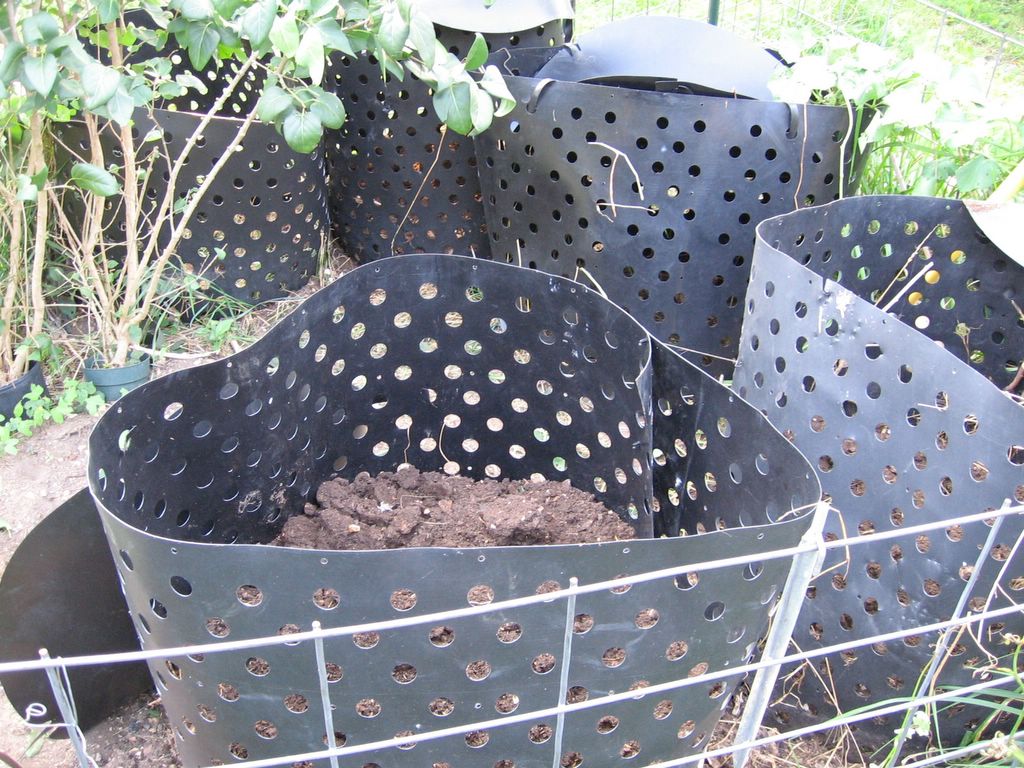
After pretty much ignoring them for a couple of months (except to toss new stuff in of course), it always feels good to get the compost bins in order--especially when you discover a lot more finished compost than you thought there was. (Click here for a lighthearted look at my first venture into the compost bin, as well as several sources for helpful information about composting.)

Realization #2:
I am so totally out of shoveling shape.

Out Of My Inbox:
--Even though parts of my garden are still in full swing, it's time to start thinking about fall clean-up and getting things ready for winter. The folks at High Mowing Organic Seeds in Vermont have already had their first frost, and their latest online newsletter includes two timely articles--End of Season Management: An Ounce of Prevention by Vern Grubinger, Vegetable and Berry Specialist, University of Vermont Extension and Planning a Winter Vegetable Garden by David Kopsell, UNH Cooperative Extension Vegetable Specialist. Click here to visit their Web Only Specials page.

--My favorite Pinetree Garden Seeds in Maine is having a Fall Clean-Up Sale.

--And on a completely non garden- but food-related subject (that I couldn't resist mentioning)--Teo at Belly Dujour sent me the following note:

"As a lover/blogger of food, I thought you'd get a kick out of a video we just posted that catalogues the Minnesota State Fair’s famed food-on-a-stick tradition. We’ve captured all the fair’s foods on a stick—from corn dogs and deep-fried Twinkies to chocolate-covered cheesecake and spaghetti and meatballs. Check it out if you've got the time, it's hysterical."

I have a lot of trouble watching videos with my dial-up connection, but I'm going to have to figure out a way to see this one. And now I think I have a sneaking suspicion why my shepherdgirl friend Katherine at Apifera Farm says the Minnesota State Fair beats the Oregon State Fair ten to one. And speaking of Katherine, I've just found out that Little Buttercup needs a home. So, if you are a city dweller with a yearning for a cow, here's your chance. No manure, no annual vaccinations, no flies.

Green Tomato Glut? I'd Relish The Situation!
I know that some of you are already picking the last green tomatoes in your garden before cooler weather hits. While they will gradually turn that summer red (possibly allowing you to indulge in homegrown tomatoes on Thanksgiving--or even Christmas), they won't have nearly as much flavor than if they'd ripened on the vine in the sun. So if you're looking for something interesting to do with your green tomatoes, you might try whipping up a batch of my Green Tomato Relish. This easy recipe (that I created several years ago for Kitchen Gardener magazine) is unlike any green tomato relish you've ever tasted--it contains no sugar (or raisins or spices) and is really more like a salsa. Click here to check it out. And you don't have to go to the trouble of canning it, as it will keep just fine in the fridge for several weeks.

From Garden To Table:
Last night we had an amazing fresh from the farm Less Fuss, More Flavor dinner:
--Roasted leg of lamb smothered with a thick layer of homegrown garlic and herbs
--The first Straight 'N' Narrow beans from my late planting, steamed until crisp-tender and dressed with only a sprinkling of salt and a touch of butter
--The first red potatoes from my experimental planting (which appears to have been a huge success--and which I will write more about another time), boiled, dashed with salt and pepper and smothered in butter
--Warm homemade rolls and a glass of red wine.

For me, this is what it's all about. The hard work, the struggling, the aching body parts, the questioning of your sanity, the ongoing battles over garden bounty, the general craziness of life on the farm . . . All is forgotten when you sit down to a dinner like the one we so gratefully enjoyed last night.

Saturday, September 09, 2006

9/9/06 Garden Journal How To: Growing Hardneck Garlic


I can do better than this—but it's gonna cost me.


Realization Of The Day:
Never in my wildest dreams did I think I would ever spend $77.00 on five pounds of garlic.


But of course this is no ordinary garlic. This is Extra Special Super Duper Fancy Schmancy Punishment Garlic. Because if you somehow never get around to planting your garlic one fall, when summer shows up you will be hit full force by the frightening result of your laziness—there is not only no garlic to eat, but there isn't any to plant the following autumn either.


If you've been saving and planting your own garlic for ten years (and improving it along the way), this is a really big bummer. Then there's the shock to your already distressed gardener's system that comes when you start shopping around for replacement stock, knowing that you will need about 200 cloves. Garlic prices are high. Very high.


So if you just cannot bear to fork over $17 a pound (plus several more dollars a pound for shipping), the only alternative is to buy some very nice tasting organic garlic from the natural foods store and plant that. Which is what I did last fall. And the photo above is what I ended up with. Actually, this is what I ended up with. I know it doesn't look all that bad, but compared to what I was expecting, my Gardening On The Cheap way out was a dismal failure.


Part of the reason is because I had been growing hard-necked (Rocambole) garlic, and most commercial garlic sold (including what I planted) is the soft-necked type. Rocambole garlic produces larger cloves, and the clove covering tends to more easily come free from the clove, making it much more fun to deal with in the kitchen.

Hard-necked garlic also sends up flower stocks in the spring that will steal energy away from the growing bulbs if you don't snip them off. Once snipped, they become garlic scapes, which seem to be all the rage with foodies and food bloggers these days.
 Who knew? For years I tossed them around the garden as a natural pest deterrent or fed them to the chickens.

While some people claim that garlic scapes have a pleasant, very mild garlic flavor, I've found the opposite to be true. My homegrown garlic scapes are strong and fiery—and I love the taste of garlic. Even the donkeys don't like them. On the other hand, spring green garlic, another chic item these days, is wonderful, especially when cooked in some butter and tossed with pasta.


Now that it's almost time to plant garlic again, I figured I'd better stop ignoring the "Hunt down some reasonably priced but superb planting garlic" note that has been on my Never Ending To Do List since, oh, late last spring. One thing I quickly discovered while doing a little online research is that by now many suppliers have been sold out of garlic for months. Oops.


Not to fear, though. Sometimes even lazy, scatterbrained gardeners are given the gift of Being There At The Right Time (and being coherent enough to realize it). For me, 'there' was at my computer this morning when the September e-newsletter from Johhny's Selected Seeds in Maine arrived. And the coherent part was when I remembered that I'd been meaning to see what kinds of garlic Johnny's had to offer and immediately opened up the newsletter.


After reading that some varieties have indeed already sold out, and that the rest typically will, too, I followed Chairman Rob Johnston Jr.'s advice to "get your garlic plans settled and your order to us ASAP." I hopped right over to their website and managed to nab five pounds of organically grown German Extra-Hardy Garlic, which I was thrilled to learn is their "easiest garlic to grow." This is what else Johnny's has to say about it:


Among the most winter-hardy garlic varieties. Very large bulbs with 4-5 large cloves. The outside skin is very white and the skin covering the cloves is dark red. The New York farmer who grows this stock for Johnny's says, 'Out of over 200 sources of garlic that I have had in my trials over the past 15 years, I believe that this is the finest garlic that I have had on the farm.' A vigorous-growing garlic with long roots, which gives it the ability to winter over without heaving out of the ground. Flavor is very good and stores well.


Sold! I readily forked over my credit card number. Okay, I hemmed and hawed and dawdled around for an hour or two before finally explaining my dilemma to Joe, who immediately told me to "Get back online and buy some before they run out!"


Realization #2:
Today's realization is also a rationalization. I finally convinced myself that this seemingly outrageous outlay of cash for a few pounds of garlic really is worth it—because you'll never end up with the best if you start out with anything less.


And if you figure that this is hopefully the last garlic I will ever have to buy again in my life, it's definitely a worthwhile investment. Now all I have to do is make sure I never, ever forget to plant garlic in the fall again—but I have a feeling that won't happen anytime in the near future.


I'm just happy that I finally took the great garlic plunge—and even managed to find some wonderful sounding organically grown garlic for less than $17 a pound plus shipping. (Although I did find one possible explanation for why gourmet garlic prices are so high. Click here and scroll down to "How Did All These Garlics Get Here?")


Now while I obviously will not be able to report on how this garlic performed in my garden until next year, I can say that I have purchased all kinds of seeds from Johnny's over the years and have never been disappointed. They're a reputable company offering quality products that all come with 100% satisfaction guarantee. They are also in the process of becoming employee owned.


If you're interested in planting some really good garlic this year, you might give Johnny's a try. You can purchase as little as 3 heads at a time, and other varieties are still available. If you live in a warmer climate, you'll want to plant a soft-necked variety, as Rocambole garlic requires a cold winter and a cool spring. You can also call Johnny's toll-free number (found on the website) for help deciding what variety would do best in your garden. Each garlic clove that you plant will (hopefully) turn into one head of garlic. When figuring out how much garlic you'll need to buy, don't forget to add in enough to save and plant next year.


Another place to look for interesting garlic to plant is at your local farmer's market. You may be able to find several varieties, and if you can't decide which one(s) you'd like to grow, you could buy a few heads and have yourself a little taste test. Another advantage to purchasing locally grown garlic is that it should do well in your climate. And of course you can always ask the farmer for growing and planting tips!


For information on everything from preparing your soil for planting to harvesting and curing your garlic, visit this page on the Gourmet Garlic Gardens website. And click here for a close-up look at 21 different cultivars of garlic.


Minding The Moonsigns:
I usually plant my garlic in October, on a fertile day in the 3rd quarter, though last year I didn't get it into the ground until the end of November. As long as the ground isn't frozen, late planting isn't a problem.


Here are the upcoming "good" days to plant if you're minding the moonsigns. First and 2nd quarter days are best for starting seeds. Third quarter days are best for transplanting and starting things that grow underground such as garlic and potatoes and turnips. Some people treat the 4th quarter the same as the 3rd, and others consider it a bad time to do anything but weed and mulch. (Click here to learn more about this.)


--3rd Quarter Fertile Days: Monday September 11th & Tuesday September 12th
--4th Quarter Fertile Days: Saturday September 16th
--1st Quarter Fertile Days: Monday, Tuesday, & Wednesday September 25th, 26th & 27th
--2nd Quarter Fertile Days: Monday October 2nd, Thursday October 5th, & Friday October 6th
--3rd Quarter Fertile Days: Monday October 9th & Tuesday October 10th
--4th Quarter Fertile Days: Saturday October 14th, Friday October 20th & Saturday )ctober 21st
--1st Quarter Fertile Days: Monday October 23rd, Tuesday October 24th, & Saturday October 28th


© FarmgirlFare.com

Thursday, September 07, 2006

What's Growin' On: 9/7/06


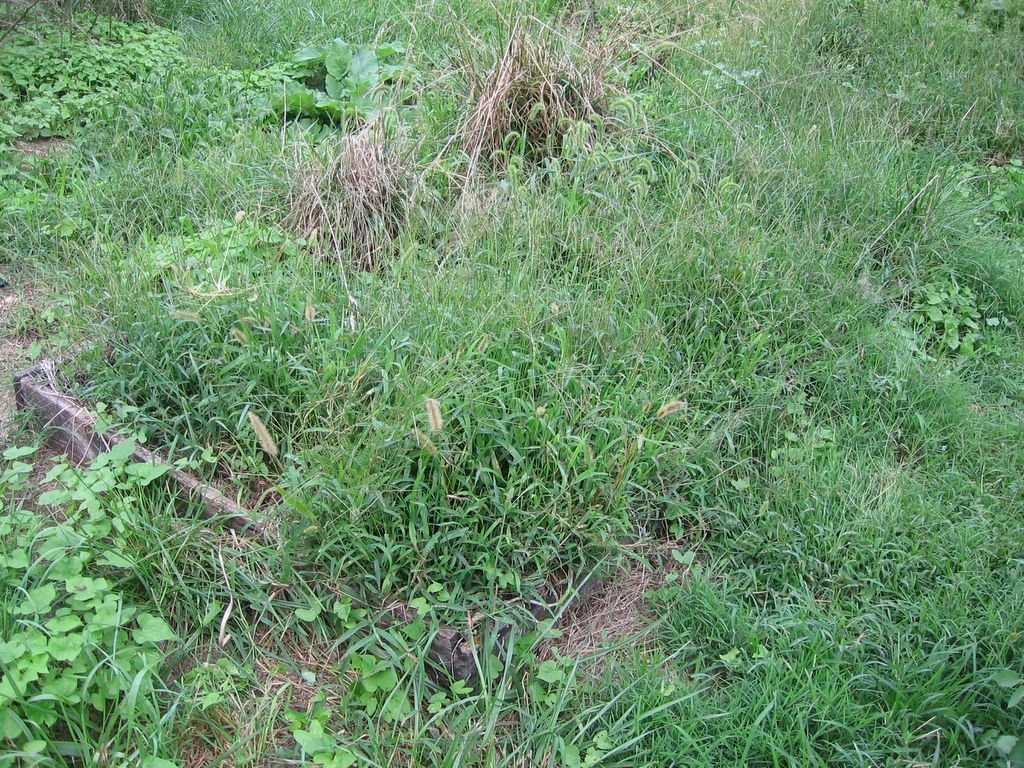
Before


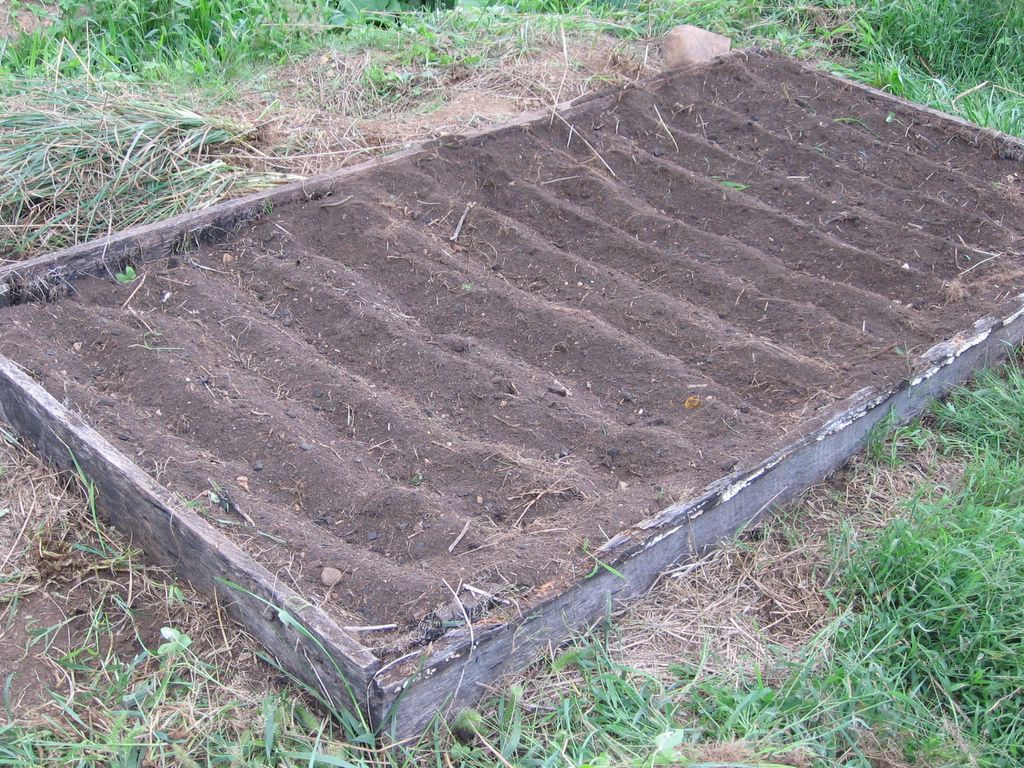
After

Realization Of The Day:
After spending five hours trying to (unsuccessfully) fix a computer problem in a tiny office that has started to feel like a claustrophobic cage, there is nothing better than heading into the garden armed with only a pair of gloves and your pent up frustration and accomplishing something so visible in less than an hour.

This bed is now seeded with all kinds of Oriental greens (left to right looking north):
--Chinese Celtuce (Baker Creek Heirloom Seeds, 2005): This is an interesting green I have successfully grown before in the spring. I can't find the description in the Baker Creek catalog and am thinking they didn't offer it in 2006. It used to be listed in the "Lettuce" section. (The rest of the seeds are in the "Oriental Greens" section.)
--Chinese Kale-Small Leaf Kailann (BC, 2005, $2.00): I have no idea if I've grown this before or not. The seed packet was open, but that doesn't mean much around here. Sounds interesting, though. "This is a delicious small-leafed form of this Asian green. Seed from Thailand.
--Michihli Cabbage (BC, 2005, $1.25): I don't remember exactly what this looks like, but I know I've grown it and liked it. "Big tall heads, widely grown in the Orient. Mild and tasty, very tender, great for stir-fry."
--Chinese Pak Choy (BC, 2006, $1.25): Pak Choy is a personal favorite. Not only is it tasty (fabulous in stir-fries), but I love the look and shape of the plants. "Long, white stems and dark green leaves; one of the most popular Chinese vegetables, used in many Chinese dishes."
--Welcome Choy Sum (BC, 2005): Can't find this one in the 2006 BC catalog either. All I know is I couldn't resist the name last year.
--Canton Bok Pak Choy (BC, 2006, $1.50): Now I know I haven't grown this one before because the catalog says "new!" (so helpful). "The typical Nai-Pe-Tsai type pak choy, semi-upright plant produces thick white stems and deep green leaves. Good for warm areas as it is heat-tolerant." Aha! That's why I bought it. I'm a sucker for anything that says it's heat tolerant.

I've never planted Oriental greens in the fall before, so this is going to be an interesting experiment. If I do have success, most of the young leaves will probably be tossed into salads. (I'll use pretty much any leafy green I can find in the garden to feed my salad habit.) When cooler temperatures hit (we're already getting down into the mid 50sF at night), I'll cover the bed with floating row cover.


Realization #2:
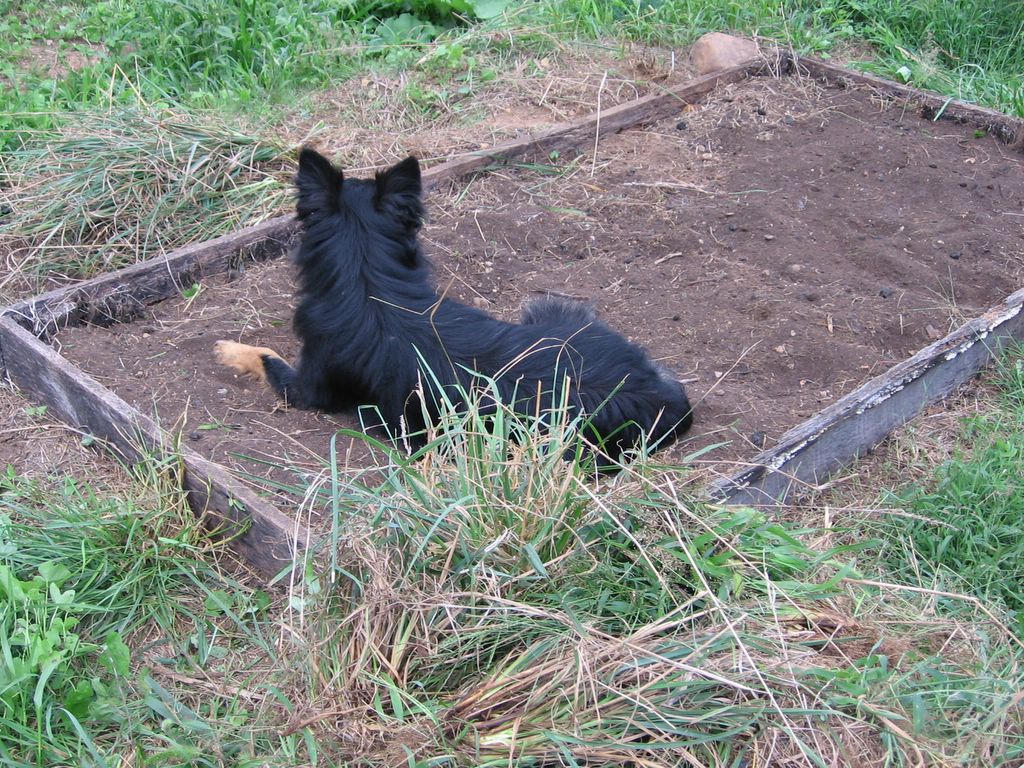
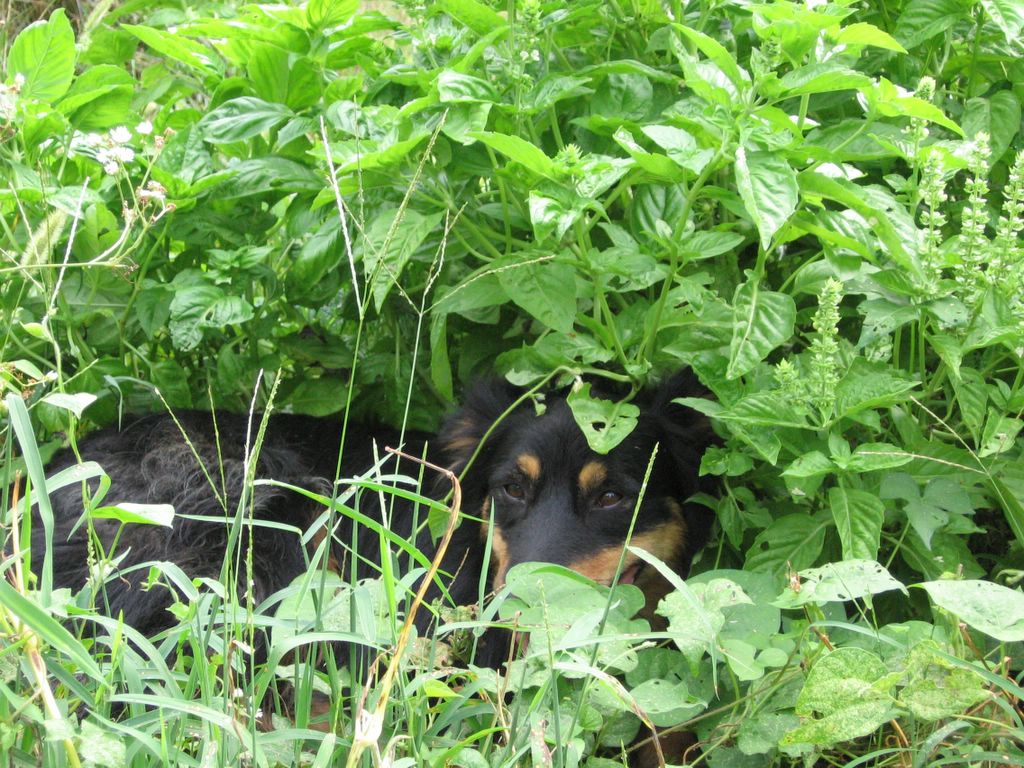
Lucky Buddy Bear is half English Shepherd and half Australian Shepherd. He lives to work. If there aren't any animals around who need herding or watching or tending to, he'll fearlessly guard your dirt. . .


For hours.

Attention Dog Lovers! This is Weekend Dog Blogging #51!
To see fun pup pics & discover yummy new food blogs, visit
Sweetnicks each Sunday night for the roundup. Care to see more canine candids? The Friday Ark boards everything from dogs to dragonflies.

Sunday, September 03, 2006

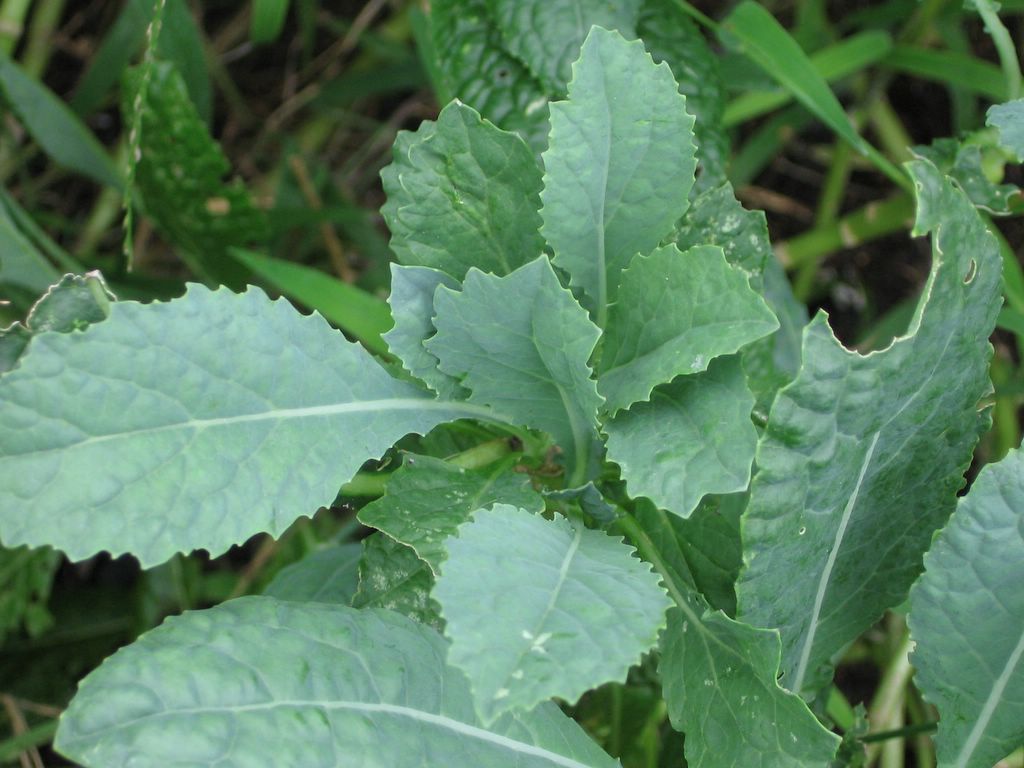
How to Grow Nero di Toscana Cabbage (aka Tuscan Kale, Cavalo Nero, Lacinato Kale, Dinosaur Kale) from Seed and What To Do with It


Realization Of The Day:
Nero di Toscana Cabbage is known around the world by several other names, including Black Palm Cabbage, Cavalo Nero, Black Kale, Tuscan Kale, Lacinato Kale, and Dinosaur Kale. But it really should be universally called Cat Cabbage because I swear this stuff has nine lives.

Regular readers know that I am entwined in a passionate love affair with Nero di Toscana Cabbage. It is easy to grow from seed and puts up with heat waves, cold snaps, long humid summers, with nary a complaint. But no matter how deep my feelings for it run, year in and year out, this delicious, easy to grow mainstay in my kitchen garden suffers through much more than its fair share of distress.

Thursday, August 31, 2006

What's Growin' On: 8/31/06


Realization Of The Day:
I've had this blog for nearly six months, and I'm still terrible at keeping gardening records.

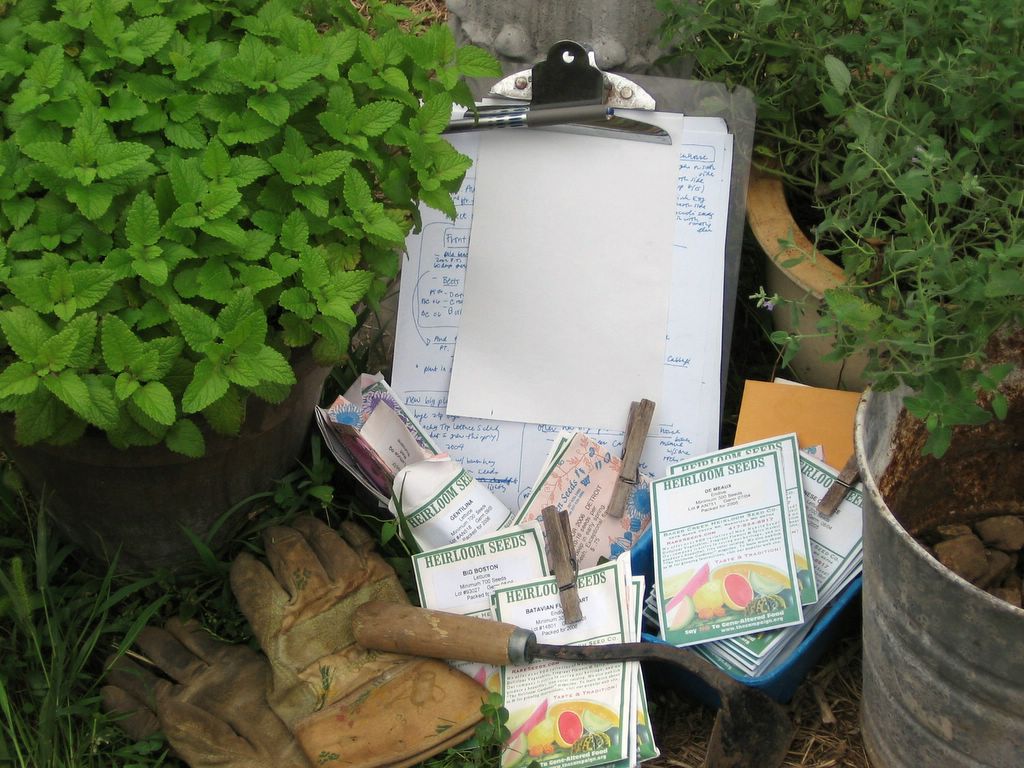
Yesterday afternoon found me in the garden happily prepping beds, yanking up weeds, and scattering all sorts of seeds. There was a lot I wanted to accomplish, and I jumped into my work armed with everything I would need: gloves, hoe, Oriental garden tool, an ambitiously large pile of seed packets, the Environmentally Friendly Weed Eater (it's at that point again where there are now more weeds than food in the garden, so the threat of devistation to edible plants is low), and my handy dandy clipboard sporting a fresh piece of paper and one of my favorite pens so I could write down what seeds I started where as soon as I had planted them.

The above photo was taken at the end of my very productive gardening session. I don't think I have to ask you what is missing from this picture. If you had no idea that you'd been taking gardening advice from someone who is somewhat of a scatterbrain (and flat out lousy when it comes to writing important things down), consider yourself warned.


Super Salads Sprouting Up Here Soon (I Hope)

The good news is that my memory is not 100% shot yet, so I do remember some of what I did--and where I did it. For instance, I emptied the contents of pretty much every packet of lettuce seeds in my posession onto one of the mini greenhouse beds. (This would be the one that hasn't been swallowed up and surrounded by sprawling volunteer lemon cucumbers. Now don't get me wrong--I am definitely not complaining. I have been pining for cucumbers in the garden for months, and things that pop up and thrive without my having to do anything but water them are by far my favorite kind of plants. But they just keep spreading, and it's getting a tiny bit scary over there.)

I admit I may have been wee bit heavy handed, but as I sprinkled I reminded myself that the seeds probably wouldn't be any good next year. And sometimes letuce seeds just look so darn tiny and the bed looks so big. So how many seeds did I plant? Let's just say that if I get 150% germination rate I did in last spring's lettuce bed (which I let go to seed in the hopes of having an effortless fall crop, but not knowing of course that the lemon cucumbers would obliterate any chance of that happening--plus, um, I think Cary may have nibbled off most of the seed heads anyway), that 4-foot by 8-foot bed should soon be home to several thousand lettuce plants.

This ought to be interesting. Especially since, although I know all the varieties of seeds I sowed, during the planting process they somehow managed to jump out of their specified little sections of soil and mingle with one another. Not a problem. I simply decided to hell with identification and that this will be my new signature mesclun mix.

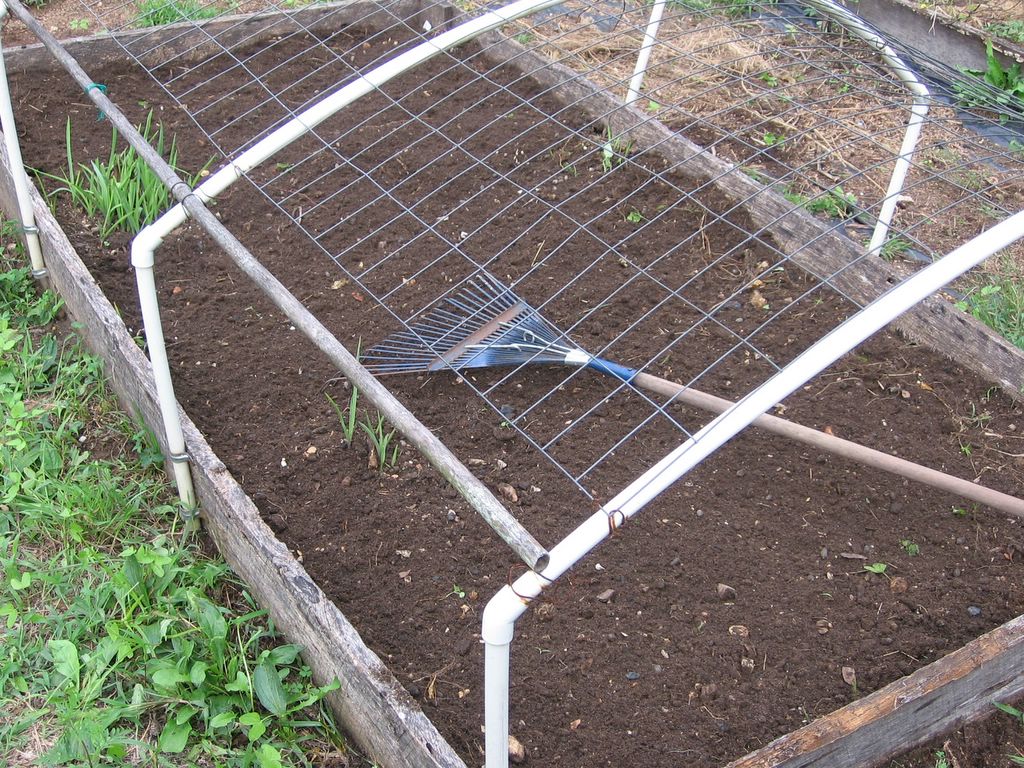
After I realized that any possiblity of keeping track of the dfferent lettuces had already been obliterated, I decided to try something new. Lettuce seeds barely need to be covered with soil. In fact, burying them (and any seeds in general) too deep is often the reason they don't sprout. Instead of lightly sprinkling compost over the seeds with a shovel or carefully running my hands over the top of the bed to mix the seeds into the soil like I usually do, I decided to pull out my trusty leaf rake and simply rake the entire plot. I have actually done this before with a rock rake, and I don't know why I never thought of using the leaf rake instead because it did a much better job. Or at least it seemed to. I guess I'll find out soon.

Here, for the record (see, I'm trying!) are the varieties of lettuce I planted:
--Petite Rouge, 2006 Baker Creek Heirloom Seeds (This was a real winner last spring; click here to see a photo and here to read about why I loved it so much.)
--Red Romaine Organic, old seeds from BC
--Big Boston, 2005 BC
--Gentilina, 2006 BC
--Jericho, 2006 Pinetree Garden Seeds, "A bolt resistant crisp and sweet cos type lettuce, 60 days." (I'll buy any variety that claims to be heat tolerant and bolt resistant as our spring temperatures can literally go from the 60sF to the 90s overnight. I do not recall a single April in Missouri when we didn't have at least one day above 90F, and even that short burst of heat can turn your lettuce bitter and send it bolting toward the sky.)
--Plato II, 2006 PT, "Slightly savoyed meaty leaves. Sweet flavor. Slow to bolt. 53 days." (I have no idea what this lettuce looks or tastes like, but I know I've been ordering packets of it for years--please reread above paragraphs if this doesn't seem possible.)
--Winter Density, 2006 PT, "Romaine type. Slow to bolt. 28-54 days."
--Buttercrunch, 2006 PT, "Bibb type. Loose head. Dark green leaves. Slow to bolt. 53 days." (I am crazy about all kinds of lettuce, but if I were forced to choose a favorite type it would have to be buttercrunch. There is a smaller variety I often grow called Tom Thumb that is absolutely adorable--perfect for gourmets and those short on space.)

Like I said, I got a little carried away with the lettuce. If you're interested in growing some lettuce of your own this fall, I invite you to read my article called "Sublime Salads For Those Who Are Short (On Time, Space, & Sunlight)" if you haven't already.

Monday, August 28, 2006

What's Growin' On: 8/28/06


Realization Of The Day:
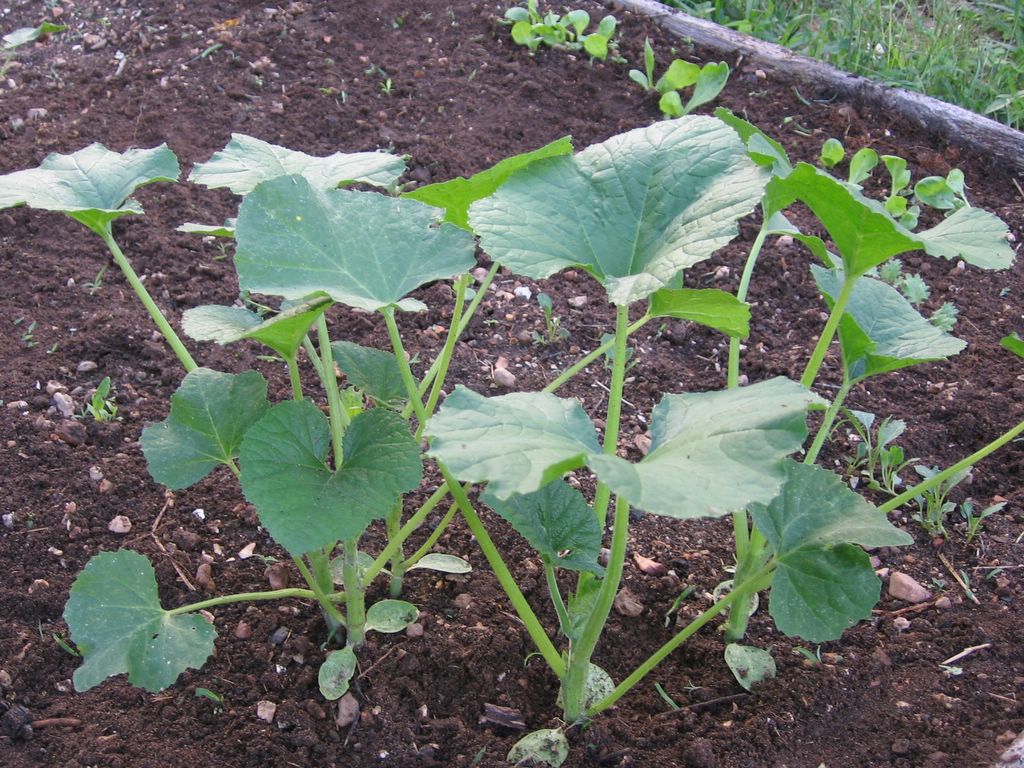
It may have been a while since I've had squash in the garden, but I am almost positive these are not golden zucchini, although the package clearly stated that's what kind of seeds it held. Yep, I just checked the Baker Creek Heirloom Seeds catalog. These are looking a whole lot like Early Prolific Straightneck if you ask me. It appears to be a simple seed packet stuffing error, and I will definitely have to see about getting some of the real golden zucchini seeds for next year as they sound intriguing and look delicious in the photo.

Now, yes, I won't deny that this is rather a bummer. I have eaten (and even grown) my share of straightneck summer squash before. But, on the other hand, I HAVE LIVE SQUASH IN THE GARDEN! Who CARES what kind it is!

Okay, I'm fine now. Oh, but the squash surprises don't end yet.


Realization #2:
Remember that bed of happy little fall crop seedlings the dogs destroyed one lovely Sunday morning a few weeks back? I wrote the other day that some escarole seedlings in the bed with the new crater in it somehow missed being murdered, and that there were some surprising volunteer cucumbers popping up. Well, not only did I find a few more survivors hidden among the weeds today, including a couple of Red Russian Kale seedlings and several Nero di Toscanas. . . (Note: Baby Red Russian kale is almost too adorable. Sprinkle it on salads and wait for the "Oh it's so cutes!" to pour in--if you can handle it.) But it turns out those volunteer cucumbers are actually some kind of squash plant!

The wonders never cease around here. There are seven of these mystery plants happily growing literally growing several inches a day and absolutely no logical explanation for how they got there.

So my illogical explanation is: the dogs felt so bad about pretty much wiping out my fall crops that they planted some squash for me as a goodwill gesture. Hey, in my garden practically anything is possible.

From Garden To Table:
Tomatoes of course!

Harvest For The Henhouse:
Tomatoes of course! (Note to self--yet again: Hello! There is no holding pattern in the garden. If the tomatoes are ripe and ready to pick, leaving them hanging on the vine for a couple of weeks "so they'll stay fresher" is not such a brilliant idea. Bad things will happen to them. Bugs will eat them. They will ROT. Duh. Why can't I remember this? (And believe me, it's not only tomatoes I do it with, either.) I think this goes back to the whole obsessive foodie thing. Maybe I need professional help.

Sunscreen Alert & Sale Reminder:
Summer may be coming to an end (thank goodness), but that doesn't mean you can fling off your sun hat and tuck the sunblock in the back of a drawer. No, no, no. It's open season on sunburn all year long no matter where you live or what the weather.

Click here if you missed reading about why I love my widebrim sun hat--and why I slather on the sunblock 365 days a year.

That special sale on sunblock--and 14,000 other products including many items from companies such as Celestial Seasonings (91 items), Newman's Own Organics (47 items), and even Wild Oats (110 items)--at Amazon.com that I mentioned in the sun hat post (which includes links to some of my favorite products) is also coming to an end. You'll receive a $10 instant rebate on your purchase of $49 or more of any combination of food and household products offered by Amazon.com Grocery. Added to their great prices, free shipping over $25, no sales tax, and delivery right to your door, you really can't beat it. Click here for more details or to start shopping. This offer is good through August 31st.

Saturday, August 26, 2006

What's Growin' On: 8/26/06


Realization Of The Day:
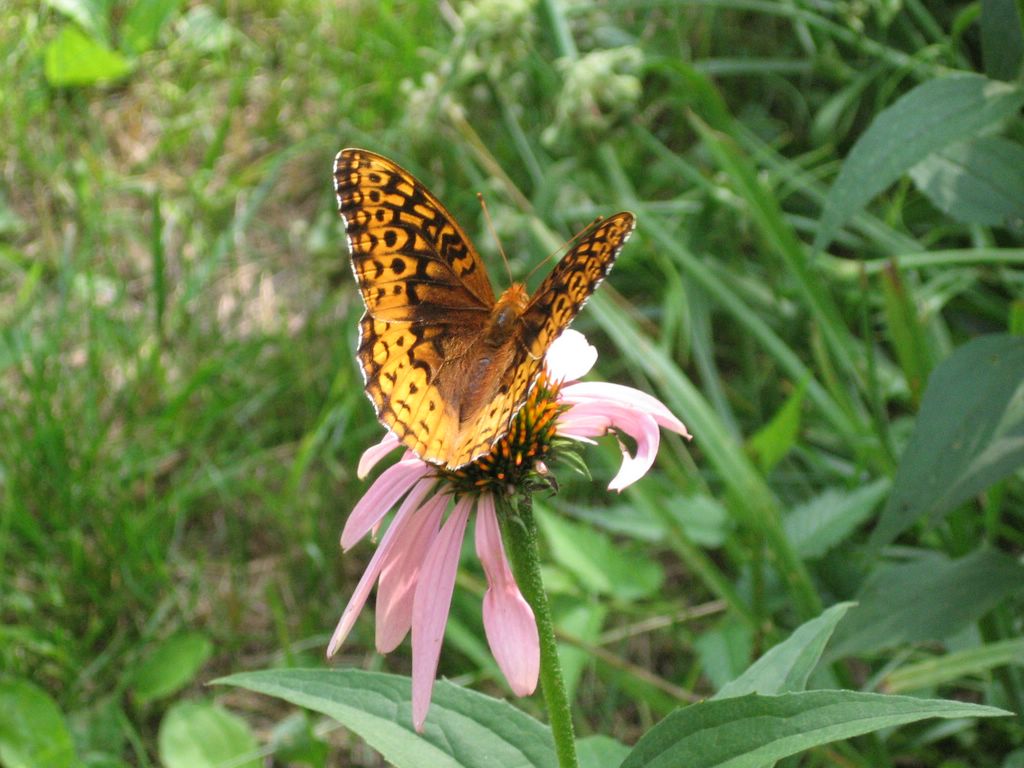
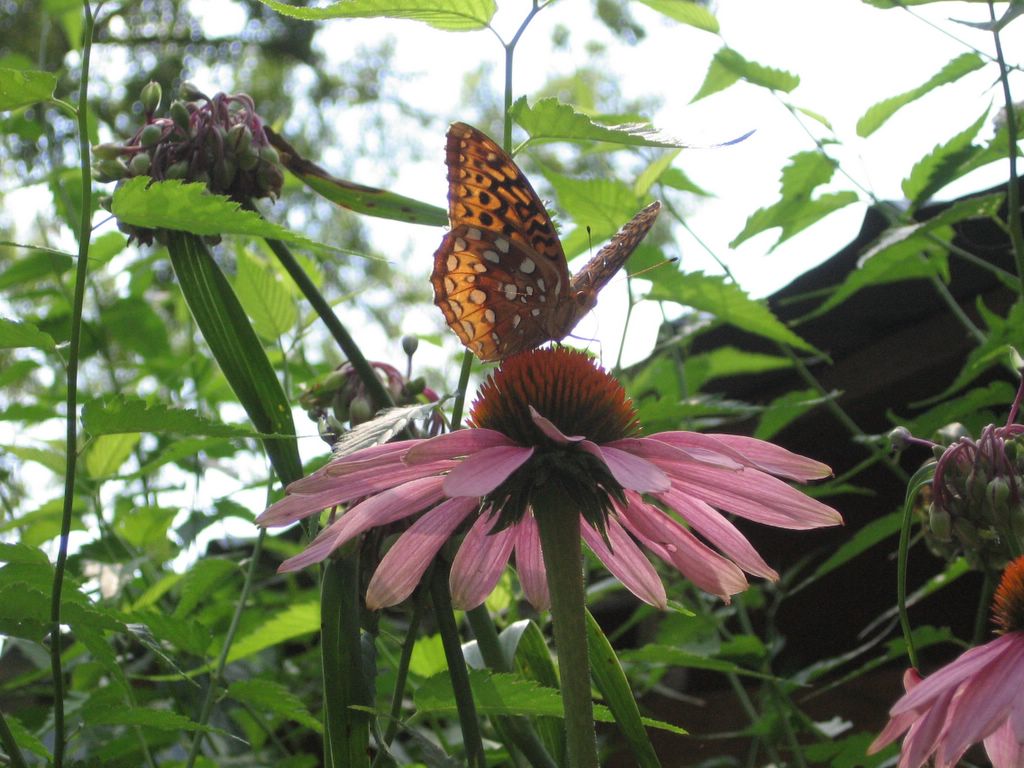
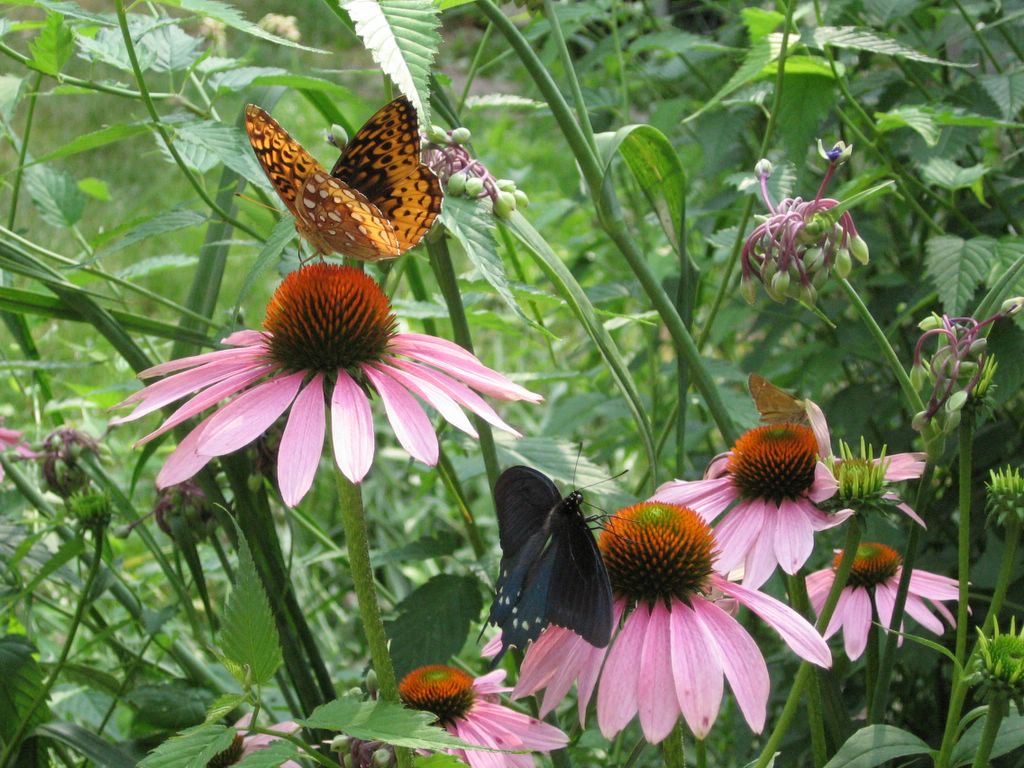
Been too busy to blog. Figured butterfly photos much better than nothing.

Personally I never get tired of looking at butterflies--in real life or in pictures. These were taken back on June 28th but never posted. Enjoy.

Wednesday, August 23, 2006

What's Growin' On: 8/23/06

Planting For Fall, Part II


Realization Of The Day:
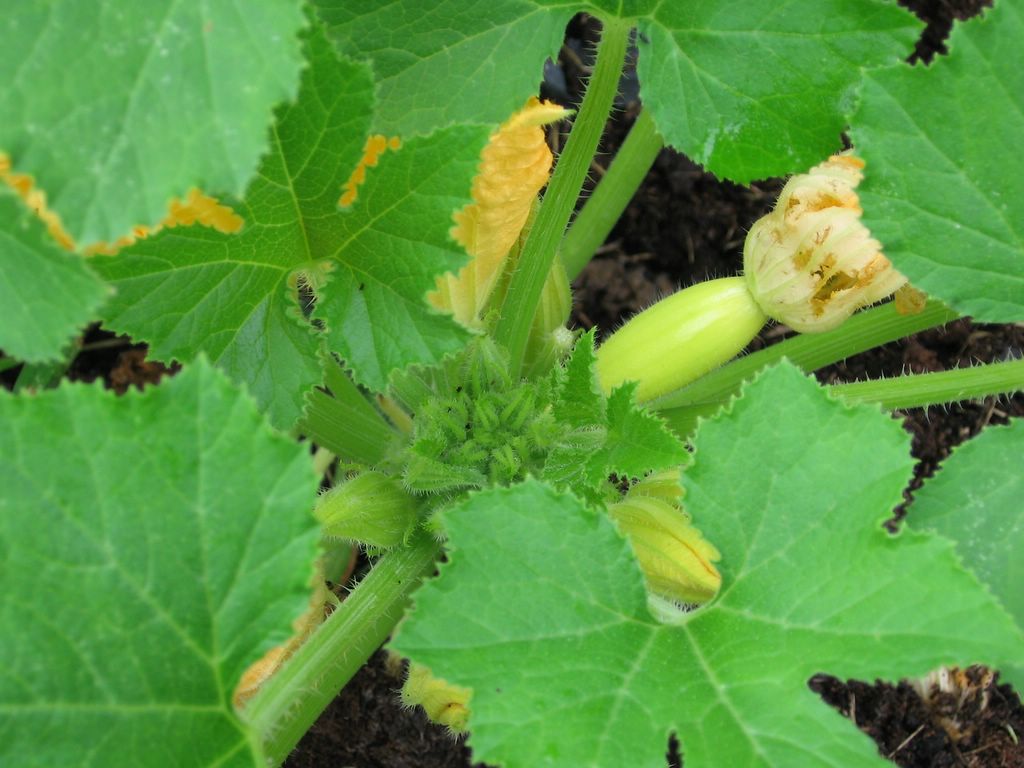
My best fall crop this year may in fact turn out to be zucchini.

Despite planting seeds way back in May, this is actually the very first specimen in the garden with enough guts to turn from flower to food. The only thing more embarrassing than admitting (while everyone else is happily flaunting full-grown squashes larger than their children and dogs) that I have yet to harvest any zucchini at all this year is that it has been so many years since I have actually tasted a homegrown zucchini that I have literally stopped counting.

All those zucchini jokes. All those people leaving bags of them on strangers' doorsteps and running. All those cookbooks and magazines offering tempting ways to force down your 600th meal of squash. And here I sit zucchiniless. It's very sad. And it is not that I am incompetent. I actually used to be one of those leave-it-on-the-doorstep-and-runners.

That was before I moved to Missouri and met my first squash bug (and my second and third and three thousandth). Now I am forced to buy zucchini. That's okay. Go ahead and laugh. I know I probably would if this wasn't about me. I mean, really, what fool buys zucchini? Hello.

But we won't go into all that now. I am hopeful. I have four gorgeous baby squash literally growing by the hour out there and weeks and weeks until the first frost. This could actually happen.

In the meantime, I'm taking precautions and planting a whole bunch of other stuff just in case.

I already wrote about the seeds I started back on August 8th (along with what--if anything--they're doing now) in my previous post, Planting For Fall. It also contains tips and hints on what fall crops to start in your own garden. Since I'm minding the moonsigns as best I can (click here to learn more about this), I'll be starting these seeds in various raised beds on August 28th, 29th, and 30th (fertile 1st quarter days) and September 4th (fertile 2nd quarter day):

Chinese Greens (All from Baker Creek Heirloom Seeds) :
--Michihli Cabbage (2005)
--Chinese Pak Choy (2006)
--Chinese Cabbage Loose Leaf (2005)
--Welcome Choy Sum (2005)
--Canton Bok Pak Choy (2006)
--Chinese Celtuce (2005)
--Chinese Kale: Small Leaf Kailann (2005)

I have had good luck in previous years planting a variety of Chinese greens in the spring. They tend to do quite well and are hardy enough to withstand cooler temps and even frosts. But I usually also have all kinds of lettuce that I am racing to eat in the spring before it bolts, so the chickens often end up eating more of the Chinese greens than I do, which really is a shame because they are versatile and delicious. You can toss many of the younger leaves and plants into salads. Mature plants can be stir-fried or sauteed. They are all delicious and very good for you. So I figured I'd see if I could get them to grow in the fall. When nighttime temperatures start dropping, I'll cover them with floating row covers (discussed in Fall Planting Part I) and then with old bedsheets.

I'll also be planting seeds for the following hardy crops in raised beds:
--Turnips
--Endive
--Escarole
--Spinach
--Beets (few varieties)
--Swiss Chard (few varieties)

I have all kinds of lettuce seeds leftover from spring, and since they usually don't last from one year to the next, I'm going to toss a bunch in the new plot where the old kale and lettuce seeds planted August 8th didn't come up, as well as in one of my mini-greenhouse raised beds. Lettuce is fairly hardy and can survive temperatures down into the twenties if simply covered with a sheet. If the lettuce is still going when it starts to really get cold, I'll cover the mini-greenhouse frame with thick clear plastic that is sealed up at night, then opened up during the day so the plants don't fry. (If the sun is out, any kind of greenhouse, no matter what size, will become extremely hot inside very quickly. Venting is always necessary. One day of forgetting, and you fry your plants.)

Speaking of greenhouses, in my walk-in greenhouse I will be:
--Starting to water the section of raised bed I declared a permanent arugula bed last spring. I let a lot of it go to seed, and will now just start watering it. This is what I did last April, and that carpet of arugula magically appeared. Arugula is fairly cold hardy. It bolts quickly in warm weather, though, which is why I haven't started it yet. With temps outside still in the 90sF, it is getting even hotter than that in the greenhouse, despite being covered with a shade tarp and being shaded in the afternoon.
--Starting some mesclun mix in hopes of being able to pick fresh lettuce on Christmas.
--I'll also be planting more beets and Swiss chard in the greenhouse, though I think that all of the plants that went to seed this summer have probably provided me with ample seeds in the soil already--I'll just start watering and see what comes up.

I mentioned previously that part of the reason I'm starting a lot more seeds this time of year than usual is because I happen to have the available planting space and am just trying to use them up. Another reason is that I didn't harvest nearly as many of the veggies that I usually freeze and enjoy throughout the fall and winter. For example, during a good year I will put at least two dozen packages of green beans in the freezer. This year I put in four. Same with the roma tomatoes I use for pizza sauce and soups--this year I turned 15 pounds of bounty into four small containers, and that was it. The Too Many Tomatoes? post I published yesterday on Farmgirl Fare was all about "salad" or "slicing" varieties which don't really preserve or even roast up well because they are so juicy that you hardly end up with any "meat." (I probably should have made that clear in the post because otherwise yesterday I would have been busy stemming, blanching, cooling, peeling, and packing them up into freezer containers for colder days ahead!)

I hope this gives you a good idea of the wide variety of things it's not too late to start from seed if you're in Zone 5 or higher. And as I mentioned previously, if you have four weeks before really cold weather sets in, you can plant a little gourmet lettuce garden and go from seed to salad bowl in less than a month. Click here to find out how.

Now I should probably end this by mentioning that if you live in a place where you can absolutely depend on the weather and know that you definitely won't have any crazy surprises, things should go quite smoothly with your fall garden. If, however, you live in a place like I do where literally anything can happen, this whole planting thing is all just one big crap shoot. Like I said before, there's a reason bookies don't take bets on gardeners. But this year I'm feeling lucky. And what's the most I can lose (besides my sanity, of course)? Some outdated packets of seeds and several hours spent outside in the (hopefully) cooler air, surrounded by far fewer bugs, and happily breathing in the joyous scent of autumn on the horizon. Doesn't sound like too bad of a bet to me. I'm in.

Monday, August 21, 2006

What's Growin' On: 8/21/06

Planting For Fall


Baby Beets

Realization Of The Day:
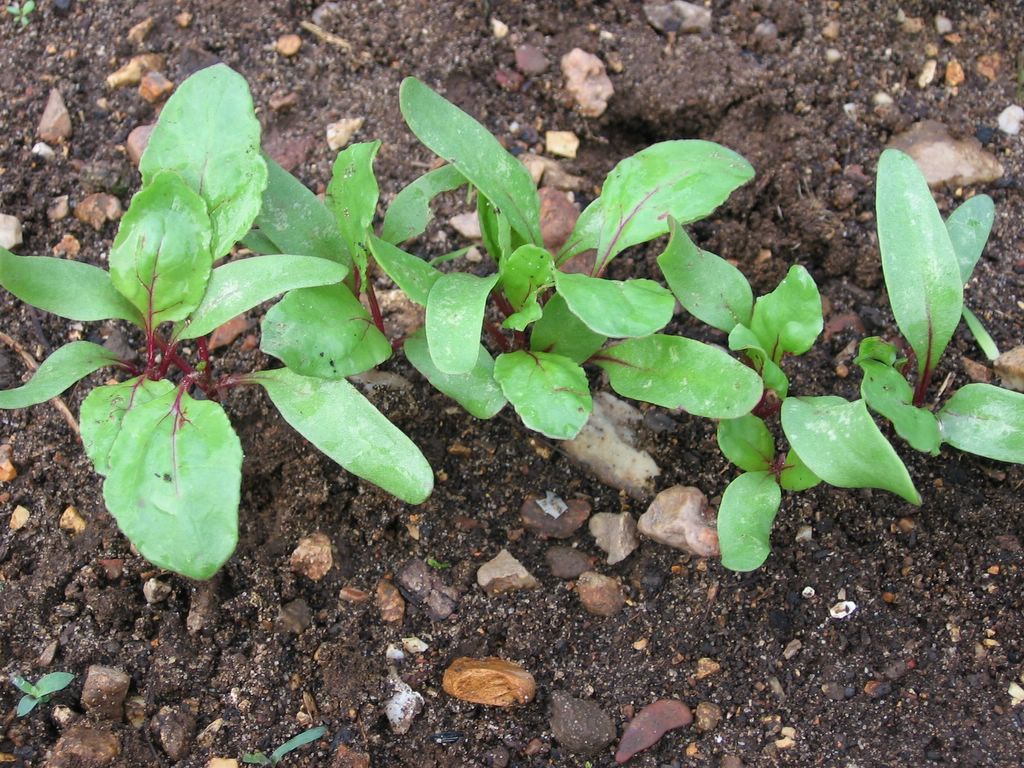
A few Detroit beet seedlings survived last week's Attack Of The Digging Dogs.

Several of you have asked me to write about fall planting in the garden. Since technically this blog is my personal garden journal, I'm going to tackle this subject from the perspective of my own garden (meaning I'm finally getting around to making note of what I've been doing). But I'll also do my best to offer tips and advice for those of you considering extending your gardening season into the cooler months this year.

Officially my garden is located in Zone 6, but because our farm is tucked several hundred feet down in a little valley, it's really more like Zone 5. We often have frost earlier and later than the Zone 6 dates of October 15th and April 15th, and I've seen the thermometer on the front yard fence drop down to -15F in the winter. (We checked it with binoculars from the safety of the house.)

Of course no matter where you live, it is possible to trick your plants into thinking that brisk air isn't as cold outside as they think. Walk-in greenhouses, makeshift mini greenhouses (check the comments section in that link for my notes regarding construction), and temporary hoop houses can all be used to effectively extend the growing season and protect more tender plants from frost. Even a length of inexpensive, floating row cover (sometimes called Reemay) draped over your plants at night (and during the day if necessary) gives you 5 extra degreesF of heat--and sometimes that can mean the difference between fine and fatal.

I love my floating row covers. I have yards and yards of the stuff and use it for everything from protecting young seedlings from early spring frosts to hiding tender bush bean plants from Cary and the deer. I bought mine from (my favorite) Pinetree Garden Seeds. It is 67 inches wide and you can buy whatever length you like for 28 cents per foot (10 foot minimum). For those of you unfamiliar with floating row covers, here is Pinetree's description:

"This polyester crop cover material has some advantages over the Reemay we've carried for years. The UV resistance has improved, it is softer and less abrasive, it's much stronger in both tension and tear tests and the heat retention is better. Still made of white, UV resistant spun bonded polyester, it is lighter weight and designed to hold in heat while transmitting 70% of light through for adequate crop growth. Placed directly on crops without support, it requires no tending and water readily passes through it. It also retards insects when the edges are buried."

Just be sure to remove it when your plants are flowering if they require pollinators. I have been using the same pieces of floating row cover for years and they're still in pretty good shape, but of course now I want some of this better stuff.

On to the actual planting. Overall, our weather isn't conducive to fall gardening. It's simply too hot when it's time to start cool season crops (it's the end of August and we're looking at temps in the mid 90s for at least the rest of the week), and then it will turn cold before anything has had much of a chance to grow. Besides the hardy crops such as chard and beets I keep alive throughout the winter in my greenhouse and perhaps some turnips or kale or endive outside, I don't usually try for much of a fall harvest. This year, however, I've decided to do some experimenting (partly to use up a bunch of old seeds I didn't want to just toss out). For example, this is the first time I've ever had broccoli seedlings in the ground in August. I sowed them in a mostly shaded plot, and they came up pretty thickly, so I think I'll transplant some of them to a sunnier location once they're a little bigger and it cools down.

I actually direct seeded all kinds of stuff back on August 8th, but (for various reasons) my success rate sucked, so I'm going to replant. I don't think it's too late. For the record, here is what I did start (knowing full well that if they did sprout, some things--like the lettuce--might perish in the heat, and others--like the pole beans--probably wouldn't have time to mature and produce a crop before being killed off by frost):

Front Left Bed (short rows: left to right, looking south):
1. Beets
--Detroit (63 days, Baker Creek 2006 seeds)
--Crosby's Egyptian (BC, 2006)
--Bull's Blood (BC, 2006)

2. Pole Beans
--Romano (Pinetree Garden Seeds, 1998, flat Italian type, 70 days)
--Purple Trionfo Violetto (PT, 2002, "a great nutty sweet flavor," 60 days)

What's Growin' On Now: Most of bed dug up by the dogs on 8/13/06. No sign of any beans. Beets all sprouted within a couple of days; some Detroit seedlings & a few Bull's Blood lived through the attack.

Front Second Bed (long rows: north to south, looking south):
1. Batavian Full Heart Endive (BC, 2006)
2. Red Russian Kale (PT, 2006, tender 3 foot reddish green leaves "best after a frost," 58 days--I've grown this many times but have never cooked it, just tossed the leaves in salads, somehow forgot to start any seeds in the spring; NOTE it is not super cold hardy like most kales)
3. Nero di Toscana or Black Tree Cabbage (BC, 2005 & 2006--another personal favorite, still have a small patch planted in the spring struggling to come back after being fried by me, eaten by worms and then blister beetles and then Cary; this stuff is resilient--I never pull it up after pest/pet attacks)
4. Canary Yellow Swiss Chard (BC, 2006--love this stuff)
5. Oriole Orange Swiss Chard (BC, 2005--actually, I love all chard)

What's Growin' On Now: Lots of seeds sprouted in only a few days. All destroyed by dogs except a few endive seedlings. Now have volunteer cucumbers popping up in one corner for some reason, but not enough time for plants to mature before frost.

New Big Experimental Bed (will write more about this another time) by south fence, closest to house:
1. Little Finger Carrot
(BC, ?? very old)
2. Carentan Leek (BC, 2006, same seeds as ones STILL in container started in February and never transplanted--along with two types of broccoli mentioned below--looking almost sad enough to be tossed into compost pile, but not quite)
3. Early Purple Vienna Kohlrabi (BC, 2006, same seeds as planted early spring in othe raised bed--ate lots of young leaves in salads, mature leaves decimated by worms so fed to chickens, new growth nibbled constantly by Cary; no big deal as the only way I truly like to eat kohrabi calls for the leaves as well as the bulbs)
4. Early Purple Sprouting Broccoli (BC, 2006)
5. Waltham 29 Broccoli (BC, 2006)

What's Growin' On Now: No sign of carrots or leeks. Lots of small kohlrabi and broccoli sprouts. Seem okay in heat so far, though already being attacked by bugs. Need to sprinkle with diatomaceous earth. 8/22/06 Update: Was out sprinkling with d.e. this morning and noticed the leeks are sprouting! Have never direct seeded leeks before. This should be interesting. May try transplanting into the greenhouse. Should probably move some of the broccoli into the greenhouse as well. Fall planting can get very complicated!

Other New Big Experimental Bed by south fence, furthest from house:
1. Seeds from a large zipper bag simply labeled "Kale 1998." Must have been thousands of seeds in there. Tossed all onto plot.

2. Rocky Top Lettuce Salad Mix (BC, 2004, same mix I grew this spring with great success, only those seeds were for 2006).

What's Growin' On Now: Nothing but a few stray weeds. I'm blaming the seeds and not the bed. I've mentioned before that in my experience, lettuce seeds do not save well from year to year. And those kale seeds were 8 years old. Figured it was worth a try though, especially as that bed is mostly shaded. Will probably reseed with something else.

In The Greenhouse:
1. 3 Aconcagua Pepper plants leftover from spring (know they won't last long once it gets cold but couldn't bear to toss them)
2. One tiny Thai Pink Egg Tomato plant leftover from spring (the sad story of the ones in the garden will be told sometime soon)
3. One rogue broccoli seedling found growing in a container with something else
4. 4 Swiss Chard seedlings from 2005 (!) still hanging around in individual plugs--NOTE: dug up and destroyed by something (think Lucky Buddy Bear) on 8/15/06.
5. Several basil plants that have been languishing in plugs since spring.

Okay, this is getting awfully long, so I'm going to stop for now. I'll continue in another post with what seeds I am planning to start next week. If you are in Zone 5 or higher, I think you probably have plenty of time left to grow a fall garden. (Not sure about the colder zones--if you haven't already, check out Cold Climate Gardening for all kinds of growing advice.)

But anyone who has at least four weeks left before a killing frost is likely can plant a gourmet salad garden (many people don't realize that most lettuces will survive frosts and temps below 32F). Click here to read my previous post that shows how you can go from seed packets to salad bowl in less than a month.

If you plan to start seeds and are minding the moonsigns (click here to learn more about this), you'll want to start them August 28th, 29th, and 30th (fertile 1st quarter days) or September 4th (fertile 2nd quarter day). If you're pressed for time, just start your seeds whenever you can!

I hope I've answered some of your questions about fall planting. As always, your comments, tips, and questions are welcome.

Sunday, August 20, 2006

What's Growin' On: 8/20/06


Today's Picks

Realization Of The Day:
Sometimes a photo can wipe out a thousand words.

All the ones you cursed and muttered and screamed in shock and frustration and disappointment and disbelief--while struggling to create your garden.

P.S. The farm got an inch of rain last night. Thank goodness.

Saturday, August 19, 2006

What's Growin' On: 8/19/06


Showing Off My Handywork


Less Than Two Weeks Later

Realization Of The Day:
By 8:00 this morning, even the weeds were already wilting. But record breaking temperatures and barely a drop of rain for weeks can't keep the garden mint from growing back. Brown thumbs--meet your new best friend!

Realization #2:
It's way too hot to write coherent sentences about gardening.

Realization #3:
I have lots of nice white laundry on the line (that's been dry since 10 minutes after I hung it up yesterday), the thunder is rumbling so loudly it's practically shaking The Shack--and it is totally sunny outside. Something is seriously wrong here.

Thursday, August 17, 2006

Preserving the Harvest: How to Freeze Sweet Peppers - No Special Equipment or Boiling Water Required!

My Favorite Heirloom Sweet Peppers and How To Save Your Own Pepper Seeds

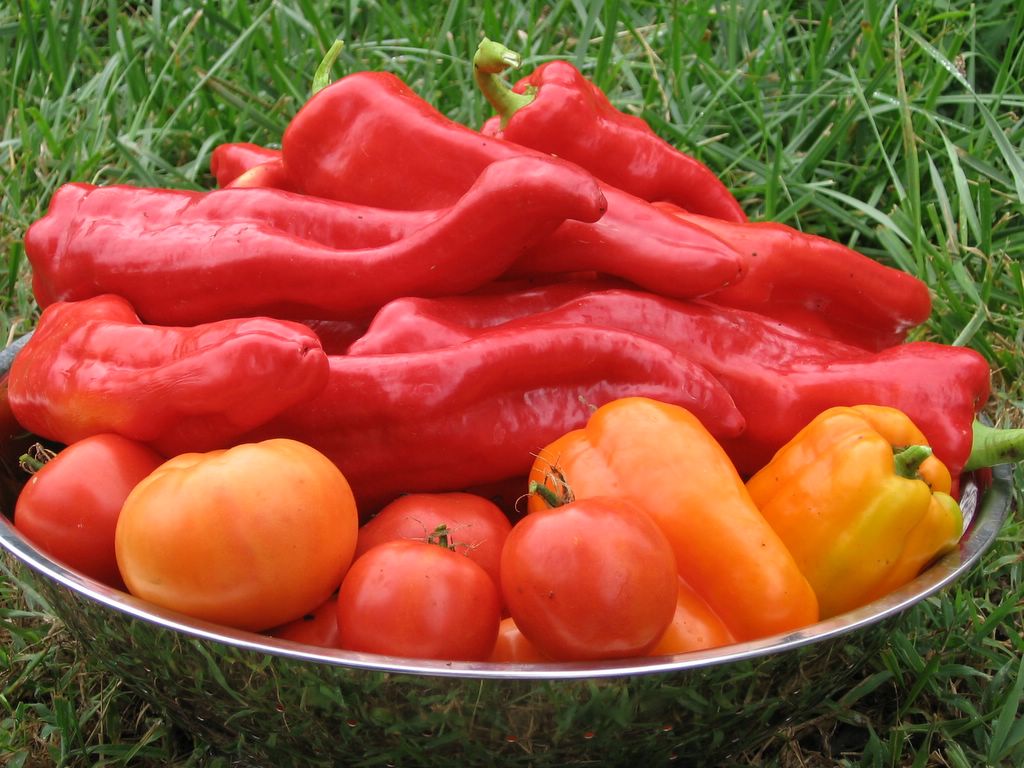
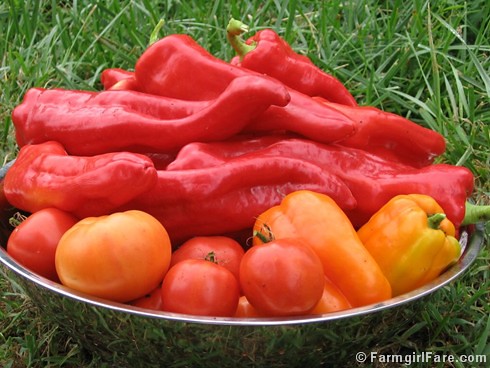
freshly picked in the kitchen garden - aconcagua sweet red peppers, orange sun bell peppers, and heirloom tomatoes - FarmgirlFare.com
Is there anything more beautiful than edible homegrown bounty?

Update: For tips on planting and growing sweet peppers, check out these posts. Happy growing!

Realization Of The Day:
Much of the garden may be in a pitiful state, but my sweet Aconcagua peppers haven't failed me yet.

I've probably tried growing at least fifteen different heirloom varieties of sweet peppers from seed over the last twelve years. Red, orange, yellow, purple, short, fat, tall, thin, you name it, including a few with names I could barely pronounce.

So after all that exploration into the world of sweet peppers, how many kinds will you find in my garden today? Just two. Yep, that's it. Sometimes a girl just has to quit experimenting and settle down with a couple of dependable favorites.

Aconcagua is one of those two. (Orange Sun bells is the other.) Year after year—while the fate of nearly everything else in my garden is uncertain—I always end up with tall, healthy plants loaded down with large, beautiful peppers (knock on wood).

The plants require nothing more than some nice, fertile soil (I amend mine with lots of sheep manure), a layer of mulch such as grass clippings (unless you find pulling weeds relaxing), water at regular intervals, and something to support the plants because they will grow 3 to 4 feet tall and tend to fall over when weighted down with ripening peppers, especially during heavy rainstorms. I tie them to bamboo stakes with recycled baling twine.

Pests are rarely a problem, although the blasted blister beetles have been attacking several of my plants this year. They've only nibbled on the leaves so far, and haven't devoured enough to kill off any of the plants.

While I don't recall any pepper plants being plagued by disease, this year I have found a couple of unripe peppers simply rotting away on the vine for no apparent reason (and they weren't touching the ground). The same thing is happening with the Orange Sun bells, though, and since the majority of the peppers aren't doing it, I haven't bothered to look into this. Weird, unexplainable stuff always goes on in my garden.

I've been saving seeds from my best peppers for years, but the original seeds were purchased from Baker Creek Heirloom Seeds, and they have this to say of Aconcaguas: "Very large, long, frying peppers, up to 11" x 2½". Tall plants give good yields over a long season, and the fruit is very sweet and delicious! This pepper was named after Mt. Aconcagua in Argentina." A packet of 25-50 seeds will set you back $1.35.

The pepper on the left in the photo is 8 inches long and weighs half a pound. In the summer, I tend to eat most of my sweet peppers raw--either cut into chunks and tossed into salads or cut into slices and dipped into something like herbed yogurt cheese or homemade blue cheese dressing. Today I added a couple to a batch of Summer In A Bowl. These are also the peppers I use when I make my Simple Summer Harvest Soup.


They do cook up quite nicely, though (notice Baker Creek even calls them "frying peppers"), so what I do is preserve much of my harvest for cooking up later in the easiest way possible—I freeze them.

No fancy equipment or giant vats of boiling water—like I had in the kitchen today to put up tomatoes—or special containers required. This is how a hot, tired, and lazy gardener freezes her peppers and saves her own pepper seeds.

Take a sharp knife and slice off the stem. Then cut the pepper in half lengthwise and pull out the seeds. Be sure to save the seeds from your best looking specimens. Simply detach them from the membranes and, if they seem a little moist, put them in a nice dry spot for a while. Otherwise stick them right into a little labeled storage bag. I either use itty bitty zipper seal bags or reuse the paper envelopes the seeds I ordered came in.

That's it. You're now ready to grow an even better crop of peppers next year. Isn't it nice when something is so easy?

And freezing your beautiful bounty is just as painless. The pepper halves go right into a freezer bag; no blanching required. You can vacuum seal them with a FoodSaver if you want them to last longer, but it's not necessary. (I do seal up all my green beans with my FoodSaver.)

Just 'spoon' the halves together and pack them tightly into the bags so you don't have a lot of extra air inside. Seal them up, label, and toss into the freezer. Done!

The peppers won't freeze into a massive clump, so you can pull out just a few halves at a time if you like. (If for some reason yours do clump together, spread the pieces out on a baking sheet and freeze until solid, then pack in freezer bags). Your frozen peppers can be added to practically anything: soups and stews, chili, omelets, fritattas.

You can fry the whole halves up in olive oil or roast them in the oven with lots of other veggies or just some little halved potatoes. You can chop them up and add them to salads. Basically you can do anything with them that you could do when they were fresh, but now you can do it during a snowstorm.

This is important, as it is what makes all of this hot and sweaty and dirty work worthwhile. There is nothing more delicious and rewarding than being able to enjoy instant homegrown food in the middle of winter when the garden is covered with a sheet of ice and you can barely remember what a blister beetle even looks like.

© FarmgirlFare.com, the year round foodie farm blog where Farmgirl Susan shares recipes, stories, & photos of her crazy country life on 240 remote Missouri acres - and the freezers are always full.

Tuesday, August 15, 2006

What's Growin' On: 8/15/06


Realization Of The Day:
After a trying and tiring day in the garden, sometimes it is necessary to search deeply for one good reason to continue the crazy, neverending struggle over our little tended patch of earth. And sometimes you simply look up, and your eyes wander over to a neglected fence where they land on a spray of smiling wildflowers that seem to have appeared for no reason at all except to capture every single drop of your attention for one brief moment--and make you smile.

Today I was captured. And I am still smiling. Mother Nature may one-up us every time, but tomorrow I will be ready and willing to continue to fight. To garden.

Sunday, August 13, 2006

What's Growin' On: 8/13/06


Sunday Morning Dog Damage

Realization Of The Day:
There's a reason bookies don't take bets on gardeners. I could probably get better odds at the blackjack tables in Vegas.

This is what I woke up to this morning after stumbling, bleary-eyed and half asleep, out the back door in search of the reason for the intermittent, high-pitched yapping of my beagle which clearly translates as, "We are definitely up to no good."

Behold one of the four beautiful beds I lovingly weeded and prepared and direct seeded last Tuesday (the right moonsign day!) in the hopes of having a tasty little fall harvest. Unfortunately what you are seeing now--instead of the zillions of happy sprouts that were there when I went to bed last night--is a giant dog-dug hole. Ignoring the fact that my footwear and attire were decidedly not garden-friendly, I couldn't help myself. I crouched down on the ground and stuck my arm in it. This hole is elbow deep. And all that nice, rich soil you see on the outside of the bed? You probably can't tell from the photo, but I'm not going to be able to just sweep it up and put it back.

This is not the way one wants to begin their Sunday morning (even if one's Sundays aren't any different from every other day of the week). Unable to take my eyes off the new crater in my garden, I just kept circling around it, my mouth hanging open in disbelief. Then I caught sight of the adjacent bed which had also been full of tiny sprouted seeds the night before and now was not. By the time I finally noticed the two wiggling, grinning dogs who had the audacity to hang around and act as if nothing whatsoever was wrong, I was wide awake.

Let's just say it's a good thing I don't live in a place that has one of those ridiculous No Yelling At The Top Of Your Lungs Before 9AM ordinances in effect.

Realization #2:
Funny how they never dig up the beds you've prepared but haven't planted yet.

I had planned to finally make note today of all the different seeds I started last Tuesday, but I don't think there's any big rush.

Check It Out!
New reader Anne at Backyard Treasures says, "You should consider joining us for a virtual Garden Party and Tour that Thicket Dweller is hosting over at her blog, Today's Lessons. Check it out." So I did, and now I'm spreading the word. Anyone with a blog is welcome to join the party. "Show me your summer garden--vegetable, herb, flower, container, or weed--and I'll show you mine," says Thicket Dweller. What a fun way to peek into other peoples' gardens and show off your own, while discovering new blogs at the same time. Not a blogger? Not to worry! You're invited to take the garden tour. Click here to check it out.

Miscellaneous:
Thanks to all of you who jumped right in to help save my little unknown plant in the greenhouse. I haven't had a chance to check out the links and photos you left for me, but it looks like the majority of you are leaning toward ajuga (something I'd never heard of). Rest assured it is still alive and well, though I do plan to relocate it somewhere else--just as soon as I figure out what it is for sure. Oh, and assuming it is ajuga--any recommendations regarding where I should plant it? And any idea how big/wide it's going to get? Thanks.

And more thanks from me and my shepherdgirl pal Katherine at Apifera Farm for all of the pickle help. She was overwhelmed and thrilled that so many of you took the time to share your tips and recipes and has already put up her first batch of pickles. Here's a direct quote from her latest email to me: "Wow, that was really satisfying! Now I can't guarantee how they'll tase, but they sure look pretty. I sort of combined like 5 million recipes for everyone." And if anyone else has a pickle recipe they'd like to share, by all means do. Pickling season is far from over for many of us! Just click here and leave it in a comment. Thanks again.

I was sure I had something else to mention, but I have no idea what it is now. If I remember I'll add it in. Don't hold your breath, though. Ah! I just remembered!

Culinary Newsbites:
Last night I posted a recipe for Savory Tomato Pesto Pie over on Farmgirl Fare, my main food and farm blog. Click here if you're looking for a new way to serve up all the garden fresh tomatoes that are hopefully piled all over your kitchen.

Hmmm. I still feel like I'm forgetting something, though. Oh! She remembers again! I've been literally deluged over the past few days with requests for various articles and recipes, as well as questions about all kinds of things. I'll do my best to get to them as soon as possible. Thanks for your patience, and feel free to bug me again--I don't mind. I have a short attention span.

Friday, August 11, 2006

What's Growin' On: 8/11/06


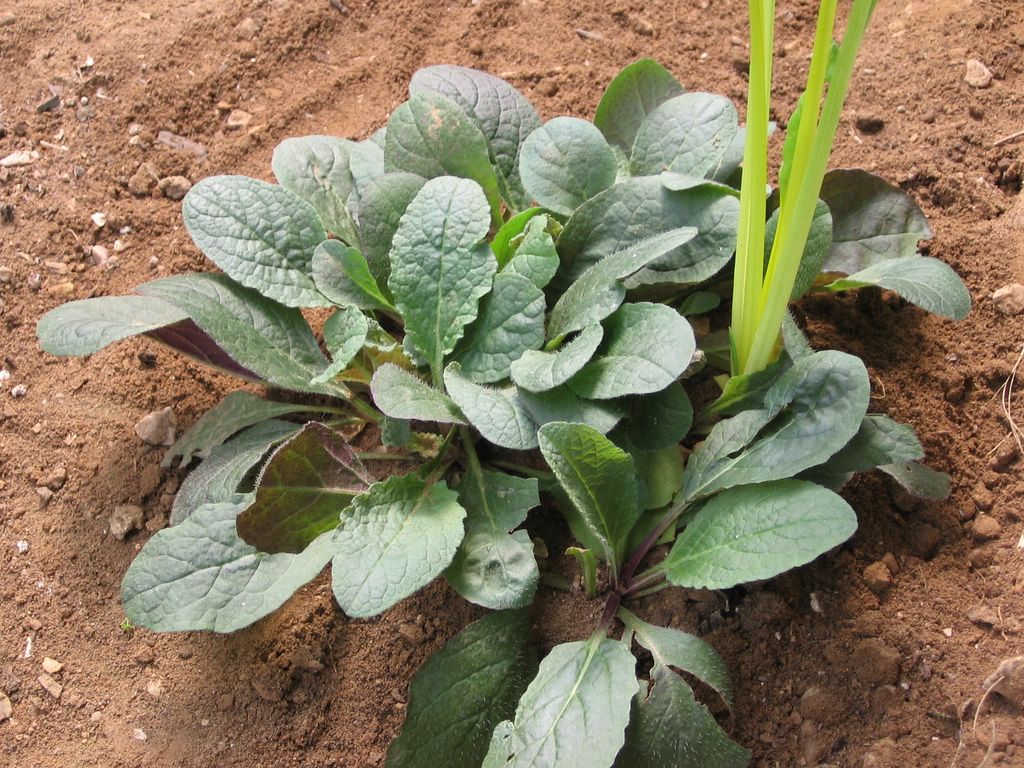
Save Me! Save Me! Help!

Realization Of The Day:
I think I've finally gone over the edge. (I tried to think of a clever garden analogy just now to use in place of "the edge" but failed.) And it's all the Internet's fault.

Okay, I have been out in the greenhouse doing a massive cleanup and replanting campaign (partly because someone--not Cary for once--dug up my only remaining patch of Swiss Chard in there). I lugged out containers of dried bean pods and radishes that have been waiting (since last year) to have their seeds removed. I fearlessly pulled out giant beet plants that had only half gone to seed but were laying all over and making a mess. I moved a big wad of row cover fabric along with various other non-living things off one of the raised beds.

And then I came to this. This thing. This clump. This happy little plant that mysteriously appeared last spring in a container that once held one of these (until it died). When I transplanted the contents of that container into the greenhouse bed several months ago (because it had a couple of volunteer baby lettuce plants in it as well), this clump was much smaller. And while I have been ignoring it, it has been thriving.

There is nothing else growing around it (that stem you see in the middle is volunteer yellow chard). It is surrounded by barren soil. It looks like one of those places in New York where they've razed an entire city block and are ready to start building the high-rise except that there's a rickety little cottage sitting at the edge of the property because the ancient owner refuses to sell.

I did not feel sympathy for this mystery clump as I might the ancient cottage owner. No, I was all ready to yank it out of the ground to make way for something bigger, bolder, and better tasting. Then, just as the wrecking ball that is my gloved hand was about to level the site, I stopped. I (gosh, this is embarrassing) started to feel kind of bad. I started wondering what kind of plant it might be.

And then I remembered I have a garden blog.

Where I could ask for help.

So now it's sitting out there, leaves sweating, roots trembling, wondering if The Girl In Charge Of The Greenhouse is going to announce a stay of execution--or send it flying into the compost pile.

I'm going to leave it up to you.

Does anyone know what this is? Is it a real plant--as in, something I should save? It actually appears to be lots of little plants all bunched together. The undersides of the leaves are purple. I have no idea if this is normal or due to lack of nutrients. I realize, of course, that I am setting myself up for possible total humiliation here, as I may be pleading for life on behalf of some common noxious weed. Yet here I am, tapping away at the keys when I could be out playing with the plants I can identify.

I'm going to go back out to the greenhouse and work around it for now. But if I don't hear anything from anyone soon, well. . .

Thursday, August 10, 2006

What's Growin' On 8/10/06: A Bounty of Beautiful Basil & a Plea for Pickle Recipes


Basil Gone Wild

Realization Of The Day:
I think I'm just going to let this giant volunteer patch of basil go to seed. I have plenty more in the garden (including some very young volunteer plants that popped up where the pole beans were supposed to). And besides. . .


It's not as if it isn't being used. (I'll give up my basil to pollinators any day. They literally mean the world to us. As for Bear--well, he usually treads pretty lightly. Plus he's really cute.) Many thanks to all of you who took the time to let me know your thoughts and experiences regarding using blooming basil in the kitchen.

Minding The Moonsigns:
Don't forget that Friday the 11th, Saturday the 12th, and Tuesday the 15th are all fertile days in the third quarter--the perfect time to put seedlings into the ground or move potted plants into roomier quarters. (Click here if you're wondering what this is about.)

I was feeling optimistic (plus I was tired of having old packets of seeds hiding everywhere) so I did go ahead and start some seeds last Tuesday (fertile second quarter day). Four entire full beds of them! I have to admit, though, that I don't have real high hopes for fall crops. (What fool plants 70-day pole beans less than two months before the first expected frost? Oh, wait, that would be me.) But I do have notes on what went where in case something decides to show up and survive.

Okay, I don't exactly have notes, but, like I usually do, I piled the seed packets on top of one another in the order I planted them in each bed. But then I went one step further--I held the ordered packets together with clothespins. Now as long as I remember which bundles of seeds went in which raised beds, and where the seeds on the top packet went, I'll be fine. I know. I'm supposed to be recording all my planting information here. That was the whole reason for starting this garden blog. And I will. Maybe tomorrow. Today I had more pressing (and more interesting) things to write about first. Which leads me to. . .

Out Of My Inbox: In A Pickle!
I thought my pal Katherine, who lives on Apifera Farm ("where animals, art, and lavender collide") knew how to do everything. I mean, she rides a horse, tends the 4700 lavender plants she and her husband planted, has a wonderful way with words on her farm blog, is an acclaimed artist, quietly created a rapidly growing peace movement with her animals, and can even bake a mean blackberry pie.

But it turns out she has absolutely no idea how to make a pickle. Here is an excerpt from the (dare I say desperate?) email I received from her:

"I can't find any basic pickling recipes in my Joy of Cooking or basic cookbooks. Perhaps they think any farm wife should already know how to do this...

I want to pickle my little cucs... and my finger beets - do you have any archive recipes?

Don't you love the word pickle?"

I do not have any pickle recipes in my blog archives, and I know nothing about pickling beets (and yes, now that she mentioned it, I do love the work 'pickle.' I even had a cat once named Pickles who had a brother named Onions.) The first summer I was at Windridge Farm I put up something like 37 quart jars of garlic dill pickles. I don't recall putting up any since then (is it any wonder?), but I offered to hunt down my old recipe for her. I also mentioned that if she only has a few cucumbers, refrigerator pickles might be the way to go. (Personally I like how they stay crisper because the cucumbers don't cook during the canning process, and I refuse to add alum--which is basically aluminum--to the jars to help them stay crisp. Plus refrigerator pickles are easier to make.)

I then offered to ask you all for help, and she was thrilled.

"I would love to see recipes! I think I want to try the long version/jar version - but I'd be curious about the fridge ones too for the ease of it..."

So how about it? Does anyone have a favorite pickle recipe they would like to share? And remember--she wants to pickle her little beets, too. I'm sure we can come to her rescue. And then I'll be able to go back to assuming she knows how to do everything, and the world will feel right again.

Thanks in advance for your help. And who knows? You might even convince me to start making pickles again. (Has anyone ever pickled lemon cucumbers? I think I'm going to have quite a few very soon.)