Showing posts with label perennials. Show all posts

Thursday, June 17, 2010

How To Easily Attract Butterflies & Pollinators to Your Kitchen Garden: Garden Journal 6/17/10

Attracting Pollinators 1
Just plant some echinacea!

Realization of the Day:
There's a winged frenzy going on out in my flowerbed.


More below. . .

Wednesday, June 24, 2009

Echinacea: My Favorite Easy To Grow, No Maintenance, Heat Loving, Drought Tolerant, Long Blooming Flowering Perennial

Echinacea is a beautiful, hardy, no maintenance, long blooming, perennial medicinal herb - FarmgirlFare.com
Echinacea Purpurea, also known as purple coneflower (despite its pink flowers)

Realization of the Day:
If basil declares that summer has arrived in the vegetable garden, then cheerful echinacea shouts it out from the flower bed.

Summer is here—in a hot, humid, stripped down, and extremely sweat-drenched way. It's already been in the 90s for over a week, and there's no end (and no rain) in sight. It just keeps getting hotter.

The heat index is supposed to get up to 108 on Saturday, but our thermometer in the backyard (yes, I stupidly looked) says it's already there. It feels as if we went from the middle of June to the middle of August overnight.

We really need to be putting up the hay (which will feed the sheep and donkeys next winter), but it's simply way too hot to do that kind of strenuous work—we'd never survive. It's too hot to do pretty much anything outdoors, though you wouldn't know it from looking at the echinacea.

There are several species of echinacea, but echinacea purpurea, also known as purple coneflower, is the most common and probably the easiest to establish in the garden. I originally started some from seed years ago at my first farm, and then dug up and brought a few of those plants with me when I moved to this farm nine years ago. I also started some echinacea angustifolia, narrow leaf coneflower, but it didn't make the move.

The seeds were pretty easy to start, but you can also find echinacea seedlings for sale at nurseries and garden centers. If you have a friend or neighbor who has some growing, ask them if they'll share.

Pollinator Party 1

Echinacea is everything I claimed in the title of this post and then some. It was supposed to say Self Seeding, Pollinator Attracting, Poor Soil Loving, Insect Resistant, Cold Tolerant, Pretty Much Impossible to Kill as well, but Blogger said the title was too long.

I've found that the less I pay attention to my echinacea, the more it flourishes, though I'm sure it would probably go crazy if I fertilized it with a little sheep manure. You'll find sweeping roadside displays of wild echinacea blooming along Missouri highways, often growing out of what looks like solid rock.


My echinacea, which conveniently starts to flower just as my beloved spiderwort is petering out, blooms all summer long and doesn't require deadheading. And if you never get around to cutting off the seedheads in fall, they'll simply drop to the ground and start sprouting up on their own come spring, while the dead flower stalks fall over or are buried in the lush new growth of old and new plants.

Echinacea also happens to be one of the most popular medicinal herbs in America. Here's an excerpt from an article by the University of Maryland Medical Center:

Results of archeological digs indicate that Native Americans may have used echinacea for more than 400 years to treat infections and wounds and as a general "cure-all." Throughout history people have used echinacea to treat scarlet fever, syphilis, malaria, blood poisoning, and diphtheria.

Today, people use echinacea to shorten the duration of the common cold and flu and reduce symptoms, such as sore throat (pharyngitis), cough, and fever. Many herbalists also recommend echinacea to help boost the immune system and help the body fight infections.

Several laboratory and animal studies suggest that echinacea contains active substances that enhance the activity of the immune system, relieve pain, reduce inflammation, and have hormonal, antiviral, and antioxidant effects. For this reason, professional herbalists may recommend echinacea to treat urinary tract infections, vaginal yeast (candida) infections, ear infections (also known as otitis media), athlete's foot, sinusitis, hay fever (also called allergic rhinitis), as well as slow-healing wounds.


On top of all that, it's beautiful, especially since the flowers look different at every stage. If you're looking for a winning perennial in the garden, I highly recommend echinacea.

Is there echinacea growing in your garden?

Previous purple coneflower posts (Did I mention it's a joy to photograph?):
8/23/05: Hardy Echinacea Blooms All Summer Long
6/20/06: Preparing to Burst into Color
7/16/06: Butterfly Bonanza
8/26/06: Butterfly Photos are Better than Nothing
6/28/06: Butterfly Paradise
7/8/06: The Stuff of Life
11/25/06: The Easiest Way to Store Seeds
6/25/07: Echinacea by the Cat Cabin
8/14/07: Echinacea Visitors
7/6/08: Been Busy
7/8/08: Winged Spectacular (one of my favorite photos)

© Copyright 2009 FarmgirlFare.com, the hot stuff foodie farm blog where the donkeys (and the rest of us) may be wilting, but the first green beans are ready!

Wednesday, April 16, 2008

Garden Journal Entry 4/16/08: My Favorite No Maintenance Flowering Perennial Bush


Ah, Spring!

Realization of the day:
I have no idea what this bush is but I love it. (Update: It's a flowering quince!)

It was here when I moved in and is definitely my kind of plant: it flourishes in our crazy Missouri climate, requires no special treatment (or even attention), doesn't grow quickly enough to need pruning or shaping, and is never bothered by disease or destructive insects.


In early spring it's covered with these delightfully bright blossoms that pretty much scream the word happy and attract swarms of bees and other pollinators (you can see a close up photo of the flowers here). This bush is located on the south side of The Shack next to the clothesline, so right now hanging up the laundry - an activity I always find fairly pleasant - is even more enjoyable. My only complaint? The flowers don't stick around for very long. Well, that and the fact that you can't eat them.

So does anybody know what this mystery bush is? If we figure it out, then you'll be able to go find one for your own yard.

Do you have a wonderfully low maintenance perennial plant in your yard or garden? Please tell us about it!

© 2008 FarmgirlFare.com, the blooming foodie farm blog where if it isn't edible, then it had better be pretty - and thrive on serious neglect.

Saturday, June 24, 2006

Spiderwort! A Beautiful, Easy to Grow Flowering Perennial that Attracts Butterflies and Other Pollinators


Realization Of The Day:
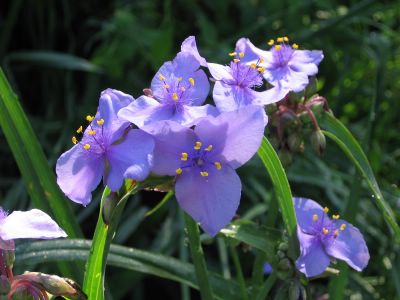
I love spiderwort. The cheerful flowers open up early in the morning, so they're often one of the first things I see when I step outside.
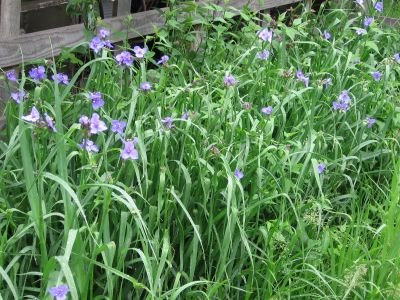


I highly recommend spiderwort for anyone who loves growing plants that require virtually no maintenance, flower for weeks, survive crazy weather fluctuations including extreme heat and cold, and can mysteriously pop up 100 feet from where originally planted. (I never did get around to moving those three extremely healthy clumps that appeared in one of the mini greenhouse raised beds in the garden, but the flowers are beautiful.)
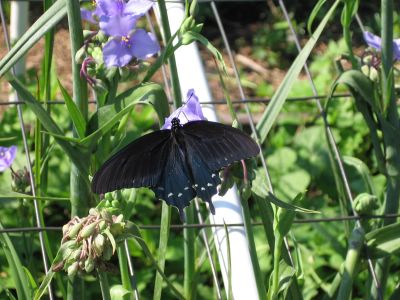


My first spiderwort plants were given to me when I moved to my first Missouri farm back in 1995 by a 76-year-old gardening neighbor who dug them up from her garden. This is the best way to get plants because they're already acclimated to your growing conditions. The spiderwort I have now was dug up and brought with me when I moved to this farm in 2000.
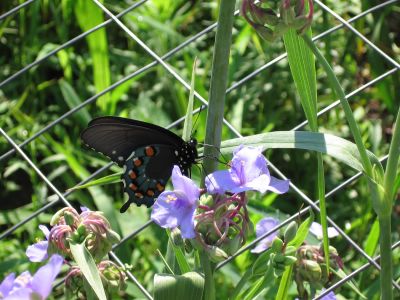
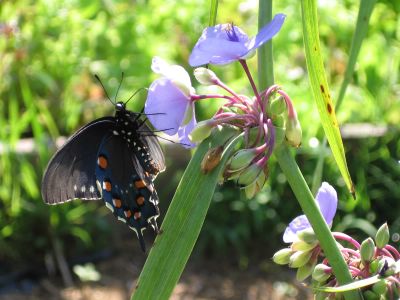


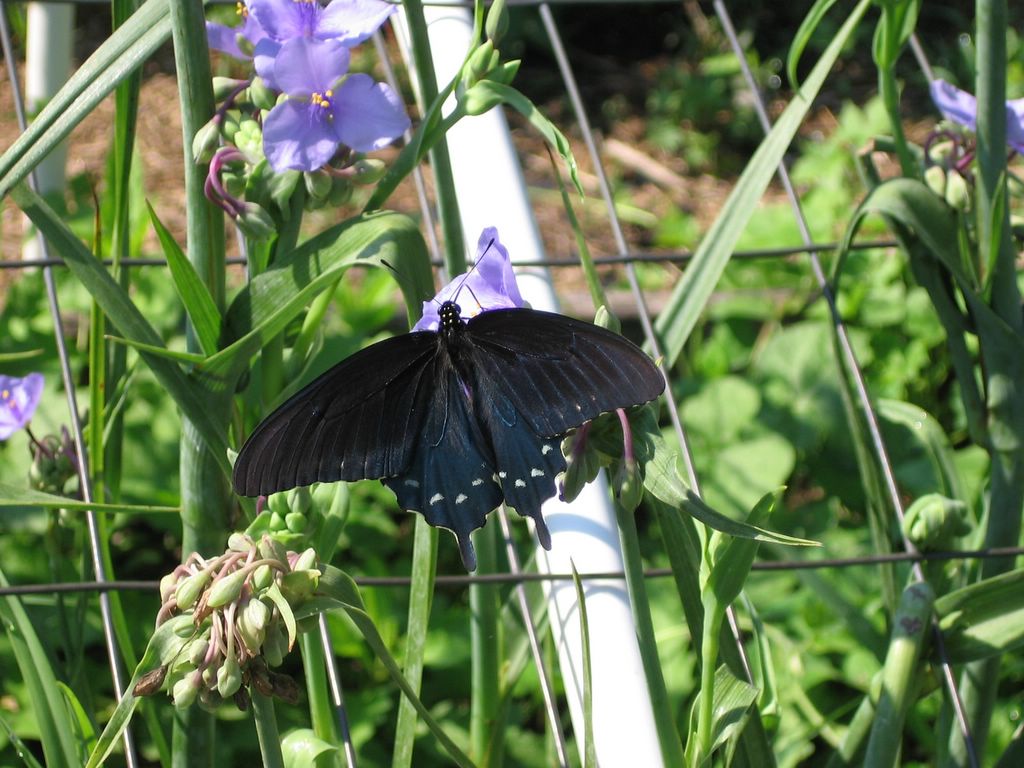
Pollinators also love spiderwort, and planting some is a great way to attract them to your garden.
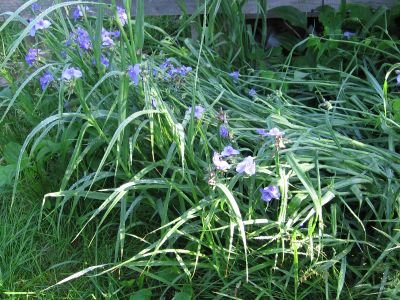


No plant is perfect, and there are a few things about spiderwort I should disclose. The first is that the plants are fairly tall and do tend to spread, often crowding and shading out surrounding plants. It would probably do best in a place of its own.

When I do get around to moving the plants out of the mini greenhouse bed, I plan to relocate them somewhere where nothing else will grow. I'm betting they'll do just fine.

The mature plants also have a tendency, at least in my garden, to fall over due to high winds and heavy thunderstorms—and possibly dog attack, though I haven't caught them in the act yet. 2011 update: dogs, donkeys, cats, and chickens have all been busted knocking down the spiderwort, and yet year after year it continues to spread and thrive.

And finally. . .
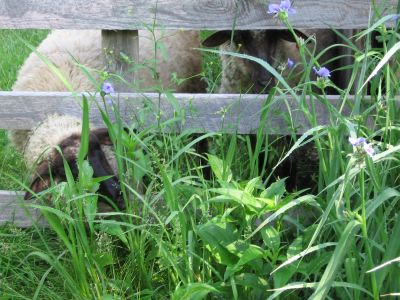


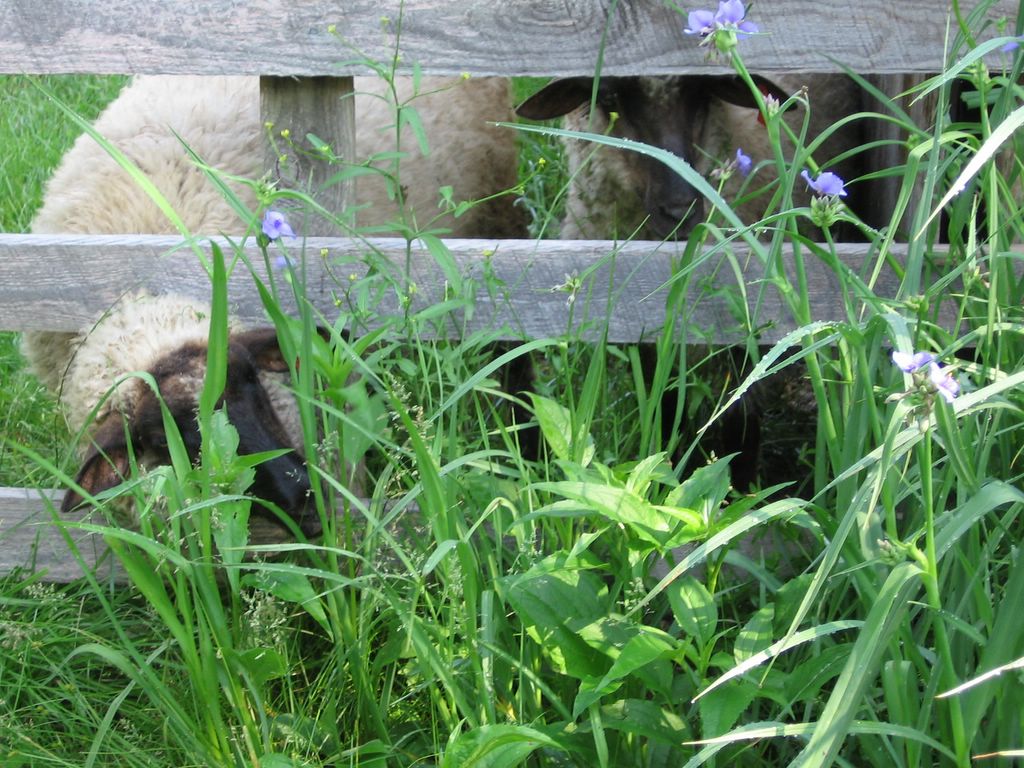
Pollinators and I aren't the only ones who love spiderwort.

Have you ever grown spiderwort? Any stories, fun facts, or growing tips to share?

© FarmgirlFare.com